Articles by Deb Bennett

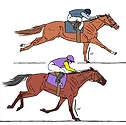
Fig 01 Gallop racehorse Flexor fatigue sm2.jpg
Biomechanics

The Gallop: Consequences for the Carpus & Hoof

How conformation, muscle fatigue & farriery choices influence joint stress & long-term soundness
The very fact that a horse is called upon to gallop implies a high level of athletic demand, higher than that typically required by the walk, amble or trot gaits that we have previously reviewed in this series. In our last installment, we detailed the biomechanics and stride characteristics of galloping. This prepares us to now take a closer view of some possible side effects of galloping, especially as they relate to the hoof but also to the horse’s carpal joint or “knee.”
Read More
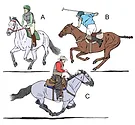
Fig 01 Gallop Cowboy Polo 3DEvent sm_1.jpg
Biomechanics

The Gallop: Horses at Speed

Analyzing how the horse utilizes its coordination to achieve its maximum potential speed
The canter and gallop are similar in that both are asymmetrical and thus can be performed on either a right or left lead. However, the canter is slower and daintier, while the gallop, by contrast, is the gait of the war horse, polo horse, jumper and racehorse.
Read More
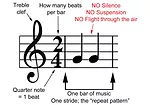
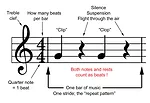
Fig 01 Musical notation canter synch asynch sm.jpg
Biomechanics

Disarticulating the Horse’s Canter

Equine biomechanics expert provides a phase-by-phase analysis
Musical notation for the canter is shown in Figure 1. It should be no surprise to learn that Figure 1a debunks the idea that the canter is a “three-beat” gait. The canter is instead a four-beat gait, each bar of its music consisting of three sounded beats plus one unsounded beat (Figures 2 and 4). The unsounded beat — the period of suspension, during which the horse flies through the air with no foot in contact with the ground — is extremely important and here is why: There is only one such moment in each bar of canter music, whereas in each bar of trot music, there are two.
Read More
Conformation-Figure-10.jpg
Farrier Tip

Assessing Pastern Conformation & Its Effects

Pastern conformation is to be evaluated in the same way as the conformation of the carpus, that is, by first visualizing the plane of assessment, and then by scanning for rotations and deviations (offsets are rarely found at this joint or the coffin joint).


Read More
Conformation-Figure-1.jpg

Conformation Analysis of the Equine Forelimb

Correct alignment & articulation are critical for the horse’s front legs
The horse’s forelimbs are designed to receive the weight and energy generated at each step by the hindquarters. In the forelimb, substance and correct alignment and articulation are thus of the greatest importance.
Read More

Top Articles

Current Issue

View More

Current Issue

View More

Must Read Free Eguides

Download these helpful knowledge building tools

View More
Top Directory Listings