 Premium content is for our Digital-only and Premium subscribers. A Print-only subscription doesn't qualify. Please

American Farriers Journal
American Farriers Journal is the “hands-on” magazine for professional farriers, equine veterinarians and horse care product and service buyers.

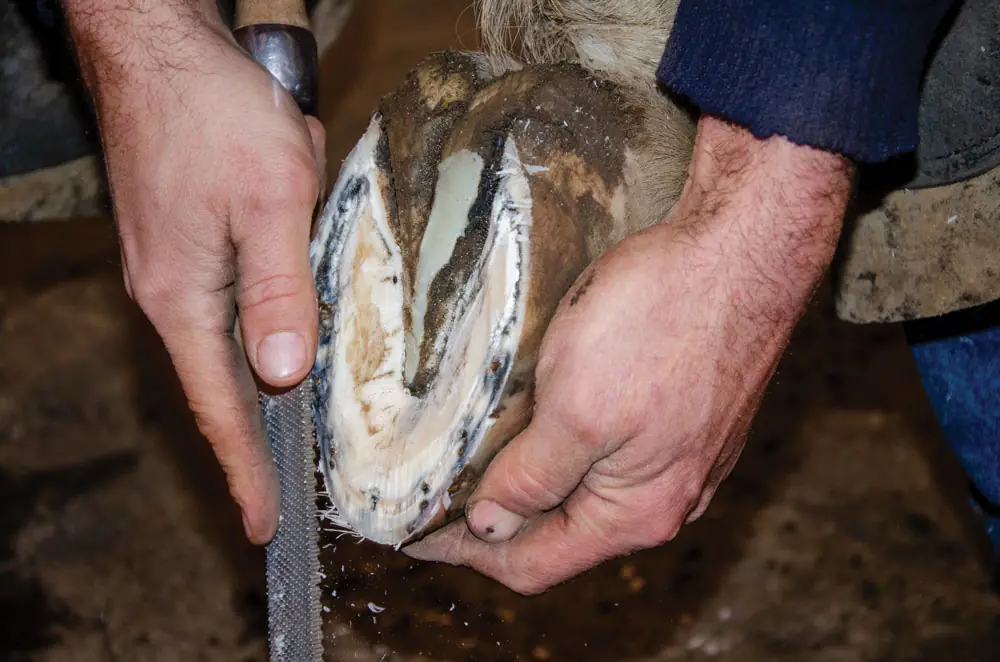
The normal anatomy and conformation of any horse is the essential guide no matter what trim style is used. The goal of the trim is to achieve a balanced stance, proper movement, healthy feet and a comfortable horse. Jeff Cota
After initial observation and assessing a horse and its hooves, hoof care begins with trimming.
When starting any work, you should have a plan that leads to successful results. If you are going to attach shoes after the trim, that’s another step to consider. If not, the hoof that’s left shoeless will be trimmed slightly differently from the one that receives shoes. When not applying shoes, the extra hoof wall length that remains should be approximately less than half the thickness of a shoe (2-3 mm) to relieve sole pressure. This may vary depending on situations.
There may be several factors to think about when considering how to manage feet without shoes.

American Farriers Journal is the “hands-on” magazine for professional farriers, equine veterinarians and horse care product and service buyers.

American Farriers Journal is the “hands-on” magazine for professional farriers, equine veterinarians and horse care product and service buyers.
Download these helpful knowledge building tools


We are here to support you.
We stock a wide range of high-quality products from trusted brands to ensure durability, performance, and reliability in every job you undertake. Our extensive inventory of horseshoe products and farrier tools means you can find everything you need in one place, saving you time and effort. Your satisfaction is our top priority. We are committed to providing excellent customer service, prompt shipping, and hassle-free returns.
