
Takeaways
- The U.S. Department of Agriculture’s (USDA) Animal and Plant Health Inspection Service (APHIS) is opening a public comment period from Nov. 13-Dec. 14, 2026, on proposed rules to the Horse Protection Act that are aimed at strengthening enforcement and ending soring.
- The proposed updates include modernizing inspection procedures, prohibiting masking agents, enhancing third-party inspector standards and requiring two APHIS veterinarians to independently concur on noncompliance findings.
- The new proposal follows nearly 10 months of delays and a federal court ruling that invalidated several provisions of a previous USDA final rule regarding action devices, pads, and substances.
The U.S. Department of Agriculture’s (USDA) Animal and Plant Health Inspection Service (APHIS) is opening a comment period on proposed rules to the Horse Protection Act. The comment period is from Nov. 13-Dec. 14, 2026
APHIS is proposing updates that it says will strengthen enforcement, ensure due process and support science-based inspections at equine events.
“The proposed rule would modernize the inspection procedures consistent with those used in other horse sports and ensure greater oversight of industry inspection programs,” according to APHIS. “The proposed changes would ensure consistent inspections at covered events, enhanced due process protections for horse owners, trainers and exhibitors, and better align APHIS’ oversight with the [Horse Protection] Act and achieve its dual purposes of ending soring and restoring fair competition at horse shows and exhibitions.”
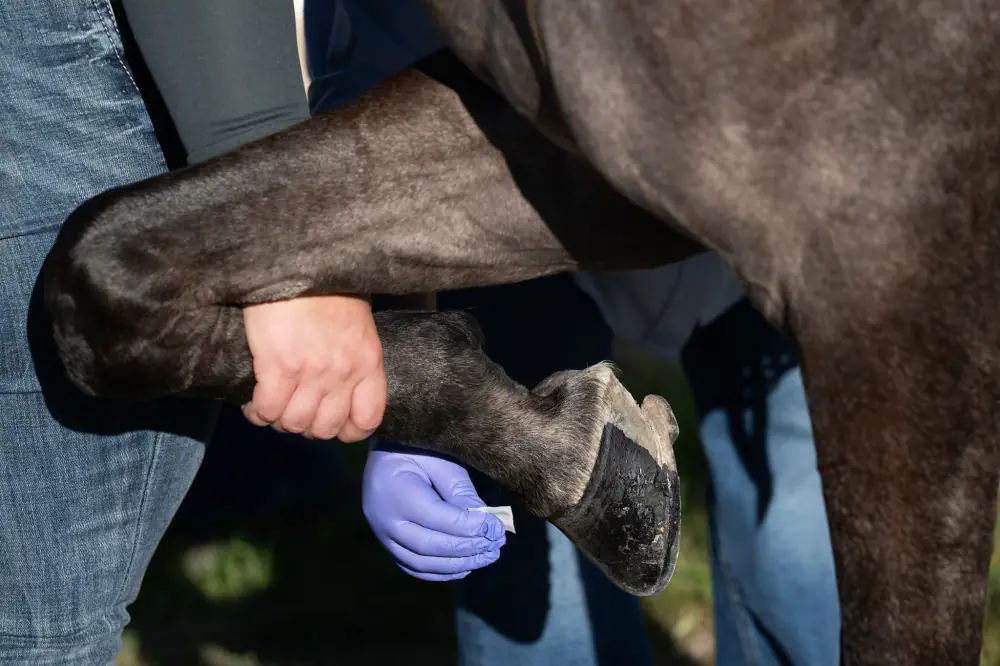
Although the HPA applies to all breeds and disciplines since its inception in 1970, enforcement historically targets the elimination of soring in Tennessee Walkers, Spotted Saddle Horses and racking horses; federal regulations are focusing on all shows, exhibitions, sales and auctions. Soring is the practice of inflicting pain on the legs and hooves of horses with caustic chemicals, chains and other objects to artificially create the high-stepping gait known as the Big Lick.
APHIS is proposing seven changes to the HPA.
- Improve training, evaluation, monitoring and conduct standards for Designated Qualified Persons (DQPs).
- Use scientific inspection procedures so only compliant horses participate in HPA-regulated events.
- Bolster rules to stop interference of APHIS or DQP inspections of horses.
- Prohibit masking agents and other substances that are used to conceal soring evidence, such as sedatives and topical numbing agents.
- Remove the “scar rule” in accordance with a court decision finding that it exceeds statutory authority.
- Require two APHIS veterinarians to independently inspect and agree with noncompliance findings before notifying the individual responsible for the horse.
- Create an immediate appeal process for APHIS inspection findings to a neutral event appeals official.
- Ensure management responsibilities for the disqualifying sore horses and prohibiting horses that are noncompliant.
The proposal is being made nearly 10 months after APHIS delayed the implementation of amendments to the HPA. It was the fourth delay since the final rule was initially published May 8, 2024. The rule originally was scheduled to take effect Feb. 1, 2025. However, APHIS delayed it twice more to April 2, 2025, and Feb. 1, 2026.
APHIS opened a comment period following the April 2 decision to determine whether the postponement was sufficient or more time was necessary. More than 6,100 comments were filed by Congressional members, state agricultural agencies, farm bureaus, horse industry associations, veterinarians and associations, as well as horse trainers, trainers and exhibitors.
Many commenters urged APHIS to withdraw or rewrite the rule. However, the parameters established for the comment period did not authorize a rewrite.
The delays came amid a flurry of opposition from various corners of the equine industry, including agriculture commissioners from 11 states and the American Horse Council (AHC), asking the USDA to withdraw the final rule.
The previous proposed final rule defined a show as a public display of any equines in competition except where speed is the prime factor, rodeo events, parades, or trail rides. This included donkeys, mules, state fairs and 4-H shows.
A lawsuit by the Tennessee Walking Horse National Celebration Association (TWHNCA) gutted part of the final rule.
On Jan. 31, 2025, the U.S. District Court for the Northern District of Texas ruled the USDA exceeded its authority in four of the five provisions contested in a lawsuit brought by the TWHNCA. The four provisions are the prohibition of action devices and pads, the prohibition of substances, the dermatologic conditions indicative of soring (DCIS) — which replaces the scar rule — and the pre- and post-deprivation review of inspector decisions. The court upholds the elimination of the designated qualified persons (DQP) program.
The HPA without the final rule protects horses, Judge Matthew J. Kacsmaryk ruled. The USDA-APHIS Final Rule went too far when it tried to ban action devices, pads and substances — including shampoo, polishes and fly spray, he ruled.
Comments can be submitted online or via mail from Nov. 13-Dec.14, 2026. Those who wish to comment online can visit www.regulations.gov and enter APHIS-2026-0067 in the search field. Select the “Documents” tab, then select the “Comment” button next to the proposed rule. Those who wish to mail comments can do so to:
Docket No. APHIS-2026-0067
Regulatory Analysis and Development, PPD, APHIS
5601 Sunnyside Ave.
Beltsville, MD 20740
Frequently Asked Questions
Q: What is the Horse Protection Act (HPA) and what does it aim to prevent?
A: Enacted in 1970, the HPA applies to all breeds and disciplines and aims to end “soring” — the practice of inflicting pain on the legs and hooves of horses with caustic chemicals, chains, and other objects to artificially create the high-stepping gait known as the “Big Lick.”
Q: When is the comment period for the proposed rules, and how can readers submit feedback?
A: The public comment period is open from Nov. 13-Dec. 14, 2026. Comments can be submitted online at www.regulations.gov under docket APHIS-2026-0067, or mailed to APHIS’s Regulatory Analysis and Development office in Beltsville, Md.
Q: What are the key changes being proposed by APHIS?
A: APHIS is proposing seven main changes, including modernizing inspection procedures, enhancing third-party inspector standards, prohibiting masking agents, requiring independent concurrence from two APHIS veterinarians on noncompliance findings, and establishing an immediate appeals process for horse owners and trainers.
Q: Why are these proposed updates being introduced at this time?
A: The proposal follows nearly 10 months of implementation delays, which included multiple postponements from an original February 2025 effective date, and responds to feedback from more than 6,100 commenters following previous rule delays.
Q: How did previous court rulings impact USDA regulations?
A: In January 2025, a U.S. District Court ruled in a lawsuit brought by the Tennessee Walking Horse National Celebration Association that the USDA exceeded its statutory authority in several provisions of a previous final rule, including bans on action devices, pads, and certain substances.


