Anatomy

Footcare & Farrier Business Insights.png

Footcare & Farrier Business Insights

Each week our editors will bring you data we collected in our 2026 American Farriers Journal Business Practices Survey. Continue reading below for our latest update and check back weekly for the next set of information.
Each week our editors will bring you data we collected in our American Farriers Journal Business Practices Survey. Check back weekly for our latest update.
Read More
Fig 01 Gallop racehorse Flexor fatigue sm2.jpg
Biomechanics

The Gallop: Consequences for the Carpus & Hoof

How conformation, muscle fatigue & farriery choices influence joint stress & long-term soundness
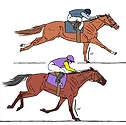
The very fact that a horse is called upon to gallop implies a high level of athletic demand, higher than that typically required by the walk, amble or trot gaits that we have previously reviewed in this series. In our last installment, we detailed the biomechanics and stride characteristics of galloping. This prepares us to now take a closer view of some possible side effects of galloping, especially as they relate to the hoof but also to the horse’s carpal joint or “knee.”
Read More
Fig 01 Gallop Cowboy Polo 3DEvent sm_1.jpg
Biomechanics

The Gallop: Horses at Speed

Analyzing how the horse utilizes its coordination to achieve its maximum potential speed
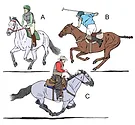
The canter and gallop are similar in that both are asymmetrical and thus can be performed on either a right or left lead. However, the canter is slower and daintier, while the gallop, by contrast, is the gait of the war horse, polo horse, jumper and racehorse.
Read More

Top Articles

Current Issue

View More

Current Issue

View More

Must Read Free Eguides

Download these helpful knowledge building tools

View More
Top Directory Listings