There once was a farrier named John. It’s not his real name, but we’ve all been John at some point.
John had been shoeing most of his adult life. He was competent. Experienced. Busy. And like many of us who’ve done this long enough, he’d grown a little complacent when it came to owner requests. Arguing just wasn’t worth the energy. After all, he was “just doing what was asked.”
One cold December day in New England, John was shoeing a mare for a new client. The horse was overdue — as new clients often are — but at the time, snow and ice hadn’t set in yet.
The owner wanted the mare shod through the winter. She was adamant about one thing, though: No traction. No snow pads. Nothing “extra.” Why spend more money when it was already December and still 55 degrees?
John voiced his concerns. He explained the risks. He did what we’d all say we’d do. And then he ended it with the phrase that has likely left every one of our mouths at some point: “But she’s your horse. I’ll do whatever you want.”
Five weeks later, New England received 12 inches of postcard-perfect snow. Rockwell couldn’t have painted it better. Underneath was a lovely layer of ice.
The property sloped downhill on the turnout side of the barn. John didn’t know that. He’d never seen it.
The mare — let’s call her Fluffy — was turned out. Fluffy went down that hill with the uncontrolled speed and grace of a bowling ball released from a speeding car.
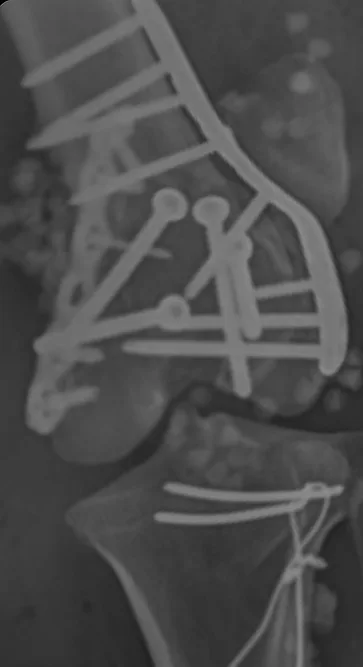
Fluffy didn’t stick the landing. She shattered her right leg. Now here’s where most of us would assume the story ends. It doesn’t. Because Karen — we’ll call the owner Karen — had a friend. And that friend was a lawyer. And that lawyer convinced her to sue John for negligence.
Sure, John had insurance. That helped. But Karen also loved that horse enough to pursue surgery. And as you all know, equine surgery doesn’t just flirt with five figures — it moves in and unpacks.
So where did John go wrong?
Not in his trimming.
Not in his shoeing.
Not in his intention.
He went wrong in two places. First, he could have refused the job without winter traction. Second, if he chose to proceed, he could have documented his concerns in writing and had the owner acknowledge them with a signature.
He did neither.
He may very well have warned her verbally. I honestly believe he did. But belief doesn’t hold up in court. Documentation does. A $500 backyard horse becomes a $50,000 “family member” the moment something goes sideways.
I first met Fluffy post-op. The damage was catastrophic. She wasn’t young. Surgery was, in my opinion, a long shot at best. Recovery required shoeing in an Anderson sling. Follow-up care was a logistical and financial nightmare.
And in the end — even with excellent veterinary and farrier care — contralateral laminitis finished what gravity started. All because a farrier chose customer satisfaction over professional judgment.
We’ve all been John at some point. And most of us have been lucky. But luck is not a business model. Protect yourself. Always. Document your recommendations. Refuse work when necessary. Put it in writing.
Give the horse what it needs — not just what the client wants.
Don’t be like John.
You’ll thank me later.