
American Farriers Journal

View Archived Issues
November 2015
Volume: 41
Edition: 7
American Farriers Journal is the “hands-on” magazine for professional farriers, equine veterinarians and horse care product and service buyers.
-
Table Of Contents
Table Of Contents
What Would You Charge?
Here’s how 144 hoof-care pros priced the trimming and shoeing for 20 types of horsesRead More
Remembering Red Renchin
Friends and colleagues celebrate the Hall Of Fame farrier’s life and his generosity to the industryRead MoreFarrier Licensing, Still Divisive As Ever
Exclusive American Farriers Journal survey reveals mandate for quality and control standardsRead MoreBefore The Big Race, It’s Business As Usual
Building a plan and adjusting as needed has led to success on the harness track for farrier-trainer teamRead MoreConsiderations for Launching a Multi-Farrier Practice
Veteran Florida farrier James Gilchrist provides lessons he learned from building a multi-farrier practiceRead More
Log Your Way to Greater Savings
While you may already deduct your vehicle expenses and mileage, are you doing so correctly?Read MoreUse This Checklist for Screening Potential Clients
This guideline provides new client questions to ask over the phone so you can save time and possible difficultyRead MoreBetter Strategies For Managing Your Inventory
Farriers offer their insights on prioritizing and buying suppliesRead MoreIs The Saddle The Problem?
Understanding general principles can help farriers confirm or eliminate causes of lamenessRead MoreKeeping Beamer Comfortable
Wisconsin farrier helps horse with an extra hoof wall stave off laminitisRead MoreProtect Your Practice from Crisis and Debt
Properly managing your money will help ensure a successful footcare practiceRead MoreCreating an Ideal Work Space
Farriers offer tips for encouraging novice owners to provide a safe, comfortable and efficient shoeing areaRead MoreMoving Your Farrier Practice
Months-long planning increases likelihood of success and lowers stress when you need to move your farrier practiceRead More -
Featured Articles
Featured Articles
Considerations for Launching a Multi-Farrier Practice
Veteran Florida farrier James Gilchrist provides lessons he learned from building a multi-farrier practiceRead MoreRemembering Red Renchin
Friends and colleagues celebrate the Hall Of Fame farrier’s life and his generosity to the industryRead More - Digital Edition
-
Online Extras
Online Extras
THIS MONTH'S DIGITAL SPONSORS:
Top Articles
Current Issue
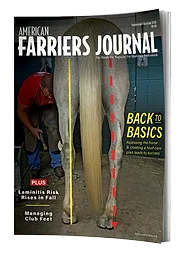
American Farriers Journal
American Farriers Journal is the “hands-on” magazine for professional farriers, equine veterinarians and horse care product and service buyers.
Thinking Beyond Breakover
Understanding Fall Equine Laminitis Risks
I Only Did What the Horse Owner Wanted: A Cautionary Tale
Current Issue

Special Report For Equine Veterinarians
American Farriers Journal is the “hands-on” magazine for professional farriers, equine veterinarians and horse care product and service buyers.
Must Read Free Eguides
Download these helpful knowledge building tools
- Spring Hoof Care
- Caring for Your Horse During a Pandemic
- CBD Products Have Promise for Farriers, but Buyer Beware
- Sharpening Knives with a Buffer
Videos

Organized & Efficient to Better Serve Farriers w/Oleo Acres: 2025 Supply Shop of the Year
Oleo Acres Farrier and Blacksmith Supply owner Rob Michel walks viewers through the Littleton, Colo., warehouse. Inventory is organized with the customer in mind. If the product is in stock and easy to find, farriers can spend more time under a horse, which Michel says is more money in your pocket.
Events
Foundations Clinic
Date: 10/23/26
Location: Fenwick, NS
View Event
Top Directory Listings
Doc Foal's | The Black Pads
At Doc Foal's, we manufacture The Black Pads and The Black Pads PLUS (featuring embedded magnets and copper). Our hybrid pads work seamlessly with your choice of conventional horseshoe, combining metal for structure with polyurethane for exceptional comfort and shock absorption.
Designed as a...

Sunrise Farrier Supply
We are here to support you.
We stock a wide range of high-quality products from trusted brands to ensure durability, performance, and reliability in every job you undertake. Our extensive inventory of horseshoe products and farrier tools means you can find everything you need in one place, saving you time and effort. Your satisfaction is our top priority. We are committed to providing excellent customer service, prompt shipping, and hassle-free returns.

Equilox International
Equilox International Inc. specializes in equine horse hoof adhesives. Developed in 1988 after many trials and extensive research at leading universities and equine centers throughout the U.S., the Equilox Adhesive Hoof Repair System was originally used to treat competitive horses. Now, Equilox Adhesive is used by farriers, equine centers, and horse owners — as well as various zoo and wildlife centers — throughout the world.