
Takeaways
- A firm frog pour in conjunction with packing helps reestablish caudal support, sole protection and moderate shock absorption while Jackson emerges from a bout with an abscess in his right front foot.
- Sidebone and podotrochlear issues continue to influence Jackson’s movement. The removal of the toe in the glue-on shoe and setting the shoe back limit leverage, while the sole pack reduces rigidity.
- The change in seasons offers Jackson relief from anhidrosis.
Through the first three installments of the 1 Horse, 1 Farrier, 1 Year series, Jackson’s hoof-care challenges have been wide and variable.
During his last farrier appointment, a subsolar and heel bulb abscess was discovered in the right front foot. Daily Epsom Salt Gel applications and 1-hour Epsom Salt soaks in warm water were performed to encourage draining and healing.
After allowing Jackson to remain barefoot up front while the abscess drained and resolved, we resumed mechanical support with a revised approach. Minor hoof wall chipping occurred because of being barefoot for 5 weeks, although it was not structurally concerning.
Once the right front hoof showed full resolution and no further signs of exudate discharge, a size 7 GluShu was reapplied — this time without the toe tab and set slightly back to reduce dorsal leverage. A mesh screen was incorporated to aid retention of the pour-in materials.
Seasonal Shifts & Lamenesses
The transition into cooler, less humid weather made Jackson more manageable overall. His arthritis and podotrochlear issues continue to have a significant influence on his movement.
Throughout the month, subtle stance adaptations persisted: Alternating load between the front limbs, occasional pointing and slight offloading during prolonged standing occurred — signs typical of chronic bone changes.
“Small fluctuations influence Jackson’s willingness to stay in motion…”
These patterns reinforce how closely Jackson’s hoof mechanics, joint pathology and environment interact. Even small fluctuations in barometric pressure, surface hardness and pasture moisture influenced his willingness to stay in motion. The more time he spent standing in one spot, the more evident the compensation became.
Reassessing Comfort & Adjusting the Pour
Despite initial improvement, Jackson’s comfort gradually declined again over the next few weeks.
After reviewing options, the owner opted to have the firmer frog pour removed and transition to a Vettec SuperFast straight bar pour before considering more rigid mechanics. Although I would have preferred to fabricate a handmade spider plate to provide additional stability, we agreed to attempt the straight bar pour first.
Since his comfort had recently decreased, introducing a more rigid structure at that stage carried a higher risk of creating additional pressure.
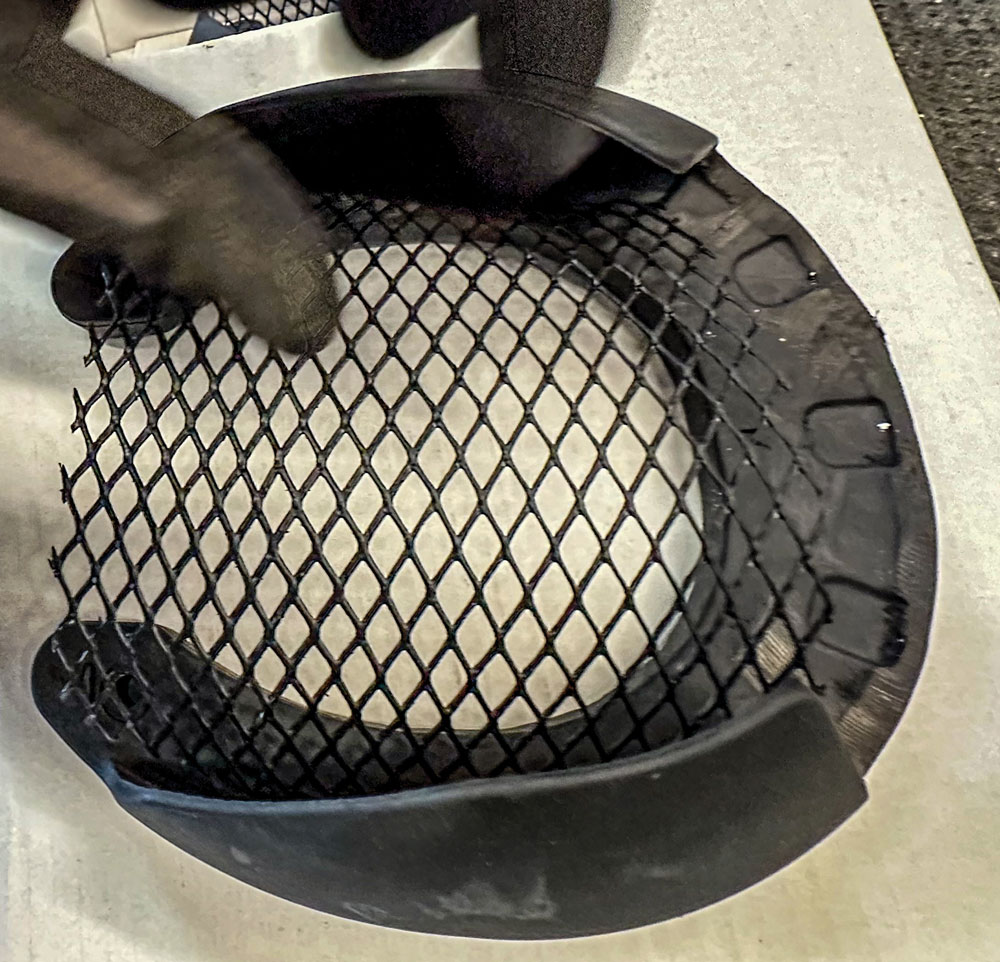
FIGURE 1: The toe is removed from the GluShu to reduce dorsal leverage. A mesh screen is added to apply a pour-in sole pack. IMAGES: Esco Buff
To accommodate this change, I again removed the toe portion of the GluShu (Figure 1) and set the shoe back slightly to limit leverage (Figure 2a). Farrier’s Choice Sole Pack and Seal was applied for sole protection, followed by the firmer Vettec SuperFast straight bar pour (Figure 2b). Play-Doh was temporarily used as a dam to contain the material during application, ensuring proper placement and density.
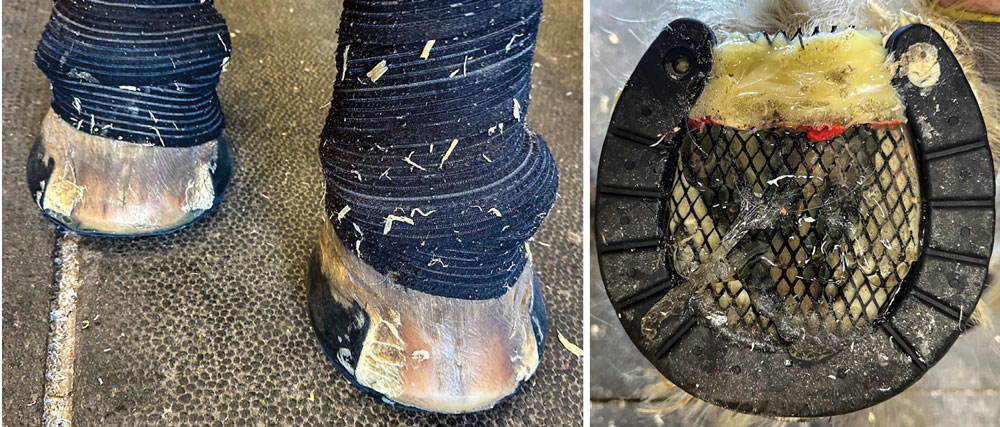
FIGURES 2a & b: Jackson is shod in a GluShu glue-on shoe with Farrier’s Choice Sole Pack and Seal to protect the sole, along with the firmer Vettec SuperFast serving as a straight bar.
This step-down in rigidity allowed us to evaluate whether his discomfort stemmed from excessive frog pressure, inconsistent weight-bearing due to arthritis or podotrochlear changes or a combination of the three. The decision also preserved flexibility, should we need to move toward a more controlled mechanical platform in subsequent cycles.
Mechanical Outcomes & Wear Patterns
Even with Jackson’s size and workload, the GluShu continues to show excellent durability.
Wear remains primarily at the toe, with only minimal lateral abrasion (Figure 3) — an encouraging sign that the shoe is holding position and not distorting under load. The updated configuration, however, did not restore a more comfortable posture or gait pattern.
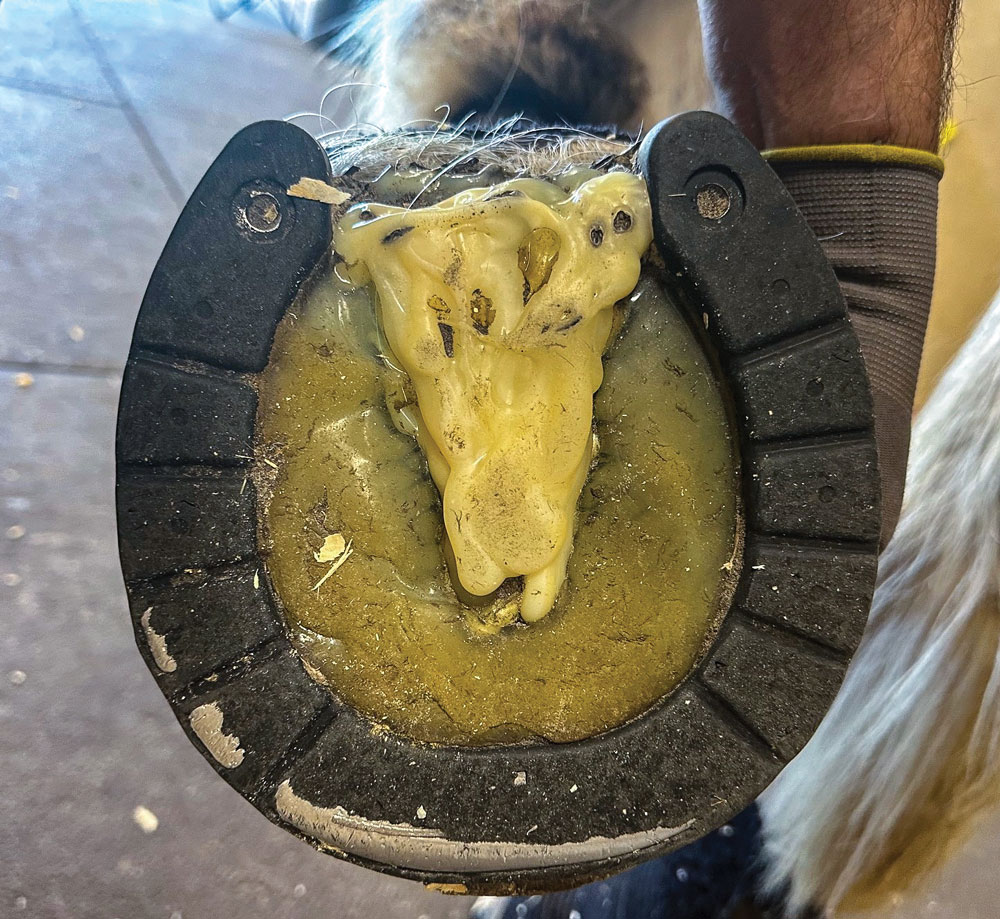
FIGURE 3: The GluShu continues to perform well. While the rubber wears on the lateral toe, the aluminum shoe under it holds up quite well.
Close observation revealed that while the hoof capsule remained stable, Jackson still hesitated to load the caudal structures consistently, particularly on a hard surface and after extended turnout.
His stride length on the affected front limbs shortened slightly, and he resumed resting both limbs more frequently. These subtle regressions suggest his comfort issues extend beyond hoof mechanics alone and may be increasingly dictated by progressive joint change.
Because of these changes, the owner will bring the attending veterinarian back to reshoot radiographs, which should help clarify whether further joint or navicular progression is contributing to his declining comfort.
Persistent Challenge: Anhidrosis
The seasonal change brings relief from Jackson’s struggle with sweat. With anhidrosis, the sweat glands fail to function normally when body temperature increases. However, the cooler weather significantly improves his heat regulation. He no longer requires daily alcohol baths and cooling fans.
Looking Ahead
As we continue monitoring the interplay between caudal support, arthritic and podotrochlear compensation and environmental influences, our next steps will likely involve the following.
- Evaluating whether a spider plate or modified frog plate can improve mechanical consistency without overwhelming his comfort threshold.
- Assessing ground conditions more closely as winter approaches, especially as harder footing historically amplifies his joint-related limitations.
- Considering a gradual return to softer pour materials if the bar pour proves too firm across varying surfaces.
- Continuing to integrate veterinary input regarding his arthritic and navicular changes to ensure mechanical choices support — not fight — his pathology.
Jackson’s case continues to illustrate how chronic orthopedic challenges rarely allow for a single, perfect solution. Instead, it becomes a process of maintaining function, minimizing discomfort and adapting mechanics in concert with the horse’s broader physiological realities.
Owner Communication & Collaborative Decision-Making
Throughout this process, maintaining open communication with Jackson’s owner has been essential.
Each adjustment — whether changing pour density, modifying mechanics, or altering shoe placement — was discussed in terms of expected outcomes and potential trade-offs. Their observations between visits helped guide timely decisions, particularly as Jackson’s issues produced subtle but meaningful shifts in comfort.
“The owner’s observations helped guide timely decisions…”
By reviewing posture, movement and environmental conditions together, we were able to tailor each phase of support to his day-to-day realities rather than relying solely on a preset plan. This collaborative approach ensured every mechanical choice aligned with the owner’s wishes and goals while respecting Jackson’s changing needs.
Conclusion
Jackson’s case highlights the ongoing challenge of supporting a horse whose comfort is influenced as much by chronic joint change as by hoof mechanics.
While the GluShu platform continues to perform well structurally, his fluctuating response to different pour densities demonstrates the need for adaptability and patience.
As we continue to navigate the interplay of caudal support, arthritic compensation and shifting conditions, our goal remains steady: to provide enough mechanical stability to protect the hoof capsule while preserving as much comfort and function as possible.
Jackson reminds us that the path forward is rarely linear — but with thoughtful adjustments and clear communication, meaningful progress remains achievable from one cycle to the next.
Over the course of a year, International Horseshoeing Hall of Fame member Esco Buff takes us on a hoof-care journey with Jackson, a 15-year-old Clydesdale cross gelding. The Clearwater, Fla., farrier documents each detail — the trim, shoeing, nutritional decisions, vet visits and his job — in this living case study.