
Takeaways
- An observant horse owner can detect and communicate subtle changes in hoof comfort before they escalate.
- Horses with developing arthritic and caudal hoof changes often benefit from targeted frog loading to stabilize the back of the foot and reduce potential pressure on sensitive solar regions.
- Combining firm and flexible pour-in materials allowed Jackson to benefit from both support and cushioning without compromising circulation or movement.
Jackson underscores a truth that farriers often carry quietly, our work extends beyond hooves. We shape the well-being of the whole horse — and, in a sense, time itself. Each trim influences immediate comfort while laying the foundation for what lies ahead.
Two weeks after the initial application of Glushu glue-on shoes with Vettec Equi-Pak pour-in pads, Jackson began to move as though his feet were tender. His stride shortened slightly, and his usual confidence on firmer footing diminished. Recognizing that even subtle changes in movement can signal deeper hoof comfort issues, I returned to reassess his setup with the owner.
There were no increased heat or pulses in any of the hooves. Using an infrared thermometer, I found no significant temperature differences between the two hooves. The next step was to remove the Equi-Pak pour-in material and test the soles and frogs for a response to hoof testing. No positive response was noted.
After discussing these findings with his owner, we concluded that Jackson likely needed firmer frog support than the initial pour-in provided. In my experience, horses with developing arthritic and caudal hoof changes often benefit from targeted frog loading to stabilize the back of the foot and reduce potential pressure on sensitive solar regions.
Custom Solution
I fabricated a customized frog support system to address the issue without removing his current glue-on shoes.
I created a firm, pour-in frog platform using Vettec Super Fast that’s designed to provide positive engagement and load sharing through the frog. I then applied Mustad Comfort Mix as a complementary sole pour around the firmer frog support to maintain sole support, sole protection and moderate shock absorption (Figure 1).
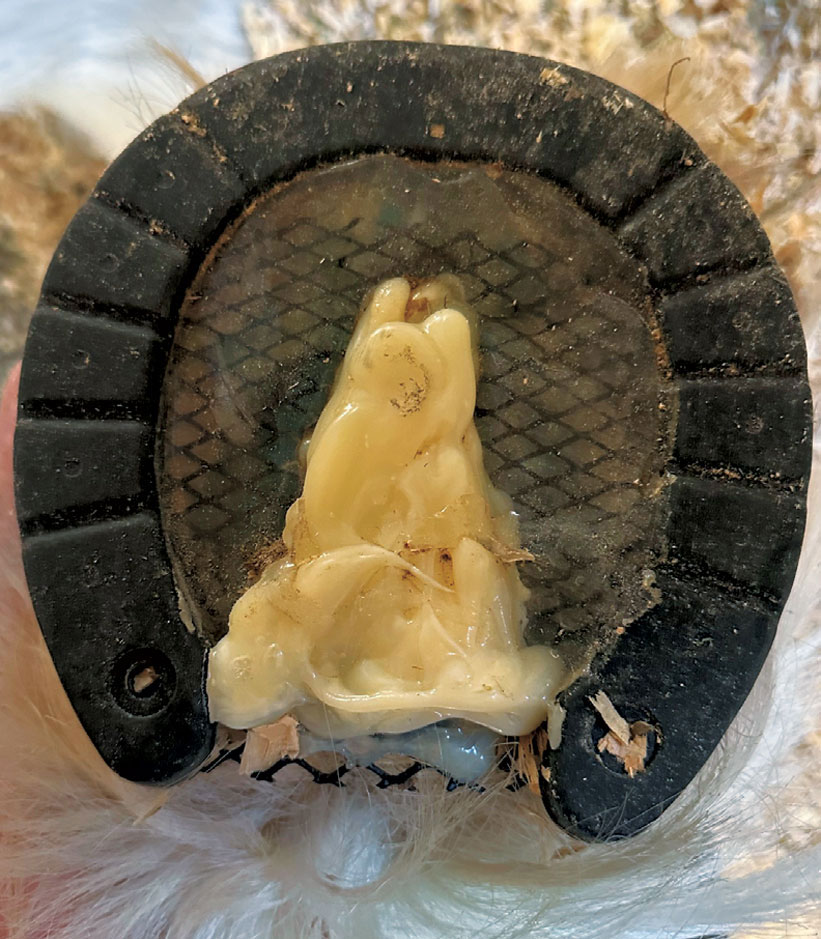
FIGURE 1: Jackson benefited from a firm, pour-in frog platform consisting of a Glushu glue-on shoe, Vettec Super Fast and Mustad Comfort Mix. The Super Fast provides positive engagement and load sharing through the frog. The Comfort Mix maintains sole support, sole protection and moderate shock absorption. Esco Buff
Jackson’s owner reported the next day that he was once again moving freely and comfortably. His stride had lengthened, his transitions improved and his willingness to move across gravel returned. The balance of firmness and flexibility between the two different pour-in materials appeared to meet his mechanical and comfort needs.
Continued Refinement
At our next scheduled appointment, three weeks after applying the revised pour-in combination, the hooves were trimmed and new size 7 Glushu glue-on shoes (Figures 2a & 2b) were reapplied using the same dual-material package: the firmer Super Fast frog support paired with the Comfort Mix sole pour. Jackson maintained stable movement and consistent comfort, with no renewed signs of tenderness or lameness.
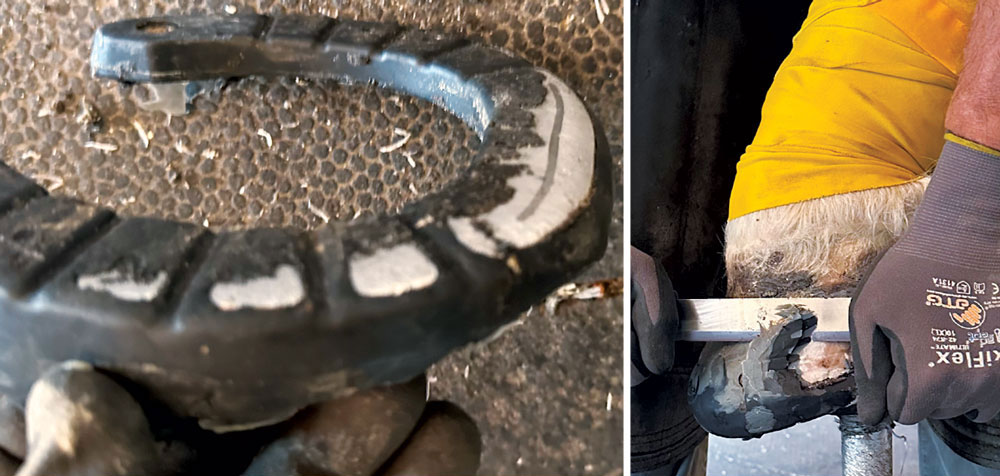
FIGURES 2a & 2b: The wear on Jackson’s Glushu after 5 weeks of application (Figure 2a). A special knife is used to remove the glue-on shoe (Figure 2b). Esco Buff
Ideally, I would have used Glushu’s frog inserts; however, the company does not manufacture them in the size required for this case. I also discussed fabricating a custom insert for Jackson out of aluminum, similar to a spider plate design (Figure 3). The owner and I decided to continue with the dual pour-in products as our first choice. The durability and wearability of the Glushu on a heavy draft mix proved both impressive and rewarding.
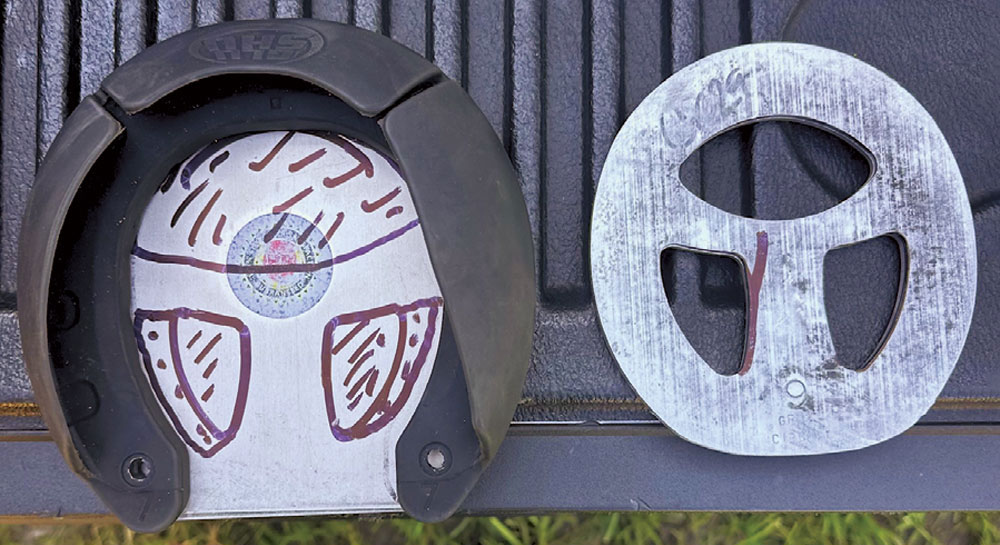
FIGURE 3: The owner and Esco Buff considered fabricating a custom insert made from aluminum — similar to a spider plate — for Jackson. However, it was decided to continue with the dual pour-in products. Esco Buff
During the following farrier appointment, however, a subsolar and heel bulb abscess was discovered on the right front foot (Figure 4). Although there was still no increased pulse, Jackson was slightly positive to thumb testing in the heel bulbs and to hoof testing in the lateral toe quarter of the sole. Upon paring out the affected areas, black exudate was released, confirming an infection.
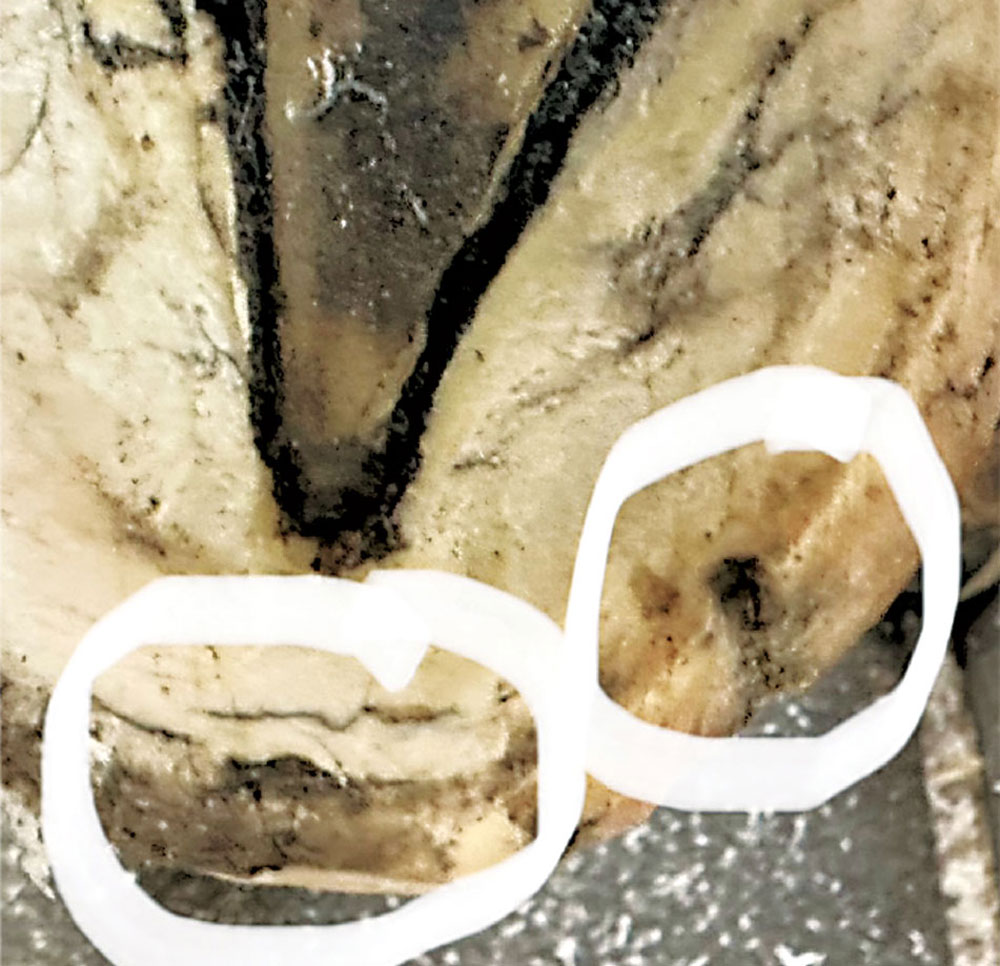
FIGURE 4: A subsolar abscess was discovered on Jackson’s right front foot. Esco Buff
After consulting with the attending team, we agreed to leave the glue-on shoes off for a full cycle — or at least 1-2 weeks — so the abscess could be properly treated and monitored. This allowed the area to remain open for drainage while the owner continued daily Epsom Salt Gel applications and 1-hour Epsom Salt soaks in warm water to encourage draining and healing.
Leaving the shoes off (Figure 5) temporarily provided both diagnostic clarity and therapeutic benefit. It ensured the abscess could be fully resolved before resuming mechanical support, minimizing the risk of trapping infection or prolonging inflammation.
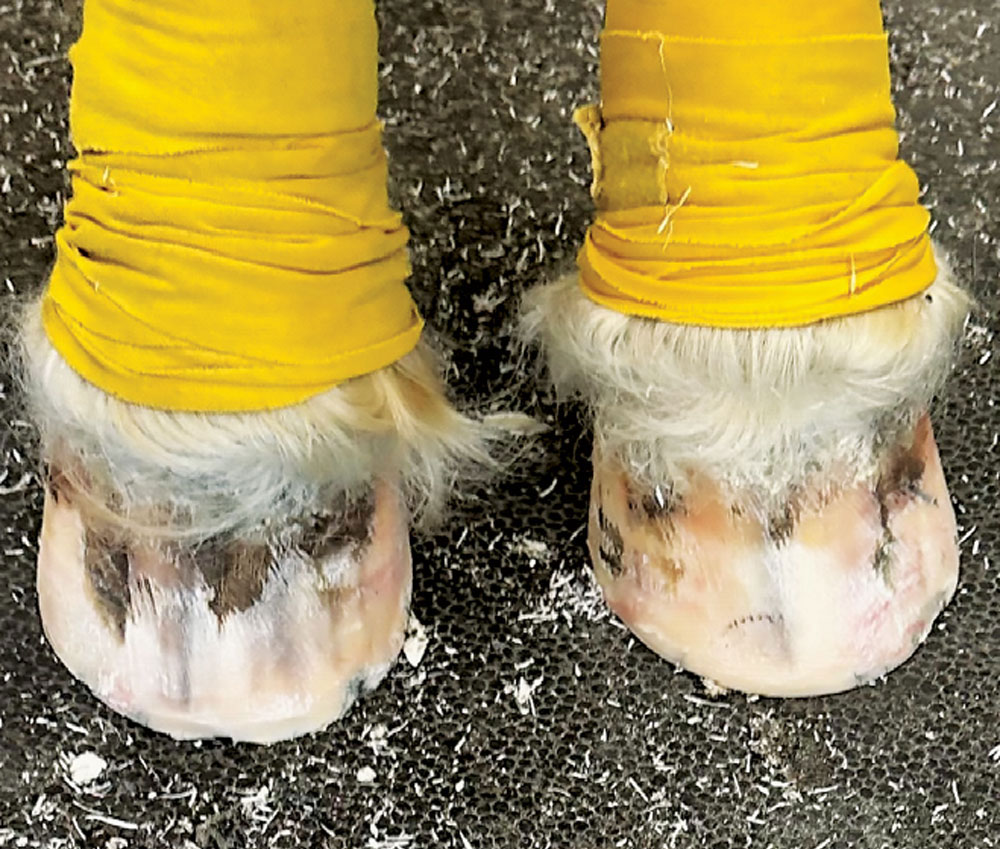
FIGURE 5: The glue-on shoes were removed for a full cycle, which is 1-2 weeks, so the abscess could be drained, treated and monitored. Esco Buff
Observations & Implications
This phase of Jackson’s care reinforced several key principles.
- Individual response matters. What works well for one horse — or even for the same horse at another time — might not always provide optimal comfort under changing conditions.
- Frog engagement is fundamental. For horses with caudal hoof sensitivity, firm frog support can stabilize loading and reduce strain.
- Material pairing is an art. Combining firm and flexible pour-in materials allowed Jackson to benefit from both support and cushioning without compromising circulation or movement.
- Feedback drives progress. The owner’s timely observations were crucial in detecting changes before they escalated.
- Stay vigilant for complications. The abscess served as a reminder that even under ideal mechanical balance, hoof health remains a dynamic process requiring continuous monitoring.
Looking Ahead
The next phase of Jackson’s chronicle will track:
- The progress of the abscess drainage and the hoof’s recovery before reapplying the glue-on shoes.
- How well the glue-on shoes continue to hold up, given his size and environment.
- Whether pastern arthritis and navicular changes progress or stabilize.
- Whether nutritional stability continues through late-summer grazing.
- Ongoing strategies to mitigate anhidrosis.
Gain more insight about 1 Year, 1 Farrier, 1 Horse by:
- Reading the first two installments of the series, “A Year in the Life of a Horse” and “Adjusting Jackson’s Hoof-Care Plan.”
- Watching the companion “1 Horse, 1 Farrier, 1 Year Podcast.”
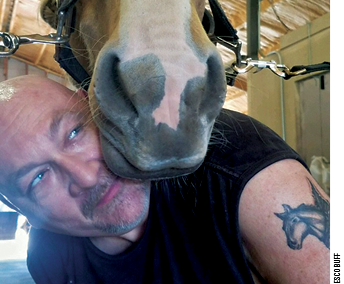
Over the course of a year, International Horseshoeing Hall of Fame member Esco Buff takes us on a hoof-care journey with Jackson, a 15-year-old Clydesdale cross gelding. The Clearwater, Fla., farrier documents each detail — the trim, shoeing, nutritional decisions, vet visits and his job — in this living case study.