
Takeaways
- Osphos was administered to help further alleviate Jackson’s discomfort.
- Jackson’s stance and comfort improved in the days after the injection.
- At the next farrier visit, Jackson’s team will reevaluate his hoof care.
Following the hoof-care appointment detailed in the previous article, a post-visit discussion was held with Jackson’s owner regarding the next steps should his comfort plateau or fail to improve further.
Given the radiographic evidence of progressive distal limb arthritis and the recognition that his discomfort was increasingly articular rather than podiatric in origin, the possibility of medical intervention was discussed.
Specifically, a Dechra Osphos (clodronate) injection was discussed if mechanical simplification and the addition of HEIRO proved insufficient. Osphos is indicated for the control of clinical signs associated with podotrochlosis, navicular syndrome and related pain, modulating bone resorption and reducing pain associated with bone remodeling.
The owner recalled Jackson previously received Osphos for an unrelated issue and responded favorably. While Jackson had improved, his comfort was not optimal, so the owner elected to proceed with the injection.
Jackson’s Response
The owner reported a marked improvement a few days after the injection. Jackson’s stance became more consistent and balanced with a noticeable reduction in compensatory postures. Most notably, the subtle, intermittent lameness that had persisted despite mechanical adjustments was no longer observable. Jackson appeared more comfortable at rest and in motion, standing squarely and with less need to shift weight off the front limbs.
This response supports the conclusions drawn from the radiographs. While mechanical restraint reduced aggravation, the dominant driver of discomfort was articular and bony. When that was addressed pharmacologically, Jackson benefited from the simplified mechanical platform, which was fully in place.
Implications for Ongoing Mechanical Strategy
Jackson will be reevaluated at the next appointment. Radiographs will be obtained before any trimming or shoeing to reassess the distal limb structures and confirm the current mechanical strategy remains appropriate given his comfort level.
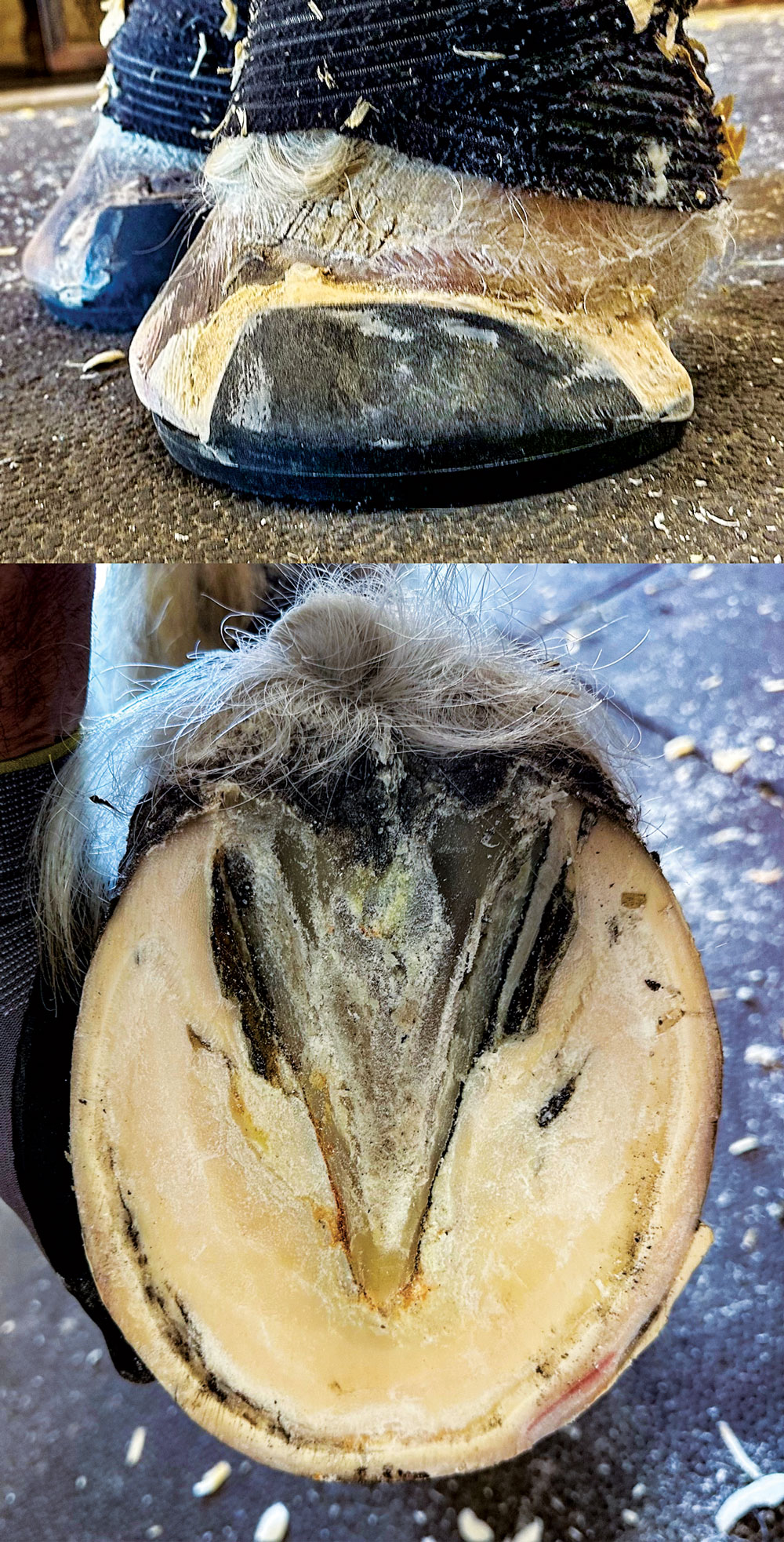
Jackson continues to be shod in Glushu horseshoes. However, his hoof-care team will reevaluate his needs and whether he should remain in the applications or transition to barefoot. Esco Buff
Based on those findings and Jackson’s clinical presentation, a decision will be made about his future hoof care. The options are continuing the simplified shoeing protocol or transitioning to barefoot if limb loading, posture and movement support it.
Any change will be approached conservatively and incrementally, with reversibility remaining a priority.
Clinical Perspective
This update highlights an important reality in chronic distal limb cases. There are limits to what well-executed mechanics can accomplish once joint pathology is the dominant pain generator. In Jackson’s case, simplifying mechanics reduced mechanical irritation, but resolution required targeted medical intervention.
Osphos complemented farriery rather than replaced it. The medication allowed mechanical strategies to function within a more tolerant physiological environment. This reinforces the value of collaborative care and of recognizing when a case has transitioned from mechanically influenced to medically moderated.
Looking Forward
Jackson’s case continues to evolve, and management remains flexible and responsive. Radiographic monitoring, owner feedback and careful observation guide decisions. Whether Jackson remains shod or transitions to barefoot, the guiding principle remains unchanged: accommodation over correction, comfort over complexity.
This phase serves as a reminder that successful chronic management often doesn’t depend on choosing mechanical or medical approaches but on knowing when and how to integrate them.
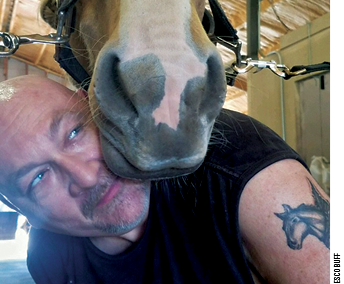
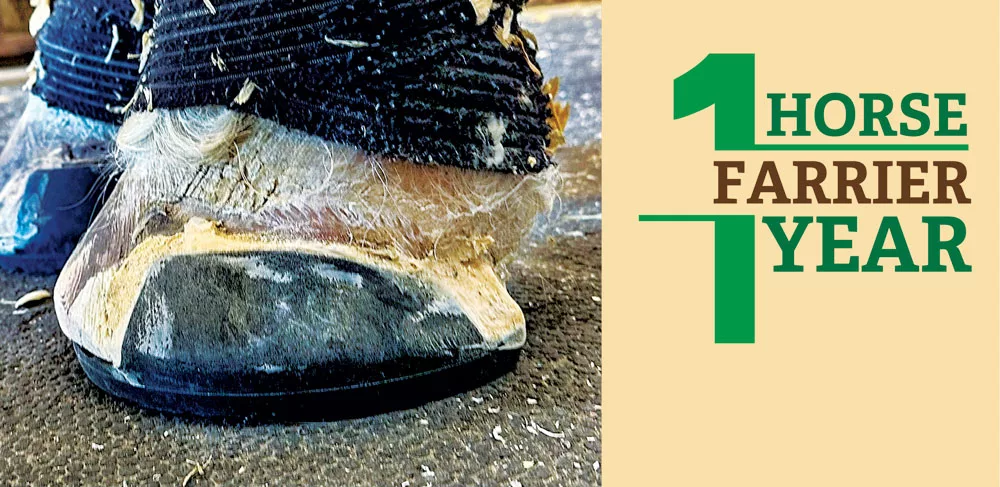
Over the course of a year, International Horseshoeing Hall of Fame member Esco Buff takes us on a hoof-care journey with Jackson, a 15-year-old Clydesdale cross gelding. The Clearwater, Fla., farrier documents each detail — the trim, shoeing, nutritional decisions, vet visits and his job — in this living case study.