
American Farriers Journal

View Archived Issues
July/August 2015
American Farriers Journal is the “hands-on” magazine for professional farriers, equine veterinarians and horse care product and service buyers.
-
Table Of Contents
Table Of Contents
 Shoeing for a Living
No-Frills Footcare In North Georgia
Commitment to getting feet to a “solid” state is the cornerstone of Doug Workman’s farrier practiceRead MoreHow to Convince Clients that their Rehab Role is Vital
Tips to get owners to stick to the plan while their horse is recovering from injuryRead MoreTaking a Crack at Hoof Wall Defects
How failures occur and the best techniques for farriers to help them healRead More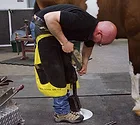
Thoughts on Managing Hoof Capsule Distortion
Bob Pethick provides usable insights on distortion and considerations when addressing these concerns as a farrierRead MoreConcussion and the Equine Foot
Examining the multitude of factors influencing the interaction of the hoof and the groundRead More
Infrared Thermography: Fun Toy or Practical Tool?
Two case studies show how smartphone infrared cameras could be used by farriersRead More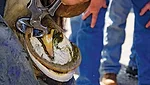
Buying, Using And Caring For Your Nippers
Reliable tips for selecting, using and maintaining one of your most important toolsRead More
Forging Tips from the Heartland
Gregory family celebrates the 20th anniversary of the school’s openingRead MoreExperiences Help Veterans Rise to the Top
Military attributes provide a framework for success in farrieryRead More
Supporting the Ledge
Thoughts on how the “ledge” provided by the solar perimeter is compromised, and suggestions on addressing thisRead MoreSpotlight on Hoof-Care: Education First: It’s Not Just About Winning
Interactive clinics and competition contribute to the Northern California Classic’s 30-year tradition of continuing educationRead More -
Featured Articles
Featured Articles
Taking a Crack at Hoof Wall Defects
How failures occur and the best techniques for farriers to help them healRead MoreShoeing for a LivingNo-Frills Footcare In North Georgia
Commitment to getting feet to a “solid” state is the cornerstone of Doug Workman’s farrier practiceRead More - Digital Edition
-
Online Extras
Online Extras

THIS MONTH'S DIGITAL SPONSORS:
Top Articles
Current Issue
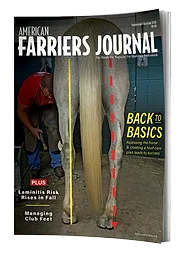
American Farriers Journal
American Farriers Journal is the “hands-on” magazine for professional farriers, equine veterinarians and horse care product and service buyers.
Thinking Beyond Breakover
Understanding Fall Equine Laminitis Risks
I Only Did What the Horse Owner Wanted: A Cautionary Tale
Current Issue

Special Report For Equine Veterinarians
American Farriers Journal is the “hands-on” magazine for professional farriers, equine veterinarians and horse care product and service buyers.
Must Read Free Eguides
Download these helpful knowledge building tools
- Spring Hoof Care
- Caring for Your Horse During a Pandemic
- CBD Products Have Promise for Farriers, but Buyer Beware
- Sharpening Knives with a Buffer
Videos

Organized & Efficient to Better Serve Farriers w/Oleo Acres: 2025 Supply Shop of the Year
Events
Foundations Clinic
Doc Foal's | The Black Pads

Sunrise Farrier Supply
We are here to support you.
We stock a wide range of high-quality products from trusted brands to ensure durability, performance, and reliability in every job you undertake. Our extensive inventory of horseshoe products and farrier tools means you can find everything you need in one place, saving you time and effort. Your satisfaction is our top priority. We are committed to providing excellent customer service, prompt shipping, and hassle-free returns.
