
American Farriers Journal

View Archived Issues
December 2017
American Farriers Journal is the “hands-on” magazine for professional farriers, equine veterinarians and horse care product and service buyers.
-
Table Of Contents
Table Of Contents
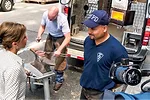

What's This? WWI Field Forge
Take a Journey Back in Time as We Explore a Shoeing Tool from the PastRead More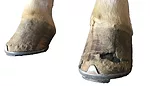
How The Hoof Reveals Stress
While horses’ hooves undergo a lot of stress, appropriate farriery and a return to the functional foot model can help deal with signs of stressRead More Shoeing for a Living
Keeping it Simple
North Carolina farrier Sean Gaul believes that a conservative approach that relies on the basics is the best way to help horsesRead More
How Radiographs And Joint Angles Can Guide Trimming And Shoeing
Approach avoids “dangerous” reliance on symmetry and sole landmarksRead More
Are You Punching Better Nail Holes?
Veteran farriers share techniques to avoid sheared nails and preserve toolsRead MoreBringing the Hoof to Scientific Research
AFA Research Committee offers tips to make literature easier to understandRead MoreConsiderations for Using Alternative Materials for Managing Leverage
The thought process for addressing leverage concerns with modern materials requires gathering information and not limiting imaginationRead More
What Causes Club Feet?
Hall Of Fame farrier Doug Butler examines why flexure limb deformities develop and how to prevent and manage themRead More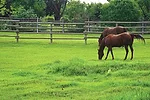
Dig Deeper When Tackling Inflammation
Examining the hoof, diet, gut health and stress can bring clarityRead More

Learn How to Forge a “Hall of Fame” Heel
California farrier John Williams offers tips and insights for creating the clean and versatile Bob Marshall-style heel checkRead More
Helping The Farrier Through Radiographs And MRI
Equine veterinarians survey how these advanced imaging methods can contribute to helping the farrier develop a footcare solutionRead More
Shoeing School Challenges Law Restricting Admissions
Pacific Coast Horseshoeing School alleges California law violates ConstitutionRead More
What It Takes To Reach 125
At the end of its 125th anniversary year, W.F. Young credits honoring tradition while remaining innovative as it looks toward the futureRead More
Enter The Summit Mail-In Forging Exercise
Build this shoe for a FREE T-shirt and your chance to win a belt buckleRead More
Research Journal: December 2017
The information, ideas and opinions expressed are those of the author and do not necessarily represent those of the United States Department of Agriculture.Read More
-
Featured Articles
Featured Articles
How The Hoof Reveals Stress
While horses’ hooves undergo a lot of stress, appropriate farriery and a return to the functional foot model can help deal with signs of stressRead MoreWhat Causes Club Feet?
Hall Of Fame farrier Doug Butler examines why flexure limb deformities develop and how to prevent and manage themRead MoreHelping The Farrier Through Radiographs And MRI
Equine veterinarians survey how these advanced imaging methods can contribute to helping the farrier develop a footcare solutionRead More - Digital Edition
-
Online Extras
Online Extras

THIS MONTH'S DIGITAL SPONSORS:
Top Articles
Current Issue
American Farriers Journal
American Farriers Journal is the “hands-on” magazine for professional farriers, equine veterinarians and horse care product and service buyers.
How Therapeutics & Equine Welfare Work Hand-in-Hand
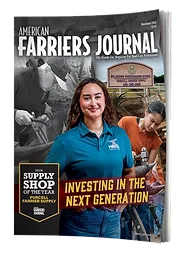
Purcell Farrier Supply Earns Third-Annual Supply Shop of the Year
Purcell Helps Drive the Industry Forward
Current Issue

Special Report For Equine Veterinarians
American Farriers Journal is the “hands-on” magazine for professional farriers, equine veterinarians and horse care product and service buyers.
Must Read Free Eguides
Download these helpful knowledge building tools
- Spring Hoof Care
- Caring for Your Horse During a Pandemic
- CBD Products Have Promise for Farriers, but Buyer Beware
- Sharpening Knives with a Buffer
Videos

Organized & Efficient to Better Serve Farriers w/Oleo Acres: 2025 Supply Shop of the Year
Events
Winter Laminitis
Doc Foal's | The Black Pads

Sunrise Farrier Supply
We are here to support you.
We stock a wide range of high-quality products from trusted brands to ensure durability, performance, and reliability in every job you undertake. Our extensive inventory of horseshoe products and farrier tools means you can find everything you need in one place, saving you time and effort. Your satisfaction is our top priority. We are committed to providing excellent customer service, prompt shipping, and hassle-free returns.
