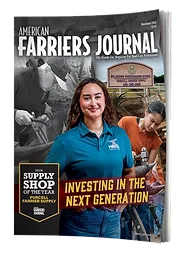
A farrier’s life is a journey. It’s filled with valleys, plateaus and glorious mountain tops. While it’s natural to dream about glory, you won’t find your way without investing time in the valleys and plateaus. The important lessons reside in those humbling climates.
Too often, we are taught to be ashamed of our failures. Yet, failure is where we learn to improve. The first shoe you forge is, to be kind, wonky. It likely has frog eyes, fish lips or other problems. As you recognize imperfections and learn how steel moves, the perimeter of the shoe smooths out and your heels become nicely rounded.
Learning to Swim
Many students are ready to take on the world after completing school. Keep in mind that a primary farrier education is no different than learning to become a welder or an electrician in a trade school. You’ve taken the first step, but you’re going to need some practice.
“After the end of the program, we take you to the edge of the cliff, and we push you into the little lake,” explains Bob Smith of Pacific Coast Horseshoeing School in Plymouth, Calif. “The only thing we’ve taught you to do is the doggy paddle. We’re trying to keep you from drowning. You learn how to go in different directions, change speeds, the breaststroke and the backstroke while continuing your education after you leave school.”
The most efficient way to learn is by finding a mentor.
“One of the awesome things about this career is you’re getting paid to learn,” says Beck Ratte Randall, the U.S. Eventing Team farrier (learn more here). “Know that not only is that mentor paying you to learn that job, they’re also paying for all the product you mess up. That all comes out of your mentor’s pocket.”
Here to Help
Randall is just one of the generous people in the industry who are willing to share their experiences with you. There’s no greater example than the knowledge and advice within the pages of the 17th edition of American Farriers Journal’s Getting Started in Hoof Care.
The valuable information you will read comes from knowledgeable hoof-care professionals who have invested their lives in this industry. They don’t sugarcoat the tasks ahead as you embark on your career.
You’ll find advice on the hurdles you’ll face, what to expect as your business matures and strategies for a profitable practice.
While you’re new to the industry, you have important responsibilities. You must continue learning, improving your skills and respect your trade. Reading this magazine is a good start, but there’s so much more available. Join a farrier organization, get to know others in the trade, attend clinics and conferences, compete in contests and, above all, ask questions.
Enjoy your journey.