Lamenesses

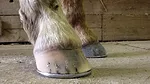
Sport-Horse_DSC_0255.jpg

Lameness in the Sport Horse

Connecticut vet reviews the more common issues you’re likely to see when providing hoof care for the “English” disciplines
Trimming protocols and choice of shoes vary for various riding disciplines. You don’t typically need reining plates, for instance, if you’re shoeing polo ponies. In similar fashion, certain lamenesses are more likely to be seen in horses used in one discipline than another.
Read More
Web-Exclusive Feature

Hoof Beats: Weights And Measures

While it is true that increased weight exaggerates motion, the cost of that added motion is fatigue. Fatigue is due to the increased energy required to put that weight into motion. Horses with heavier shoeing packages work harder than those shod light; it is as simple as that. There is no better support to this point than the fact that so many trainers elect to race barefooted in big races, especially in second-heat races. A few special horses gait better with added weight and overcome the fatigue factor to win. Donato Hanover was a great example of this.
Read More

What Are We Talking About? Farrier Explains Term Usage

I am Derrick Cooke, a Certified Journeyman Farrier with the American Farrier's Association. I have been shoeing horses more than 28 years and had the pleasure to help many with lameness issues improve quality of life and, in many cases, return to work and win championships. Many times, I hear people use the terms of the industry in context that are inconsistent with their needs. I am setting out to help clear up what we mean when we use the terms appropriately. The terms most confused are "Therapeutic Shoeing" and "Corrective Shoeing."
Read More

A Closer Look At Flexion Tests In Lameness Examinations

Lameness will likely be a problem for all horse owners at some point. It is a sign that a horse has an injury that causes pain when it moves or places weight on the affected leg. If the cause of lameness is apparent, you may be able to administer first aid. If not, confine the horse to prevent further damage to the leg and call the veterinarian if mild lameness persists. Horses with severe lameness need prompt veterinary attention, as they are usually experiencing significant pain.
Read More

Manipulating Foot Function

While the impact of shoeing on foot function is well documented, the biomechanics aren’t as easily understood
There’s been plenty of hoof research conducted on foot function over the years. And a general summary of existing research data conducted by Andy Parks indicates nailing on steel shoes limits the expansion of the foot and increases the magnitude and frequency of impact vibrations as the foot hits the ground.
Read More
Web-Exclusive Feature

Hoof Beats: A Bad Break

A broken P3 (the third phalanx, or coffin bone) can sideline a racehorse for several months. It can be career-ending or just a temporary setback depending on the position and severity of the break. Small fractures on the side of the bone are said to be wing fractures because they are located on the wings of the P3 bone. (picture1) They can actually separate the wing tip from the rest of the P3, or just compromise the structure with a hairline fracture in that area.
Read More

Top Articles

Current Issue

View More

Current Issue

View More

Must Read Free Eguides

Download these helpful knowledge building tools

View More
Top Directory Listings