Takeaways
- The first NWS screwworm outbreak occurred in south Texas near the Mexico border.
- For farriers working in areas where screwworms have arrived, this means taking sanitary precautions seriously.
- If screwworms move north, it could have a major impact on not only on farrier work, but the entire horse industry.
With New World screwworms (NWS) making their way from Mexico into the U.S. in early June, farriers need to be taking precautions when working with horses housed in a quarantined area.
For farriers working in areas where screwworms have arrived, this means taking sanitary precautions seriously such as disinfecting tools, washing your rig and making sure clients understand they can’t move animals out of a quarantined zone for any reason (trail ride, horse show, sale, etc.) without first undergoing USDA inspection.
Even with clients outside the quarantined areas, make sure they understand how to deal with situations if screwworms find their way into their area. If the NWS outbreak continues to move north, it could have a major impact on not only on farrier work, but the entire horse industry.
Likely Heading North
The first NWS screwworm outbreak in early June was reported in south Texas near the Mexico border. It has since spread to other areas and is likely to continue to find its way north.
The first diagnosed case occurred on a ranch near La Pryor, Texas, that had larvae burrowing into its umbilical area with a 3-week-old calf.
On June 3, USDA Secretary Brooke Rollins confirmed that the National Veterinary Services Laboratories in Ames, Iowa ,had found the NWS in Texas. A nearly 20-mile quarantine zone went up around Zavala County, and every warm-blooded animal inside the area — horses, cattle, even the family dog — now needs to be inspected before it can be moved.
Texas Animal Health guidelines begin with a 3-day stop-movement period to determine the extent of the infestation. Livestock in the area can be inspected, and those without signs of infection or open wounds may be treated with Dectomax or Exzolt and held for an additional 3 days. After that holding period, animals must be reinspected and cleared before being allowed to leave the quarantined area.
“For at least 18 months, we’ll be working with containment — not eradication…
While screwworm outbreaks are most likely to occur on cattle ranches, this this doesn’t mean outbreaks won’t occur in other animal species, including horses and pets. Many ranchers are already taking precaution s to stop the screwworm spread with increased visual monitoring, preventive medicating, increased fly control and limited handling.
Day-to-day activities such as castrating, dehorning, teat injuries, mastitis, and even ear tagging can provide an entry point for the fly. Newborn calves are susceptible since where the umbilical cord attaches is a primary spot for screwworm entry.
Animal health officials tell producers to watch all body openings — nose, ears, umbilicus, genitalia — for drainage or enlargement, and to report suspect cases even when they’re not sure. With a foul, rotting smell and an animal that’s isolating or off feed, ranchers are likely looking at something they can’t afford to shrug off.
Other Impacted Businesses
Another major concern is the wildlife and deer industry. As the hunting industry has grown in south Texas, some ranches have gone from producing cattle to strictly raising deer for hunting. And now that a dog in New Mexico has officially become infected with screwworms, this is likely to raise the alarm for people that weren't really involved or thinking about it.
Dairy operations are more exposed to immediate dollar losses than cow-calf operations who can hold beef cattle on pasture and wait out a quarantine. But with milking parlors running twice a day, it’s not possible to hold back milk.
If a dairyman has 200 cows producing 75 pounds of milk per day, that would be 293,000 pounds of dumped and unpaid-for milk over a required 20-day quarantine. Based on a $20.00 milk price per hundredweight, this represents an out-of-pocket loss of nearly $60,000 to this dairyman.
And with Texas being the nation’s third-largest milk state, this means a South Texas screwworm problem won’t likely stay along the state’s Southern border.
This NSW outbreak is very serious and farriers need to do their to keep it from spreading to new areas. If this occurs, it could be a major problem for the horse industry.
How Screwworms Burrow Into Animals
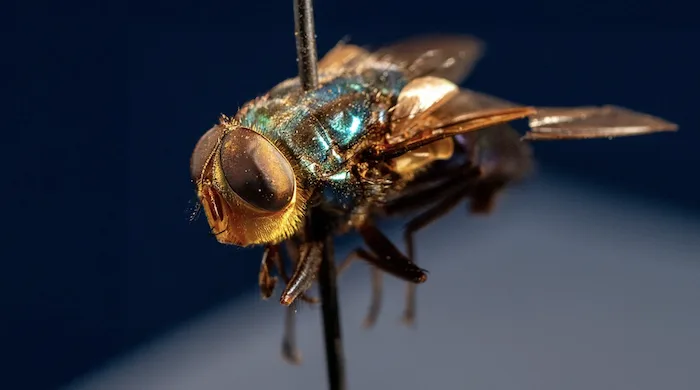
Screwworms don’t behave like the horn flies and stable flies that farriers battle all summer. The female lays her eggs at the edge of an open wound, and when they hatch, the larvae burrow into living tissue. Feeding and tearing as they go, it is not just the cleaning up dead flesh like with a common blowfly. One untreated wound can host thousands of larvae and turn septic very quickly.
Separating screwworms from an ordinary fly strike is what veterinary diagnosticians describe as a “chain of abscesses.” These are clusters of lesions, often anywhere from blueberry-to-golf-ball-sized, rather than one clean wound.
Sterile Screwworms Needed for Eradication
The way to eradicate screwworm is to release millions of sterile flies that keep existing worms flying up from Mexico from breeding. This scientific concept has worked for many years.
Unfortunately, a new USDA facility being built to deal with screwworm outbreaks isn’t finished. USDA’s sterile-fly production facility at Moore Air Base in Edinburg, Texas — backed by roughly $750 million in federal funding — won’t produce its first sterile flies until late 2027.
So for roughly 18 months, farmers and ranchers will be working with a containment system — not an eradication one.