
Wounds, cracks, or openings in the hoof capsule or sole due to abscess, hoof failure or puncture can be difficult to manage in the horse’s normal living environment. The wound quickly can become contaminated with dirt and fecal matter that are laden with opportunistic microbes looking to infect the area. The diverse bacteria causing infection are all part of either the normal flora of the hoof, the gut, or the soil of the horse’s living environment.1
Numerous antibacterial products are available through veterinarian prescription or over the counter. However, many of the treatments available have not undergone more than limited scientific scrutiny. Determining the precise contents of many of these products can be difficult to figure out.2
Farrier Takeaways
- Sugar granules soak up moisture that allows bacteria to survive. Wounds heal quicker with the absence of bacteria.
- Low doses of sugar can create a perfect medium for bacteria to grow. Mixing it with a mild bacteria-killing solution of povidone-iodine can overcome this problem.
- Sugardine improves granulation, as well as suspension of drainage, promoting healing.
Topical treatments containing sugar have been used for wound care for centuries. Dr. Richard A. Knutson, a Greenville, Miss., orthopedic surgeon, reinvestigated wound management by mixing granulated sugar and povidone-iodine into a slurry treatment in the 1980s.3 The mix he created was not only non-toxic, but effective and simple to make. He called the poultice sugardyne — sugar for its most abundant component and dyne for power (as in dynamite, dynamo and dynamic). We now refer to the treatment as sugardine.
The late Hall of Fame farrier Burney Chapman mentions his first experience with sugardine was while working with a severe founder case with open hoof ulcers. The horse was owned and treated by a human medical doctor who suggested using the mixture.4
Chapman was so impressed that he went on to describe the successful use of sugardine to treat wounds of the hoof, canker, thrush and abscesses. In his experience, non-healing wounds of the foot treated with other topicals showed dramatically improved granulation, as well as suspension of drainage, with the use of sugardine. The use of sugar and povidone-iodine has been studied far more extensively for wound healing in human medicine than it has been studied in the veterinary field.5-7
Sweet Benefits
The explanation for why sugar works in healing is complex and difficult to narrow to a single mechanism. Bacteria need water for growth, like all forms of life.
Sucrose or table sugar is a good example of a polar compound that readily dissolves in water, forming an aqueous solution. When aqueous solutions in the environment of the microorganisms or bacteria are concentrated by the addition of a solute such as sugar, it creates a hypertonic solution through osmosis and growth of the microbes is limited.5-6 In simpler terms, the sugar granules soak up any moisture that allows the bacteria to thrive. Without bacteria, the wounds heal more quickly.
“Sugar soaks up moisture that allows bacteria to thrive…”
Furthermore, sugar provides a local source of energy for cells, creates a protective layer over the opening and helps the granulation process necessary for wound healing.7-8 Low doses of sugar alone can create a perfect medium for bacterial growth.6 To overcome this problem, sugar is mixed with a mild bacteria-killing iodine solution.
Povidone-Iodine
The antiseptic action of iodine was discovered in 1811 and its bactericidal properties were first described in the 1870s by Casimir-Joseph Davaine, a French medical doctor. Iodine tincture was widely used for the prevention of infection and treatment of wounds despite the tincture’s lack of stability, toxicity and side effects, such as blistering and skin burns.
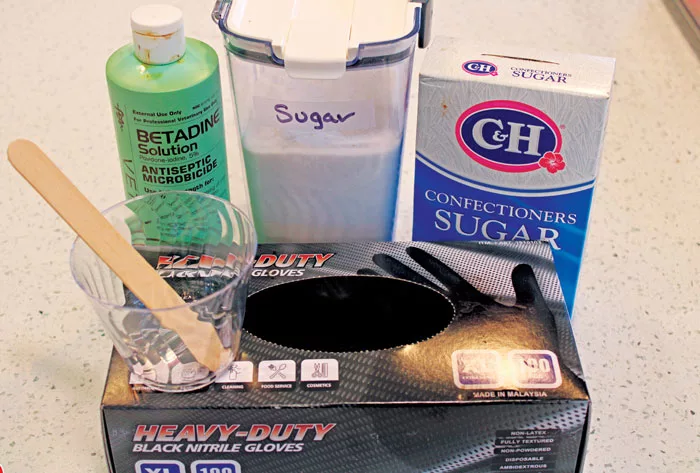
1. To make a smooth spreadable paste, you will need sugar, povidone-iodine, mixing utensils and gloves.

2. Add a few drops of iodine solution to 2 tablespoons of sugar and stir.
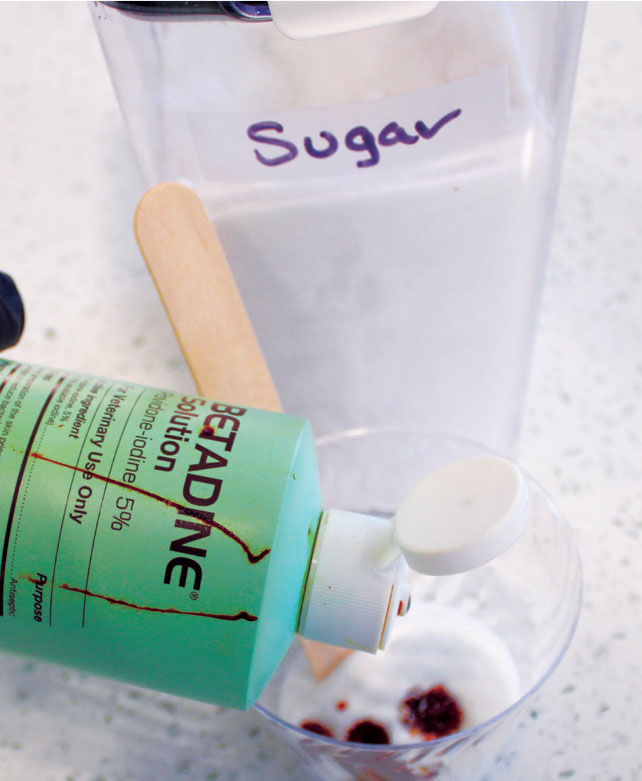
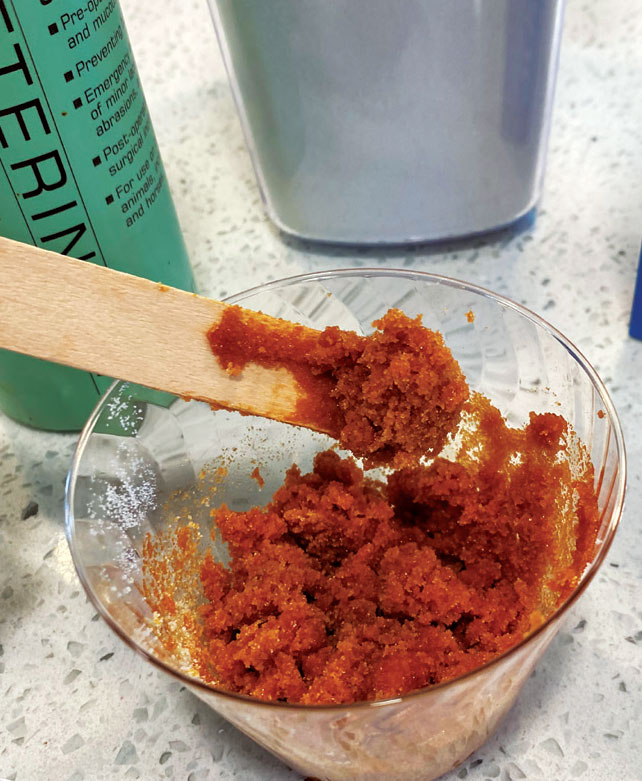
3. Too little liquid will create a mixture that’s too thick. It will be chunky and difficult to spread. Slowly add more povidone-iodine as needed.
4. Too much liquid will create a mixture that’s too runny and won’t stay in place.
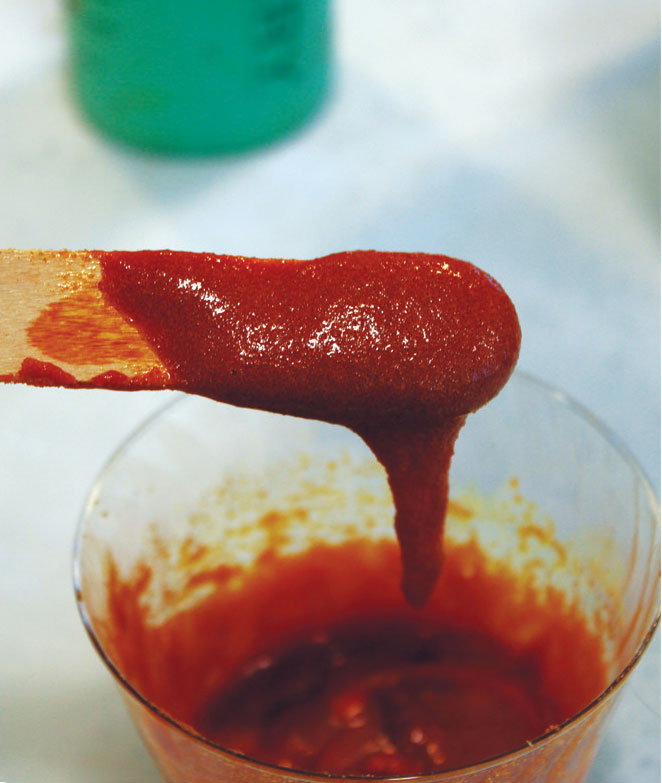
5. Your goal is to make a smooth and creamy paste that’s similar to easy-to-spread peanut butter.
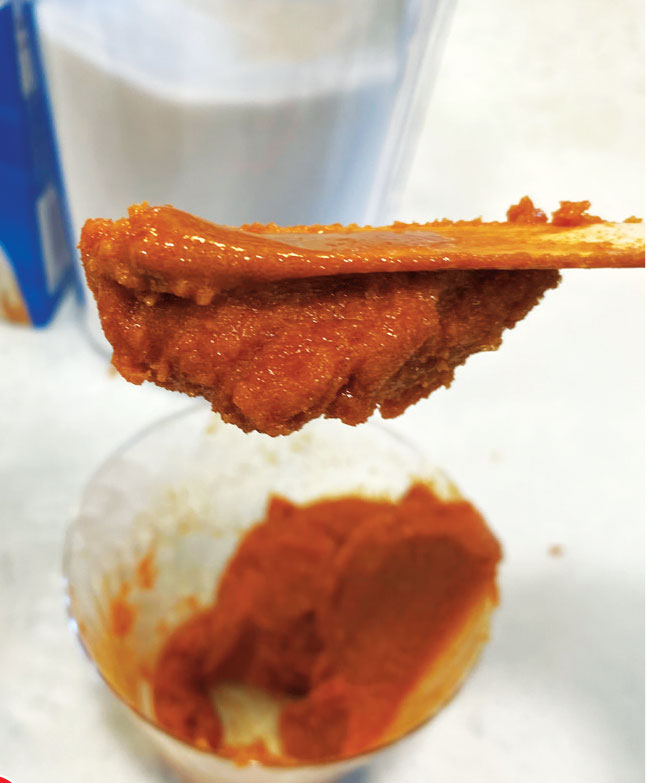
Povidone-iodine solution was created in the 1950s to overcome the side effects of the use of iodine tincture. Povidone-iodine is a chemical complex of povidone, hydrogen iodide and elemental iodine.9 The solution is primarily used for skin disinfection before and after medical procedures.
Povidone-iodine works by balancing and slowing the release of free iodine. It has antiseptic, disinfectant, antibacterial, antifungal, anti-protozoal and antiviral effects. It keeps high antiseptic properties of iodine, even in the presence of blood and plasma, does not cause the development of resistant forms of microorganisms, doesn’t have allergic effects, and is non-toxic to the body.2,10
Combining the Two
The antibacterial and tissue nourishing effects and osmotic properties of topical sugar treatments can be enhanced with the addition of an antibacterial/antifungal antiseptic, such as povidone-iodine to create a stable healing environment for wound management.2-4,6-7,11-13 These properties have been shown in human medicine to promote wound contraction, reduce bacterial infection rate significantly and shorten healing times to wound closure.7 Odor control or elimination can be another benefit of the compound’s use.
A study comparing commercial povidone-iodine and sugar ointments and hand-mixed solutions showed when stored at average room temperatures the antibacterial effectiveness remained up to 5 months.14
“Odor control or elimination can be another benefit…”
There are a couple of considerations when choosing sugardine treatment. The positive effects are short-lived. The osmotic effect of the hypertonic sugar draws exudate from the wound and moisture from the surrounding tissue, causing the solution to become dilute and weaken.13 Daily or twice daily reapplication of the treatment is necessary.
Iodine is inactivated by organic materials.1 The presence of contaminants such as manure or organic materials may affect the effectiveness of the sugardine compound. A clean area around the area to be treated should be carefully maintained before application.
Care should be taken when mixing as high concentrations of iodine can be cytotoxic or toxic to cells and can harm healthy cells. Scrub formulations of povidone-iodine (betadine scrub vs. betadine solution) must not be used to treat wounds because the detergent component has increased cytotoxic effects on exposed tissues.13
Sugardine is most used in the treatment of hoof abscesses and other wounds of the hoof. Sugardine is easily prepared using inexpensive materials commonly available in most areas of the industrialized world.
More on Sugardine
Gain more insight on equine wound care by reading these articles:
References:
- Packer M, 2015. Topical wound pro-ducts: purple, blue or silver spray-are they all the same?Equine Health, 2015(23), pp.22-27. doi.org/10.12968/eqhe.2015.23.22
- Jacobsen S, 2016. Topical Wound Treat-ments and Wound-Care Products. In: Equine Wound Management. [online] John Wiley & Sons, Ltd. pp.75–103. doi.org/10.1002/9781118999219.ch5.
- Knutson RA, Merbitz LA, Creekmore MA and Snipes HG, 1981. Use of sugar and povidone-iodine to enhance wound healing: five year’s experience. Southern medical journal, 74(11), pp.1329–1335. doi.org/10.1097/00007611-198111000-00010.
- Chapman B, 1989. Using Sugar To Treat Those Nasty Wounds. American Farriers Journal Special Management Report #1, pp.1-3.
- Chirife J, Herszage L, Joseph A and Kohn ES, 1983. In vitro study of bacterial growth inhibition in concentrated sugar solutions: microbiological basis for the use of sugar in treating infected wounds. Antimicrobial Agents and Chemotherapy, 23(5), pp.766–773.
- Taha N, Selim M and Moustafa A, 2015. Sugardine versus povidone–Iodine in Management of pressure ulcers. Journal of Nursing and Health Science, 4(4), pp.84-93.
- Di Stadio A, Gambacorta V, Cristi MC, Ralli M, Pindozzi S, Tassi L, Greco A, Lomurno G and Giampietro R, 2019. The use of povidone-iodine and sugar solution in surgical wound dehiscence in the head and neck following radio-chemotherapy. International Wound Journal, 16(4), pp.909–915. doi.org/10.1111/iwj.13118.
- Murandu MD, 2015. An investigation of granulated sugar dressing in the management of sloughy, necrotic and infected exuding wounds (Doctoral dissertation, University of Birmingham).
- Fleischer W and Reimer K, 1997. Povidone-Iodine in Antisepsis — State of the Art. Dermatology, 195(Suppl. 2), pp.3–9. doi.org/10.1159/000246022.
- Gupta Jr S, Shinde S and Shinde RK, 2022. Topical Management of Wound: A Narrative Review of Cadexomer Iodine Ointment Versus Povidone Iodine Ointment. Cureus, 14(4).
- Honnas CM, 2010. Equine Foot Surgery: A Joint Venture With the Farrier. AAEP Proceedings, 56.
- Diehl C, 2014. Sugardine — A Stinky, Gooey Mess That Works When Treating Wound Injuries. [online] American Farrier’s Journal. Available at americanfarriers.com/articles/5090-sugardine---a-stinky-gooey-mess-that-works-when-treating-wound-injuries [Accessed 21 February 2023].
- Leise BS, 2018. Topical Wound Medications. Veterinary Clinics of North America: Equine Practice, 34(3), pp.485–498. doi.org/10.1016/j.cveq.2018.07.006.
- Shiraishi T, Oka R and Nakagawa Y, 1997. Pharmaceutical and Bacteriological Study on Povidone-Iodine Sugar Ointment. Dermatology, 195(2), pp.100–103.