Jimmy Petty had the reputation of being able to shoe any horse brought to him. He shod 7 days a week, for 12-14 hours a day and was proud of the status — until he got hurt. In 1997, a Quarter Horse mare flipped over on him, crushing his lower lumbar.
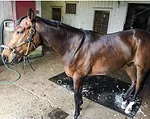
Horses that are nervous, lame or irritable aren’t the most pleasant to trim or shoe — and they can be downright dangerous. Sedation is commonly used in these types of horses so that a farrier and equine veterinarian can work safely. In fact, 90% of farriers say they shoe sedated horses, according to a recent American Farriers Journal poll.
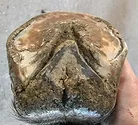
Thin-soled horses can be a challenge. Thin soles chronically plague some horses, likely an inherited trait, while others can experience an acute case as the result of the environment, a recent trimming or as a side effect of another foot pathology, such as laminitis.
Why should a farrier be concerned about a routine castration?
A post-operation complication from castration, or any other procedure, has the potential to trigger an inflammatory cascade.
Less than 2 decades ago, it was thought that all laminitis cases were the same regardless of the cause. Research since has proven that there are key differences in the mechanisms that lead to laminitis in different situations and that there are basically three major forms…
Looking for continuing education credits? The International Hoof-Care Summit in Cincinnati, Ohio, qualifies. Veterinarians, vet techs and farriers can learn the latest about the techniques, medications and research relating to hoof care while earning CE hours.
Laminitis likely can’t be cured by the time the intricate structures of the hoof degrade, it’s impossible to reverse the damage. That means that prevention, early detection and stopping progression of the disease are critical.
Barbaro was expected to break the Triple Crown drought in 2006 by becoming the first colt to claim the illustrious title in nearly 3 decades. He handily won the Kentucky Derby and was the favorite to win the Preakness Stakes.
Farriery is a centuries old profession that hasn’t changed much at its core. However, in this day and age, technology can help take your hoof-care business to the next level.
Technology is underutilized in farriery, though. While 67% of farriers carry a smartphone, only 51% use computers in their footcare business, according to the most recent American Farriers Journal Farrier Business Practices Survey.
Oleo Acres Farrier and Blacksmith Supply owner Rob Michel walks viewers through the Littleton, Colo., warehouse. Inventory is organized with the customer in mind. If the product is in stock and easy to find, farriers can spend more time under a horse, which Michel says is more money in your pocket.
At Doc Foal's, we manufacture The Black Pads and The Black Pads PLUS (featuring embedded magnets and copper). Our hybrid pads work seamlessly with your choice of conventional horseshoe, combining metal for structure with polyurethane for exceptional comfort and shock absorption.
Designed as a...
We stock a wide range of high-quality products from trusted brands to ensure durability, performance, and reliability in every job you undertake. Our extensive inventory of horseshoe products and farrier tools means you can find everything you need in one place, saving you time and effort. Your satisfaction is our top priority. We are committed to providing excellent customer service, prompt shipping, and hassle-free returns.
Equilox International Inc. specializes in equine horse hoof adhesives. Developed in 1988 after many trials and extensive research at leading universities and equine centers throughout the U.S., the Equilox Adhesive Hoof Repair System was originally used to treat competitive horses. Now, Equilox Adhesive is used by farriers, equine centers, and horse owners — as well as various zoo and wildlife centers — throughout the world.