Lamenesses

Successfully Working with Farriers Will Help the Horse

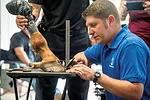
“Neither of us can be successful in helping the horse without the other.” This is a simple statement, but rang loudly when I interviewed farrier Bob Pethick for this report. The Hall of Fame farrier, who has nearly 50 years of experience, works with dozens of vets each year on lameness cases. He recognizes that farriers and veterinarians putting egos aside, providing mutual respect and working together helps deliver the best outcome for the horses in their care.
Read More
306_SFJ_Jennifer_Horn_JC_0719.jpg
Shoeing For A Living

Shoeing Mackinac Island’s Horses with Limited Resources

Michigan farrier Jennifer Horn applies sound principles to maintain driving and trail riding mounts
There are few places in the United States where a modern community has no use for motorized vehicles. One such place can be found on Mackinac Island, just south of Michigan’s Upper Peninsula in Lake Huron. The island, which is 3.8 square miles, outlawed horseless carriages in 1898, leaving three modes of transportation — walking, bicycling and horses.
Read More
Graceland_JC_0915_LP3_9851.jpg

Results from Our Equine Lameness Survey

The results from an exclusive American Farriers Journal on hoof-care and lameness show farriers’ experiences in encountering these cases
One of the major concerns every farrier deals with is how to help lame horses. This was evidenced by the responses from farriers participating in a recent survey who indicated they routinely deal with a number of horses with lameness issues.
Read More

Research Journal: September/October 2019

The information, ideas and opinions expressed are those of the author and do not necessarily represent those of the United States Department of Agriculture.
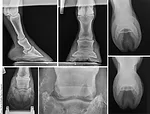
Examination of a series of lameness cases in Texas revealed insights into why owners of 200 cutting horses sought treatment at the Texas A&M Veterinary Teaching Hospital. Two hundred cutting horses were presented for evaluation with poor performance being the more common complaint (58%) compared with lameness (42%). All of the horses were lame in at least one limb and 81/200 were lame in multiple limbs.
Read More

Top Articles

Current Issue

View More

Current Issue

View More

Must Read Free Eguides

Download these helpful knowledge building tools

View More
Top Directory Listings