Therapeutic Shoeing

Stanley-Shoe.jpg

How to Convert a Router to a Pad Cutter

This step-by-step process shows h a woodworking router to trim pads.
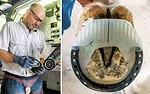
Ever since the flip flop made its way from Europe 30 years ago, Versailles, Ky., farrier Steve Stanley has found it to be useful for horses under the right circumstances. He commonly uses flip flops as temporary solutions when managing harness horses that suffer from joint and knee pain.
Read More
Open_SFL_Chapman.jpg
Shoeing For A Living

Training the Next Generation of West Texas Farriers

Blane Chapman and his brothers emphasize education and fundamentals in their hoof-care practices
When shoeing in Lubbock, Texas, there’s a good chance that the farrier is working on a Quarter Horse. It’s also a good bet that the farrier is either a Chapman or someone who has worked for a Chapman.
Read More
cover-for-ISBN.jpg
Book Review

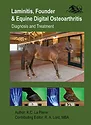
Laminitis, Founder & Equine Digital Osteoarthritis

By K.C. La Pierre
K.C. La Pierre is no stranger to controversy in the hoof-care industry. With his latest book “Laminitis, Founder & Equine Digital Osteoarthritis,” La Pierre maintains that the traditional research on laminitis and founder have produced few treatment protocols because the model used in this research states that the coffin bone is suspended in the hoof by the laminae.
Read More
Slide10.jpg

Trimming and Shoeing Strategies for High-Low Feet

Hall of Fame farrier details how he improves performance in horses with mismatched feet
The prevalence of asymmetrical, mismatched or high-low feet has changed dramatically over the past half-century. What once was rare is now an almost daily occurrence that farriers must maintain to keep horses performing as well as possible.
Read More
Farrier-QA-Open.png
Farrier Q&A

What horses do you typically provide hoof-care for and what percentage has high-low hooves? How do you manage high-low on these horses?

I provide hoof care to Thoroughbreds, hacks, show jumper, dressage and 3-day eventer horses. About 12% had high-low hooves — here in Australia we call it “grass hoof.” It’s caused by the horse continually only putting one foot forward to feed.
Read More

Top Articles

Current Issue

View More

Current Issue

View More

Must Read Free Eguides

Download these helpful knowledge building tools

View More
Top Directory Listings