
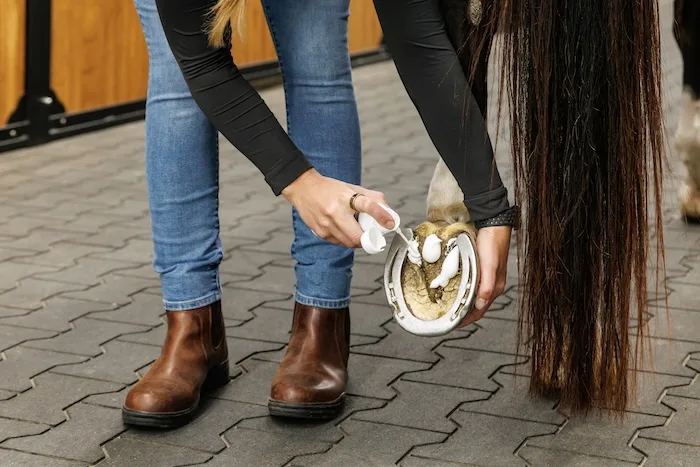
Few hoof conditions create as much frustration for farriers as chronic thrush. While the infection itself is often easy to identify, successful treatment can be much more challenging, particularly when the organisms are hiding in deep central sulci, collateral grooves, hoof wall separations or beneath pads.
Most farriers have encountered cases where an owner insists they have been treating a hoof for weeks, yet the foul odor and tissue deterioration remain. Often, the problem isn't a lack of treatment. The problem is getting the treatment to the infection site and keeping it there long enough to be effective.
Understanding Why Thrush Persists
Thrush thrives in exactly the places that are hardest to access. Deep central sulci, contracted heels, sheared heels, hoof cracks and the spaces beneath pads can all create environments where moisture, debris and infectious organisms accumulate.
Environmental conditions certainly play a role. Wet turnout areas, poorly drained paddocks, and prolonged exposure to mud can contribute to recurring infections. However, farriers know that conformational challenges often make certain horses more susceptible than others. Horses with deep sulci or narrow heel structures may be difficult to keep clean and dry, even under excellent management conditions.
For this reason, treatment success depends not only on antimicrobial activity but also on how effectively a product can access the areas where pathogens are established.
The Challenge of Product Application
Application remains one of the most challenging factors in thrush management.
Many traditional liquid products can run out of the hoof before adequate contact time is achieved. Other treatments may struggle to reach deep crevices or may be difficult for owners to apply consistently. Some formulations employ aggressive chemicals that can create discomfort or discourage routine use.
Farriers frequently find themselves balancing efficacy with practicality. A treatment recommendation may sound great in theory, but if the horse owner finds it messy, difficult to apply or unpleasant to use, compliance often suffers.
As a result, manufacturers have begun developing products that address both effectiveness and ease of use. The goal is not simply to kill bacteria and fungi but to improve consistency of application and overall treatment success.
New Technology Focuses on Delivery
One area receiving increased attention is expanding foam technology.
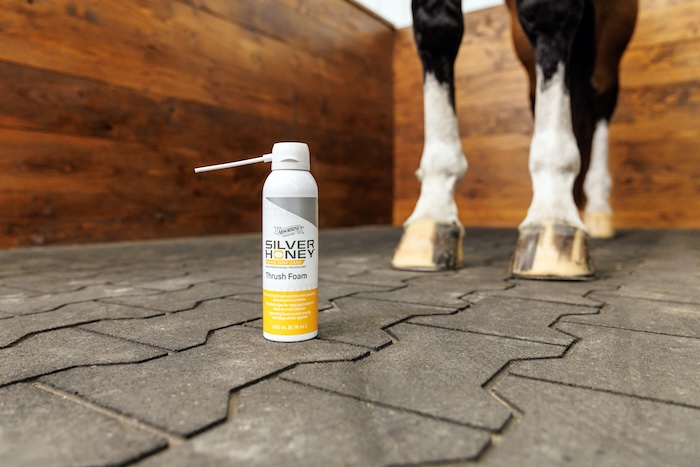
Unlike traditional liquids, expanding foam is designed to move into cracks, grooves and crevices while remaining in place after application. This allows the treatment to maintain contact with affected tissues without excessive runoff resulting in less product waist.
Silver Honey® Rapid Hoof Care Thrush Foam utilizes this approach through an expanding foam formula delivered with a precision straw applicator. According to product materials, the foam expands into hoof structures while the applicator allows targeted placement under pads, around shoes and within deep sulci. The product is formulated to stay where it is applied without runoff or staining.
A Shift Toward Gentler Antimicrobials
Another emerging trend in hoof care is the movement toward ingredients that provide antimicrobial activity without relying solely on harsh chemical agents or antibiotics.
Silver Honey Thrush Foam combines Manuka Honey and MicroSilver BG®, making it the first thrush treatment to utilize that specific combination. The ingredients provide broad-spectrum antimicrobial and antifungal activity while remaining gentle on hoof tissue.
For farriers, products that support healthy tissue while actively addressing infection may help improve long-term outcomes, especially in cases where hoof quality has already been compromised by chronic thrush.
Helping Owners Stay Consistent
Perhaps the greatest value of any thrush treatment lies in whether owners will actually use it as directed.
Farriers frequently serve as educators, helping clients understand that no topical product can overcome poor environmental management, inadequate hoof hygiene or irregular maintenance schedules. At the same time, treatment protocols that are simple and convenient are more likely to be followed consistently.
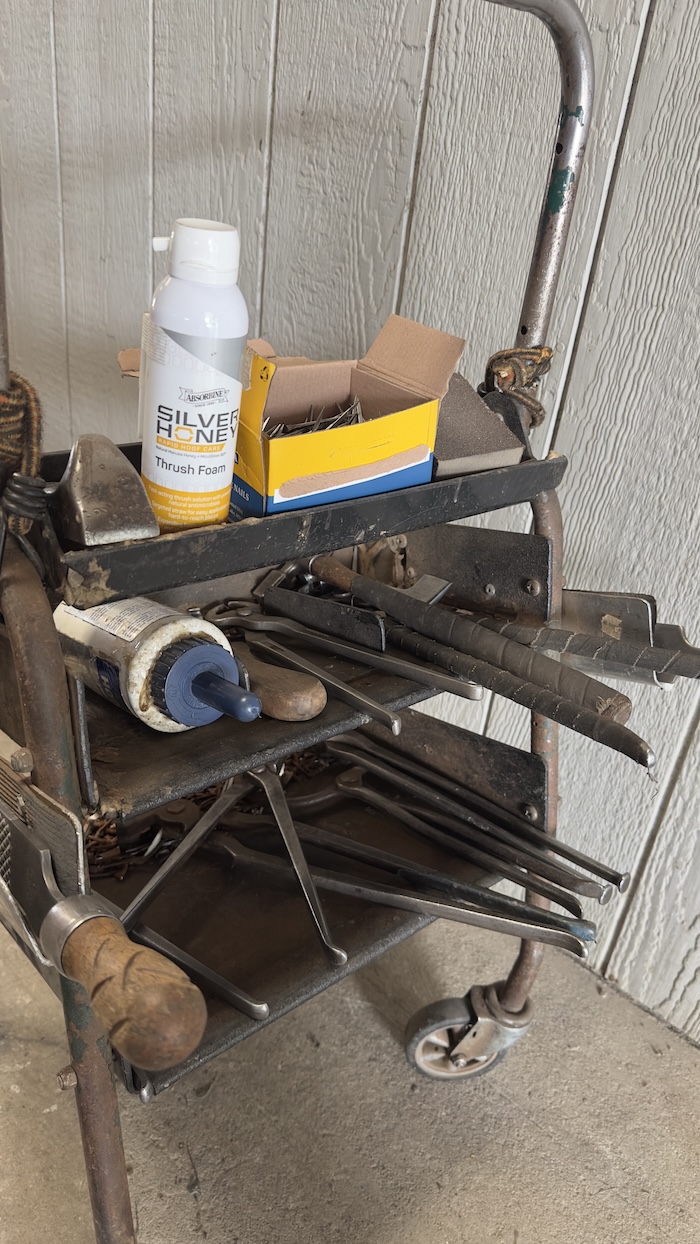
Silver Honey Thrush Foam can be used daily during active infections and as part of a maintenance routine after improvement has occurred. The precision applicator and non-staining formula are intended to make routine application easier for horse owners.
Anything that improves owner participation ultimately supports a farrier's efforts to maintain healthier feet between appointments.
Looking Beyond Treatment
Routine trimming, proper hoof balance, environmental management, adequate drainage and consistent cleaning practices remain the foundation of healthy feet. No topical treatment can replace these fundamentals.
However, advancements in delivery systems and ingredient technology are providing professionals with new tools to recommend when infections occur. Improvements in thrush care come not only from stronger antimicrobial ingredients, but from better ways to deliver those ingredients to the areas where they are needed most.
This article is brought to you by Absorbine.
Absorbine has proudly made only the highest-quality animal health care products for more than 132 years. The family-owned company is recognized as a worldwide leader in enhancing the health and wellness of animals through its innovative and specialized animal health care brands – including Absorbine Veterinary Liniment, UltraShield fly control products, ShowSheen grooming products, Hooflex hoof care products, and Silver Honey wound Care.