
Takeaways
- New York City passed "Romanch’s Law," signed by Mayor Zohran Mamdani, to phase out horse-drawn carriages by June 1, 2028.
- The Transport Workers Union filed a class-action lawsuit against the ban, arguing that the fatal accident prompting the law was caused by stray voltage on city infrastructure rather than animal mistreatment.
- Union leadership criticizes the legislation for stripping owners of costly medallions without guaranteed compensation and restricting their ability to sell horses to permitted operators elsewhere.
- Although the mayor proposed a compensation and support framework — including medallion buybacks, career counseling and training stipends — workers argue these safeguards should have been legally mandated within the bill itself.
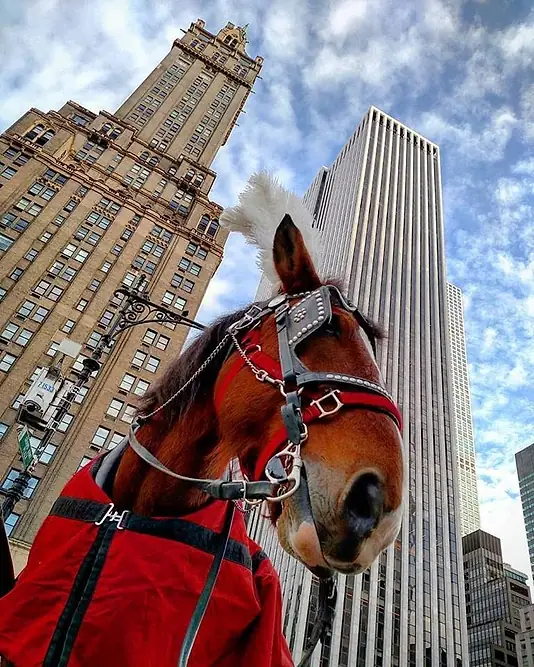
The Transport Workers Union filed a class-action lawsuit Thursday morning challenging New York City’s ban on horse-drawn carriages.
Mayor Zohran Mamdani signed the law, which outlaws the carriages in the city, just hours before the lawsuit was filed.
“Our city has changed and now it is time for our laws to change, too,” he said during the signing ceremony. “That is why today I am signing Romanch’s Law, legislation that will phase horse carriages out of New York City once and for all by June 1st, 2028.”
The bill was named to honor Romanch Mahajan, an 18-year-old tourist from India who died June 17, 2026, after jumping from a carriage drawn by a runaway horse. The union maintains the horse was spooked by stray voltage. Mahajan’s family is suing the city over the death.
“His death was a grievous loss, and nothing in this complaint minimizes it,” according to the lawsuit. “But his family, in notices of claim filed by its counsel, Ali Najmi, chair of the Mayor’s Advisory Committee on the Judiciary, attributes the bolting to stray voltage on city infrastructure — a hazard the local law does not touch.”
John Samuelsen, TWU International president, calls the law “an unconstitutional abomination.”
“It strips horse-carriage owners of the city-issued medallions that they purchased for hundreds of thousands of dollars — without mandating or guaranteeing compensation,” he says. “It prohibits carriage drivers from selling their horses to carriage-ride operators in another city or even another state where rides are permitted. And that’s just the tip of the iceberg.”
Mamdani developed a compensation framework for the drivers, but details aren’t immediately known.
“That plan will include medallion buybacks for owners, a stipend for drivers and stable hands to attend workforce training and career development classes, as well as career counseling and entrepreneurship support,” he says. “And as we hammer out the plan’s details, we will work directly with horse carriage workers to incorporate their feedback at every step of this process.”
It doesn’t go far enough for the drivers, since they aren't included in the law Mamdani signed.
“Despite the good intentions of the mayor,” Samuelsen says, “the protections he outlined recently should have been written into the legislation.”
The union cites case law that the city cannot ban the industry when it can enforce regulations against those who violate them.
Carriage horses within the city are protected by the most comprehensive set of laws of their kind in the country, according to the Horse and Carriage Association of New York. New York City Administrative Code Title 17, Chapter 3, Subchapter 3, mandates that horses are housed in stalls at least 60 square feet and allows them to turn around and lie down safely within the stall. To enforce this law, the stables are subject to inspection at any time by city officials, law enforcement, veterinarians and the American Society for the Prevention of Cruelty to Animals.
In addition, city law mandates 5 weeks of vacation at a stable that allows daily access to paddock or pasture turnout. The licensed carriage horses are sent to farms in Pennsylvania, New Jersey and upstate New York for a minimum of 5 weeks, according to the Horse and Carriage Association of New York. Records must be maintained to prove the vacation time was received.
Carriage horses are also examined by a veterinarian two to four times a year and must be appropriately trimmed and shod.
“The city has not only failed to show that regulation has failed, but agency leaders testifying before the City Council described a well-regulated industry that has been following the rules,” the union states. “A Department of Consumer and Worker Protection executive knew of no license being revoked or suspended ‘in recent years.’ The Department of Health witness testified that it directed carriage drivers to suspend operations because the weather was too hot or too cold 102 times over three years. ‘We have not issued violations for violating the suspension,’ the official testified.”
While the 16-year campaign to ban carriage horses has focused entirely on their welfare, Transport Workers Union International and its Local 100 carriage drivers say that changed June 17.
“The issue has long been a contentious one, but after the tragic death of 18-year-old tourist Ramanch Mahajan in June, the focus changed from the welfare of the animals — and mistreatment of the horses was never proven — to one centered around the public safety,” according to the Local 100. “It has been noted widely that Mahajan’s death, while untimely and heartbreaking, was the only fatality ever associated with the 168-year-old industry, while e-bike and scooter crashes regularly kill riders and pedestrians.”
By comparison, in 2026, there were 28-bike fatalities and 738 injuries through late October, according to The New York Times. Since 2019, 113 e-bike riders and pedestrians have died, while another 17,434 have been injured, according to AAE Law.
In addition, the city and Central Park Conservancy have not acted on union and driver requests to install hitching posts, “which could have prevented the Romanch tragedy,” according to the lawsuit.
Frequently Asked Questions
Q: What is Ramanch’s Law?
A: It is legislation signed by Mayor Zohran Mamdani that phases out horse-drawn carriages in New York City by June 1, 2028.
Q: Why was the law enacted?
A: The bill was named in honor of Romanch Mahajan, an 18-year-old tourist who tragically died on June 17, 2026, after jumping from a carriage drawn by a runaway horse.
Q: How is the Transport Workers Union reacting to the ban?
A: The union filed a class-action lawsuit challenging the law, criticizing it as unconstitutional because it strips owners of expensive medallions without guaranteed compensation and restricts the relocation of horses.
Q: What support or compensation has been promised to workers?
A: Mamdani outlined a framework featuring medallion buybacks for owners, stipends for workforce training and career development classes, and career counseling, though union leaders argue these protections should have been written directly into the legislation.
Q: What existing standards govern carriage horses in New York City?
A: Carriage horses are regulated by strict welfare laws that mandate minimum stall sizes, routine veterinary examinations two to four times a year, and a mandatory 5-week annual vacation on farms in New York, New Jersey, or Pennsylvania.


