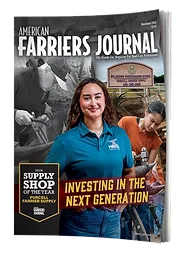
For more than two decades, the bright yellow “Briefings” page that regularly appeared in American Farriers Journal was among the publication’s most popular features. Now, we’re bringing back this valuable content that offers 4-5 quick-to-read items on the AFJ web site. “Hoof-Care Briefings” will be coming your way on the last Monday of each month, and highlight farrier tips, industry news, maybe a bit of shoeing history from time-to-time and insights of special interest to footcare professionals.
— Frank Lessiter, AFJ Editorial Director
Takeaways
- Costs of lifetime horse care are often three or even four times higher than owners expect.
- Farriers need to be realistic about what they can accomplish.
- You can’t medicate your way out of a horse that isn’t in proper condition or isn’t getting good nutrition and hoof care.
Horse Ownership Lifetime Costs Range From $300,000 to $924,000
Horse owners nationwide vastly underestimate the lifetime cost of caring for a horse, which ranges from nearly $300,000 to $924,000, according to a 2023 Equine Lifetime of Care report conducted by Synchrony, a premier consumer financial services company. While 83% of horse owners say they are prepared for expenses, actual costs may reach three or even four times higher than they expect.
According to this report, costs vary depending on the horses role:
- $575,000-$1,000,000 for competitive horses
- $295,000-$400,000 for recreational horses
- $215,000-$290,000 for backyard horses
On an annual basis, the all-in costs for owning a horse range from around $8,600 to $26,000 per year, not including events or operating expenses.
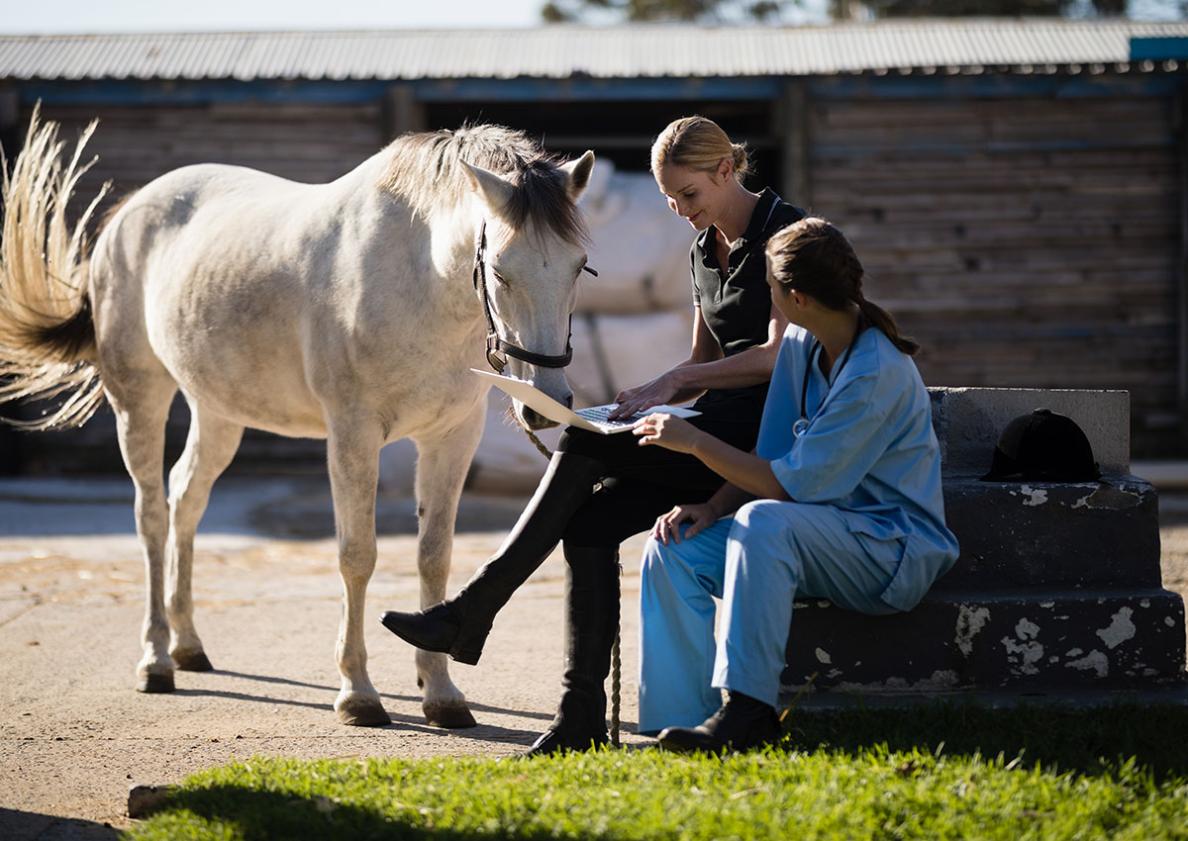
Even for backyard horses, lifetime horse ownership costs can reach $290,000.
The study, conducted on behalf of CareCredit, a Synchrony financing solution for veterinary care, investigated an exhaustive list of horse expenditures, including food, nutrition, boarding, grooming, farrier services, tack, other gear, breeding, veterinary care, end of life care, and more, over a horse’s 25-year lifetime.
The findings from 1,231 U.S. horse owners and nearly 30 equine veterinarians found that while horse owners often financially prepare for food, boarding and gear. However, owners often overlook critical components of veterinary care, such as colic treatment, broken bones, and eye issues — which could cost as much as $10,000.
Horse owners typically start experiencing stress when an unexpected veterinary invoice reaches $1,500...
The report indicates that horse owners typically start experiencing stress when an unexpected invoice reaches $1,500. To that end, more than 80% of these surveyed horse owners surveyed would apply for a credit card that specifically helps finance veterinary care.
“Nearly all horse owners keep their horses for life – which can be as long as 25 years. Yet, the true cost of care is consistently underestimated, and many horse owners aren’t financially prepared for care-related expenses,” said Jonathan Wainberg, senior vice president and general manager of the pet division at Synchrony.
“Many might expect experienced horse owners to be the most financially prepared for the lifetime commitment of raising a horse – whether it’s a competitive, recreational, retired or backyard horse – but often that’s not the case,” said Mike Pownall, a Canadian equine veterinarian. “Helping horse owners clearly understand the full financial commitment and the financing options they can rely on from the very beginning can give them peace of mind that they are ready to manage the cost of the lifelong care their horse needs, easing the financial stress for both the veterinarian and the owner.”
8 Things I Learned from Burney Chapman
From an American Farriers Journal article written by Florida farrier Dave Farley
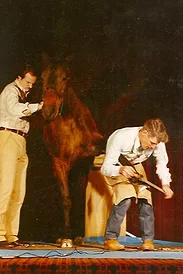
Burney Chapman working on a horse during an earlier American Farriers Association annual convention.
I got to know Burney Chapman because I was a horseshoer in need of help and Burney helped everybody. We weren’t in business together; I was just in the right place at the right time. He was larger than life and worked unbelievably hard — he was a titan.
Burney grew up on a ranch and he had to shoe his own horses. He started shoeing with one hammer — a claw hammer — and a handful of Capewell city nails. He worked on a dude ranch in college, where he offered to trim a few broodmares, that’s how he started shoeing professionally. But he was passionate about it. He was later inducted into the Brotherhood of Working Farriers and the American Farriers Journal International Horseshoeing Hall Of Fame.
At the 1983 American Farriers Association convention, Burney reported on a specific horse’s condition, completing a resection on stage and exemplifying amazing knowledge of anatomy, proving himself as an articulate teacher.
The 80s were the beginning of farriers speaking to larger audiences and he spoke to hundreds of farriers and veterinarians. That’s where I met him, in the hallway after his presentation. He was magnetic, so people surrounded him, and he took the time to help as many as he could.
Horse owners expect farriers to show up on time on the day agreed to...
He learned a lot over the course of his career and shared some of what he learned with me; he told stories and exemplified knowledge and professionalism. Here is what he shared.
1. Honesty Is Crucial
Burney told me one of the first things he learned was that horse owners just wanted a farrier to show up on time. Better yet, show up on the day they were supposed to. He thought this was a problem in west Texas, but soon learned it was a worldwide concern.
Not only do farriers need to show up when they say they will, he also said they need to be realistic about what they can do — owners need to know that you can’t assess the horse until you see it. And once you see it, acknowledge your role in the situation. You are one part of the team: the owner, the vet and the farrier. Everyone needs to communicate and know what exactly is going on in order to effectively care for that horse.
Burney didn’t want to work on a horse unless its regular farrier was there. He said, “I’m only going to be here a short time. That man is going to take care of that horse the rest of his life and I want to help him increase what little knowledge I have to teach him.”
2. Be Familiar with Anatomy & Stay Educated
Burney studied an anatomy book like a veterinary student. He was inspired by one of his professors at Texas Tech University, Dr. F.G. Harbaugh, who loved anatomy and used to draw the foot and its inner workings from every angle. Burney took up this practice. He said a shoer should touch a horse’s leg and be able to feel tendons they already know from reading a research paper.
He had his own early form of hoof mapping — though he would be impressed by how far it has come today. He tried to shape a mirror image of the coronary band on both lame and sound horses. Then, he could understand where everything should be underneath. He paid attention to equal distances and took pride in them.
3. See Inside the Hoof
Before Burney, we all felt like experts, balancing feet and fitting shoes to the perimeter to the best of our knowledge. He started out working on feet without completely understanding where it was. He championed the use of X-rays, which was not common at the time. Now, if you are not experienced with X-rays and radiographs, you are behind.
He emphasized the significance of sole depth and how the circumflex artery shuts down without enough sole. During that resection on stage, he looked at the damaged circumflex artery. An audience member asked what he was looking at, and Burney said, “I’m looking at what used to be the circumflex artery.” And most of us were missing it, looking over the top of the soul.
4. Equine Nutrition Is Essential
The 80s were also the beginning of equine nutrition becoming a serious concern, as farriers did not have much of an education with it at the time. Things have changed significantly since then. We know the key components to grow good hooves and hair, and that nutrition plays a key role in sole and hoof growth.
5. Farriers & Veterinarians Can Share Their Expertise
Burney had a close relationship with Dr. George Platt. They were the first poster-worthy vet and farrier team that I knew. On stages and at clinics they worked together as a team, sharing their expertise without crossing boundaries.
Burney never told George Platt how to treat a horse and George never told Burney how to shoe a horse — that was their agreement.
6. How to Be a Good Teacher
Burney said that to be a good teacher, there are four things you must do:
- Get the audience’s attention.
- Understand the horse’s foot.
- Learn as much as possible about how to teach and speak publicly.
- Above all, love what you do. Without that passion for what you are teaching, he said the other steps will not work.
People loved to be around his teaching because he had good ideas and he was always excited about them. He taught those around him to do what he did — but he did not, could not, teach them to think like he thought. For that reason, the heart-bar shoe failed for some people. He remained unique.
7. The Right Way to Travel
I was already traveling, and I was losing money. Burney told me to charge clients for travel expenses and travel time. He told me I was ignorant — which wasn’t a bad thing — and that I just didn’t know how to do it right yet. He gave me tips: that traveling is fun, you need to rest while you fly and getting the good rental car will pay for itself.
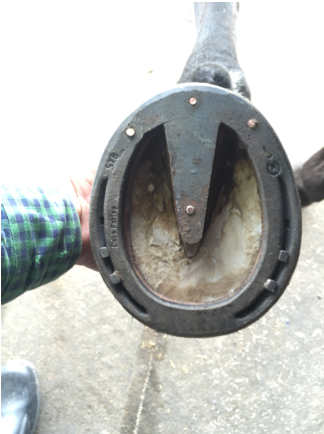
A heart-bar shoe.
8. The Heart-Bar Shoe
He gave us the heart bar shoe (reinvented it). It has many uses, including unloading the wall with frog support, floating or unloading an area of the hoof wall and addressing heel pain — including pain in the navicular bone or bursa. It can also provide limb support, if used as an egg bar heart bar.
Heart-bar shoes can be made with varying amounts of support to the frog. Some horses cannot take much positive pressure. But if the shoe is made and applied correctly, weight placed on the horses frog rather than hoof wall is comfortable.
Late-Breaking News & Views
Full-time farriers work with average of 301 horses per year, according to the 2025 American Farriers Journal’s Business Practices Survey … With President Trump slapping costly tariffs last year on products moving between the U.S. and Canada, Glencoe, Ontario, farrier Doug Clark lost a 50-head Thoroughbred barn account last spring due to the uncertainty of U.S. regulations ... Next year (January 26-29, 2027), the International Hoof-Care Summit is heading back to Covington, Ky., Kentucky, the site of the 23rd annual event … Full-time farriers charge $57.80 to trim 4 feet based on data from the 2025 American Farriers Journal’s Business Practices Study.
Proper Joint Care Can Do Wonders for Soundness
Multiple studies indicate joint injuries are prevalent not only among Standardbred racehorses, but also across the board with many equine disciplines. Veterinarian Jennifer Selvig the equine medical director at Cleary Lake Veterinary Hospital, in Prior Lake, Minn., provides an informed perspective into the care, prevention and treatment of equine joint injuries in an article in Hoof Beats magazine.
Prevention is Key
According to Selvig, ensuring that the horse is appropriately trained and conditioned for the task it will be asked to perform, managing any conformational or health challenges the horse may face and paying careful attention to the horses diet are all key preventative measures to ensure joint health.
“The musculoskeletal system in horses is very good at compensation,” Selvig says. “So, if you haven’t done the proper training for whatever discipline the horse is supposed to be doing, the muscles won’t be strong enough and the joints will be forced to take the brunt of the excess load.”
She explains that proper conditioning for the horses intended sport is the top factor in terms of joint care. However, many other things can be added to the horse owners or trainers preventative medicine toolkit.
“There are various supplements that have some good research behind them,” she says. “There are also drugs and other medical devices that can be helpful.”
She says Adequan, Legend, Pentosan and Polyglycan are examples of injections that can be administered to performance horses on a precautionary basis. While these injections are not considered cornerstones of equine joint care, they can be beneficial in key areas as conditioning and nutrition.
Proper conditioning is the top factor with joint care...
Each horse’s conformation also plays a role in preventative care. For instance if you have a horse that is very toed in, she says it is going to be more prone to developing osteoarthritis in the fetlock,.
Preventatively speaking, while you can’t change the direction that a leg is pointing, you can work with your veterinarian and farrier as a team to take and evaluate frequent X-rays. This can provide valuable insight about the balance of the hoof that isn’t always possible to see from the outside.
Good Hoof Care Is Essential
She adds that poor hoof balance, angles or quality are going to translate to more stress on other structures in the leg. In addition, chiropractic care and massage therapy can also play small yet helpful roles in preventative joint maintenance.
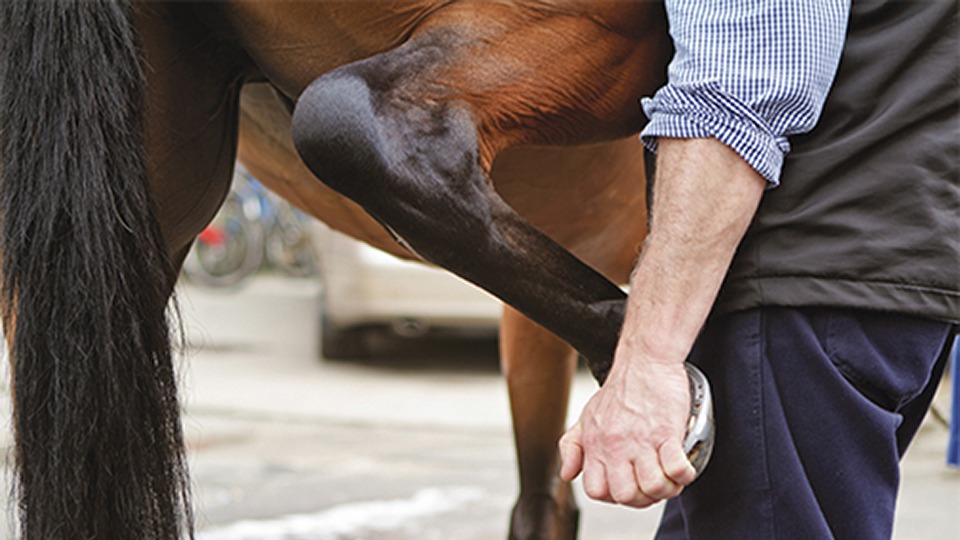
Flexion tests are part of a multi-layer approach to diagnosing a joint injury.
An Impactful Injury
She believes Joint injuries what people think of most with joint injuries and joint care is lameness. Since lame horses are unable to perform, lameness is often the primary reason for a veterinary referral. While there are other reasons outside of a joint injury that a horse may be lame, this symptom is usually the chief complaint.
When evaluating lameness, Selvig uses a modified version of the lameness scale developed by the American Association of Equine Practitioners (AAEP). She says any lameness greater than a Grade 1 will limit performance. I
A Prevalent Condition
Selvig advises clients that hard-working, athletic horses, especially those in the middle or late stages of their careers, are likely to need some type of joint help. As for those horses participating in disciplines where speed is a factor, she says knee and fetlock injuries are common.