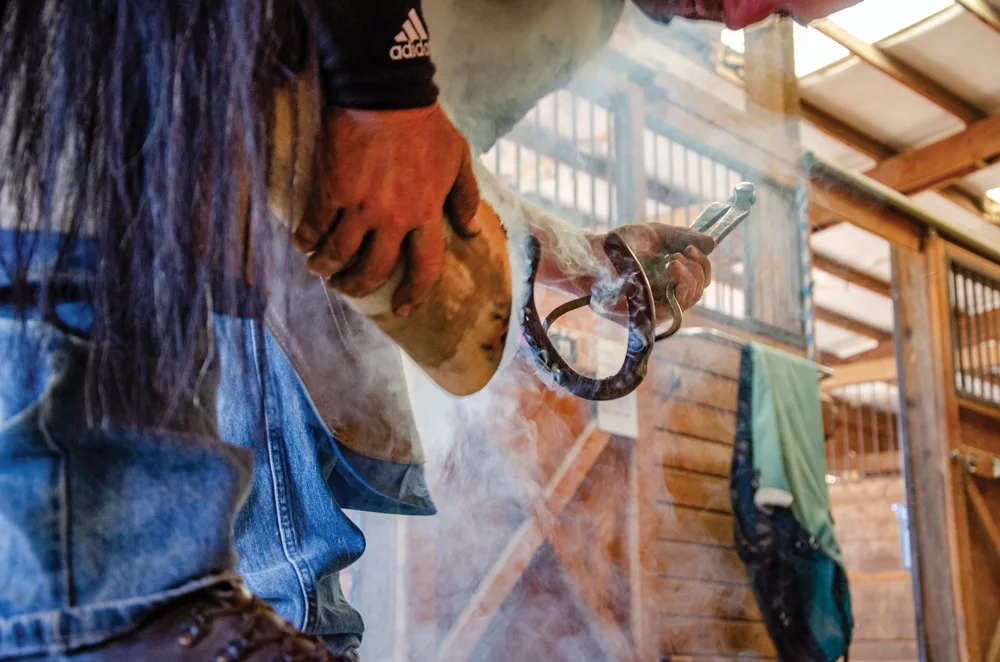
A farrier I’ve known for decades developed slowly escalating respiratory issues that led me to reflect on the fumes that farriers inhale when they hot-shoe horses.
I’m an orthopedic scrub nurse with more than 30 years of hospital theater experience. My degree in practice development introduced me to surgical smoke, the plume created when energy‑based instruments vaporize tissue. Although 95% of surgical smoke is water vapor, the remainder contains an array of hazardous compounds.
A 2020 blog from the U.S. National Institute for Occupational Safety and Health explains that surgical smoke often contains ultra‑fine particles and toxic compounds such as benzene, toluene and hydrogen cyanide. A 2018 study on surgical plume found that it can contain carcinogens like acrolein, benzene, carbon monoxide and formaldehyde.
Researchers who compared the mutagenic potency of surgical smoke with cigarette smoke concluded that pyrolyzing 1 g of tissue produced condensates “equivalent to smoking six unfiltered cigarettes.” The toxic effects include eye and airway irritation, headaches, dizziness and nausea. Chronic exposure can lead to asthma, bronchitis, chronic obstructive pulmonary disease (COPD), anemia and cardiovascular problems. The data made me wonder whether farriers might face similar hazards when inhaling the smoke produced while hot shoeing.
Hooves, horn, hair, nails and skin are made primarily of keratin, a fibrous structural protein rich in cysteine and stabilized by disulfide bonds. When keratin‑rich materials are burned or pyrolyzed, the protein decomposes and releases gases and particulates.
Studies examining incineration of feather waste — another keratinous material — report that burning releases ammonia, nitrous oxide, hydrogen sulfide, carbon dioxide and methane. These gases contribute to environmental pollution and irritate the respiratory tract. By analogy, the smoke produced when a hot shoe is pressed onto a hoof likely contains similar nitrogen‑ and sulfur‑containing gases along with particulates and volatile organic compounds.
In surgical settings, the 5% non‑water component of surgical smoke includes polycyclic aromatic hydrocarbons, formaldehyde, acetonitrile, furfural, carbon monoxide and dozens of other chemicals. Benzene and other carcinogens exceed occupational safety limits.
The dangers are not solely chemical. Infectious particles such as hepatitis B antigens and human papillomavirus DNA have been identified in surgical smoke. Because many of these compounds come from the pyrolysis of proteins and fats, similar toxins are expected when horn or hoof tissue is burned.
While studies on hot‑shoe smoke are scarce, farriers often report symptoms reminiscent of chronic smoke exposure, including persistent coughs, sinus irritation and breathlessness.
The absence of published data on hoof‑smoke composition forces a look toward surgical‑smoke research. Electrosurgical studies show that carbon monoxide binds to hemoglobin and reduces oxygen transport; hydrogen cyanide and toluene are neurotoxic and can cause headaches and dizziness; and mutagenic compounds such as benzene raise cancer risk. Additionally, ultrafine particulates in surgical smoke can lodge deep in the lungs and incite inflammation.
Hot‑shoe smoke likely contains a similar mix of compounds because hoof keratin is rich in sulfur and nitrogen, and its combustion can produce sulfide‑ and amine‑laden fumes. The difference is farriers work without smoke‑evacuation systems or high‑filtration masks. The only mitigation is usually an open forge door or working outdoors.
Recognizing and addressing these hazards is essential for safeguarding the health of farriers. Equismoke Awareness aims to fill the knowledge gap by disseminating research, advocating for new studies and encouraging farriers to adopt evidence‑based safety practices.
Some safety recommendations include wearing a high-filtration mask, getting regular health checks and using a smoke evacuation system, such as fans, ventilation or simply working outdoors.
Gain more insight about the risks of hot-shoe smoke by reading "Can Hot Shoeing Horses Harm Farriers?" by Lisa Nealen, founder of Equismoke Awareness, in the January/February issue of American Farriers Journal.