There has never been an appliance among farriers’ options that has been the answer for any single issue in every situation. Likewise, no two farriers’ approach to hoof care has been exactly the same. You will encounter farriers of differing levels of experiences, education, preferences for modalities, interests in disciplines or business practices.
Farrier Bob Pethick finds veterinarians can hurt a farrier’s reputation by using incorrect terminology in the absence of understanding with the client.
The health and well-being of the horse should be the ultimate goal for the veterinarian and farrier in lameness cases. According to New Jersey farrier Bob Pethick, that end demands the two parties work together to be successful, especially when helping performance horses stay in or return to the show ring.
There are a handful of farriers who have a unique perspective on the veterinarian-farrier relationship. Fewer than 10 of the veterinary colleges in the United States have full-time farriers. These professionals have regular workloads in the clinics, but also serve the veterinary schools in other capacities.
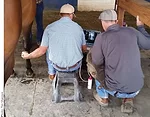
When farriers and veterinarians work together, great things can happen for the horse. This requires a balance of communication, mutual respect, confidence and several other traits. We asked equine veterinarian Bob Grisel and farrier Tim Shannon to share their advice for colleagues working with footcare counterparts, and also expectations for the other party.
“Neither of us can be successful in helping the horse without the other.” This is a simple statement, but rang loudly when I interviewed farrier Bob Pethick for this report. The Hall of Fame farrier, who has nearly 50 years of experience, works with dozens of vets each year on lameness cases. He recognizes that farriers and veterinarians putting egos aside, providing mutual respect and working together helps deliver the best outcome for the horses in their care.
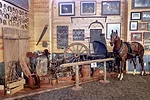
National Museum of Horseshoeing Opens in New Location
The National Museum of Horseshoeing Tools and Hall of Honor is now open in its new location in the Historic Stockyards City, 2200 SW 13th St. in Oklahoma City, Okla.
As this issue heads to the printer, we just finished our virtual conference, “Farrier Business Success Academy.” This free event gave attendees 3 days to watch eight sessions by farriers and equine industry professionals delivering advice that could immediately impact businesses.
The best place to start supporting your insulin resistant (IR) horse is by feeding a low sugar and starch diet along with a balanced intake of key minerals. Minerals have direct and indirect involvement in virtually every action in the body, and have important effects on IR and its consequences. Hoof Nutrition Intelligence is brought to you by Banixx.
While exercise can sometimes be difficult due to an extreme lack of fitness or laminitis, diet is more important and makes more of a difference. Hoof Nutrition Intelligence is brought to you by Banixx.
Nutrition and supplementation have an important role to play in the health of the equine hoof. Minerals such as zinc, copper and manganese are critical to skin and hoof integrity, says Dr. Dean Meyer, equine veterinarian.
Oleo Acres Farrier and Blacksmith Supply owner Rob Michel walks viewers through the Littleton, Colo., warehouse. Inventory is organized with the customer in mind. If the product is in stock and easy to find, farriers can spend more time under a horse, which Michel says is more money in your pocket.
Brier Equestrian & Wellness Centre presents Foundations Clinic on Friday, Oct. 23, 2026, in Fenwick, Nova Scotia. Hall of Fame farrier Ada Gates Patton is the clinician.
At Doc Foal's, we manufacture The Black Pads and The Black Pads PLUS (featuring embedded magnets and copper). Our hybrid pads work seamlessly with your choice of conventional horseshoe, combining metal for structure with polyurethane for exceptional comfort and shock absorption.
Designed as a...
We stock a wide range of high-quality products from trusted brands to ensure durability, performance, and reliability in every job you undertake. Our extensive inventory of horseshoe products and farrier tools means you can find everything you need in one place, saving you time and effort. Your satisfaction is our top priority. We are committed to providing excellent customer service, prompt shipping, and hassle-free returns.
Equilox International Inc. specializes in equine horse hoof adhesives. Developed in 1988 after many trials and extensive research at leading universities and equine centers throughout the U.S., the Equilox Adhesive Hoof Repair System was originally used to treat competitive horses. Now, Equilox Adhesive is used by farriers, equine centers, and horse owners — as well as various zoo and wildlife centers — throughout the world.