 Premium content is for our Digital-only and Premium subscribers. A Print-only subscription doesn't qualify. Please
American Farriers Journal
American Farriers Journal is the “hands-on” magazine for professional farriers, equine veterinarians and horse care product and service buyers.
The use of frog pads or frog plates as therapeutic devices has been successful for some foot pathologies. They can also be valuable in assisting the equine practitioner to diagnose subtle lameness in horses.
Before you can understand the effectiveness of pads and plates, you need to fully understand the function of the frog. How it functions within the horse’s hoof has been a matter of debate for years and is sure to continue as new horseshoers and researchers discuss the topic.
Some say the frog functions like a heart by pumping blood back up the horse’s leg in conjunction with the digital cushion.
This couldn’t be further from the truth, as the digital cushion is essentially devoid of blood and the frog functions without muscle and the necessary equipment to pump.
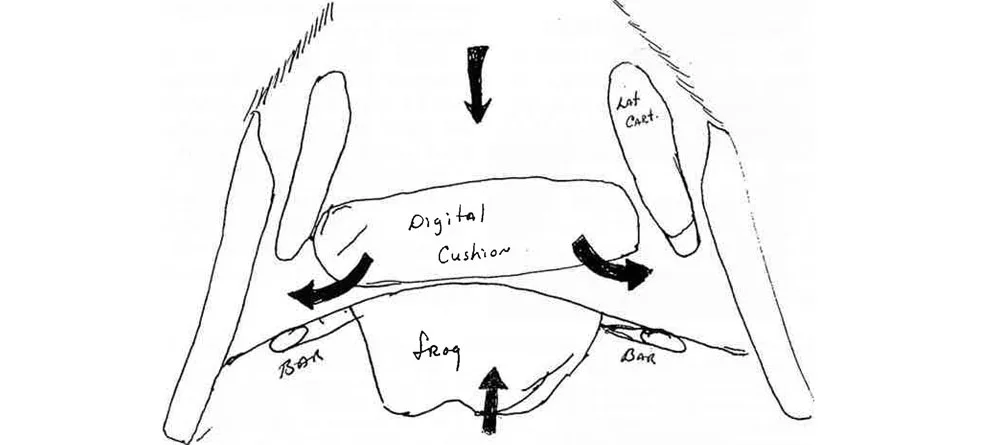
First, you must understand the shape of the frog within the heel of the foot. The frog’s widest and thickest portion is at the heel. It is wedge-shaped both in thickness and width and progresses cranially (Figure 1).
The frog is connected to the bulbs of the heel and coronary band and lies between the bars of the wall. It consists of a horny frog and sensitive frog.
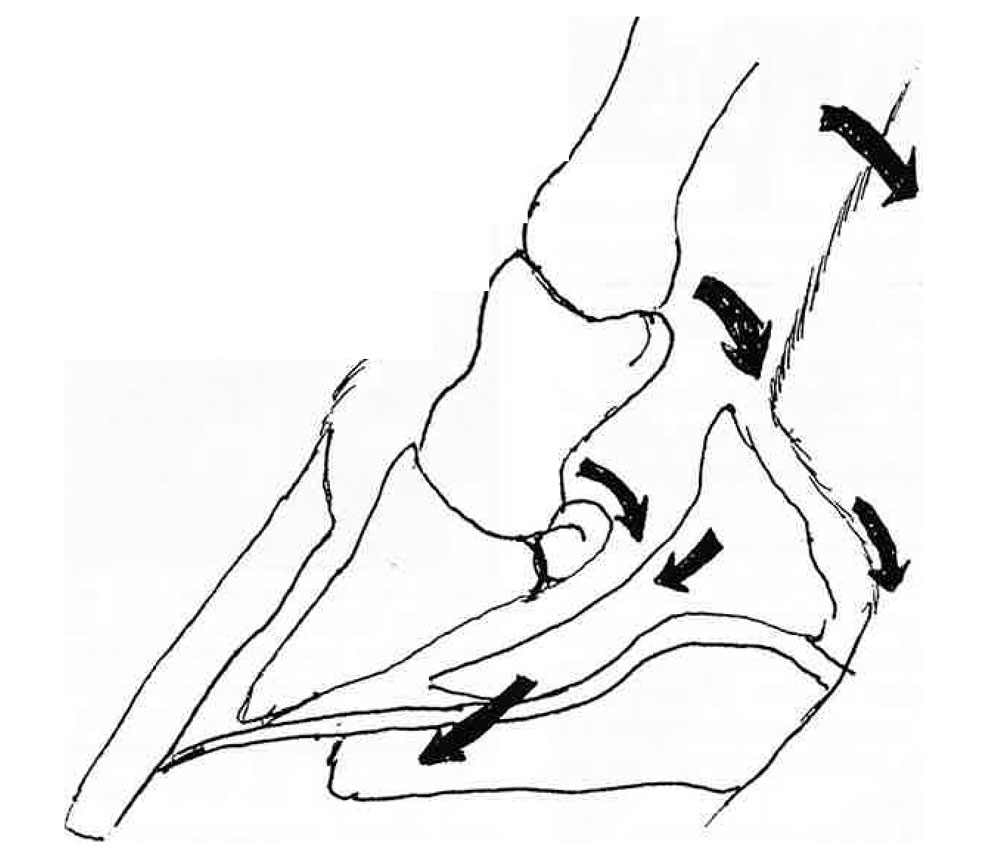
FIGURE 1: The frog functions mechanically by directing forces placed upon it from below and above, both laterally and forward. Pressure is primarily redirected toward the toe or forward when weight is placed on it from above.
On both sides of the frog between the…

American Farriers Journal is the “hands-on” magazine for professional farriers, equine veterinarians and horse care product and service buyers.

American Farriers Journal is the “hands-on” magazine for professional farriers, equine veterinarians and horse care product and service buyers.
Download these helpful knowledge building tools


We are here to support you.
We stock a wide range of high-quality products from trusted brands to ensure durability, performance, and reliability in every job you undertake. Our extensive inventory of horseshoe products and farrier tools means you can find everything you need in one place, saving you time and effort. Your satisfaction is our top priority. We are committed to providing excellent customer service, prompt shipping, and hassle-free returns.
