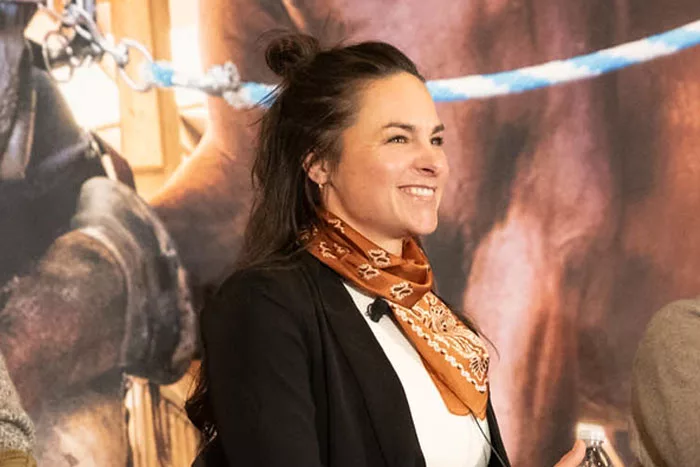
Becoming a successful farrier doesn’t happen overnight. It requires developing shoeing skills, confidence, business know-how, and strong relationships — often learned on the job with guidance from mentors and peers. Beck Ratte Randall, U.S. Eventing Team farrier, didn’t start until age 28, but life experience and mentorship from Hall of Famer Steve Teichman helped her build a successful career. By setting clear goals, staying open to opportunities, and learning from those around her, she has grown into a multi-state business with her own team. Her journey shows that finding the right mentor and being proactive about your growth can set any young farrier up for long-term success.
- Setting Clear Goals
For Ratte Randall, success means clear goals and a business designed to meet them — including keeping weekends free. She built client and peer relationships so others can cover small emergencies, allowing her time for vacations, hobbies, and passions like attending Aachen Horse Show.
Financial success isn’t just income; it’s using money for what brings joy, like raising colts and rescuing horses. “If I can bring home money so I can buy another colt or rescue another horse… I’m going to do it,” she says.
She keeps an open mind to opportunities, whether shadowing farriers, attending the International Hoof-Care Summit, or riding along on her days off. Meeting mentor Steve Teichman confirmed shoeing was her calling.
Randall regularly reassesses her goals — whether to show her own horses, join a team, or focus on a discipline. Her advice: keep defining what you want, and share it with your mentor so they can help you get there.
- Meet Expectations & Earn Trust
For Ratte Randall, apprenticeships work best when both sides know what’s expected. Mistakes are part of the job — from cutting pads wrong to overheating glue — and mentors often cover the cost and shield clients from errors. In return, apprentices must work hard, be proactive and build trust with clients, vets, and peers.
She advises asking questions, even if it’s uncomfortable, and clearly stating your goals so your mentor can help you achieve them. “Working relationships go two ways,” she says. With her own assistants, she expects constant productivity and open communication, especially since her 3-4 day workweek allows them to work for others. Clear expectations, she says, are the foundation of a successful farrier career.
- Stay Organized & Professional
Ratte Randall stresses the value of professionalism: clean, well-fitting clothes, neat hair, and punctuality. She uses branded gear for free advertising but says real credibility comes from reliability and organization. Her tools include whiteboards in every vehicle, Google Calendar for color-coded scheduling, and detailed notes on each horse. Being organized, on time, and well-presented shows clients and mentors you take the job seriously.
- Build Strong Relationships
A Successful career requires not only a clear vision, organized work, and defined goals, but also strong relationships with mentors, peers, and clients. Trust with peers is built through reliability, professionalism, and openness to feedback. Having colleagues who can step in when needed allows farriers to maintain quality work while taking time off and traveling.
With clients, handle differences gracefully and avoid criticizing previous farriers. Explain your approach clearly and professionally, remembering that everyone is learning at their own pace. These actions build long-term respect and trust. As farriers gain experience, knowledge, and relationships, they can gradually shape their business to fit their goals and lifestyle, making the career more rewarding over time.
Related Content:
"Set Yourself Up for Success as a Young Professional Farrier"