 Premium content is for our Digital-only and Premium subscribers. A Print-only subscription doesn't qualify. Please
American Farriers Journal
American Farriers Journal is the “hands-on” magazine for professional farriers, equine veterinarians and horse care product and service buyers.

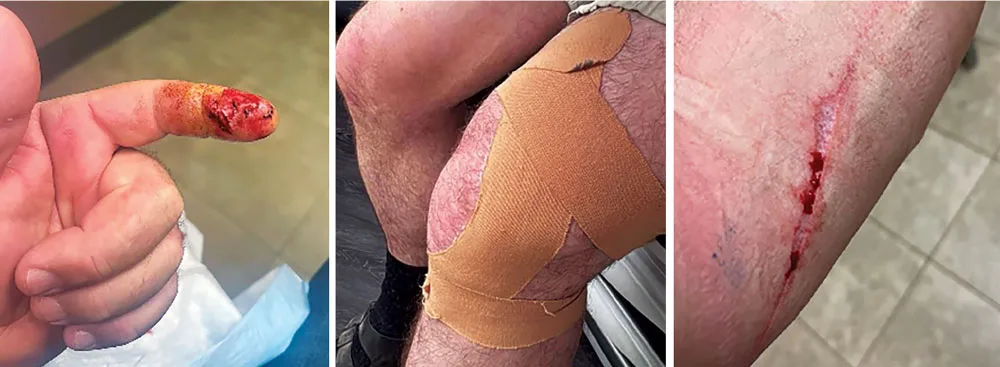
FIGURE 1a-c: Common farrier working positions are vulnerable to sudden limb movement and injury. Joshua Speer
When a 1,200-pound horse jerks a leg, strikes or rears during hoof care, the result is not merely inconvenient. For farriers working beneath a horse’s center of mass, often bent or kneeling and supporting weight asymmetrically, unsafe behavior is a serious occupational hazard with the potential for immediate and long-term injury to the farrier.
Despite this reality, dangerous behavior during farrier work is frequently minimized, excused as temperament or misdirected as a handling failure on the part of the farrier. In practice, most unsafe behavior observed during hoof care develops long before the farrier arrives and is commonly associated with inadequate preparation, unresolved discomfort or inconsistent expectations.
Farriery consistently ranks among the most hazardous animal-related professions. Occupational safety data and farrier association surveys document a high incidence of work-related injuries, including concussions, fractures, crush injuries and chronic musculoskeletal damage.
A survey conducted by the American Farrier’s Association reported that most farriers…
American Farriers Journal is the “hands-on” magazine for professional farriers, equine veterinarians and horse care product and service buyers.

American Farriers Journal is the “hands-on” magazine for professional farriers, equine veterinarians and horse care product and service buyers.
Download these helpful knowledge building tools


We are here to support you.
We stock a wide range of high-quality products from trusted brands to ensure durability, performance, and reliability in every job you undertake. Our extensive inventory of horseshoe products and farrier tools means you can find everything you need in one place, saving you time and effort. Your satisfaction is our top priority. We are committed to providing excellent customer service, prompt shipping, and hassle-free returns.
