 Premium content is for our Digital-only and Premium subscribers. A Print-only subscription doesn't qualify. Please
American Farriers Journal
American Farriers Journal is the “hands-on” magazine for professional farriers, equine veterinarians and horse care product and service buyers.
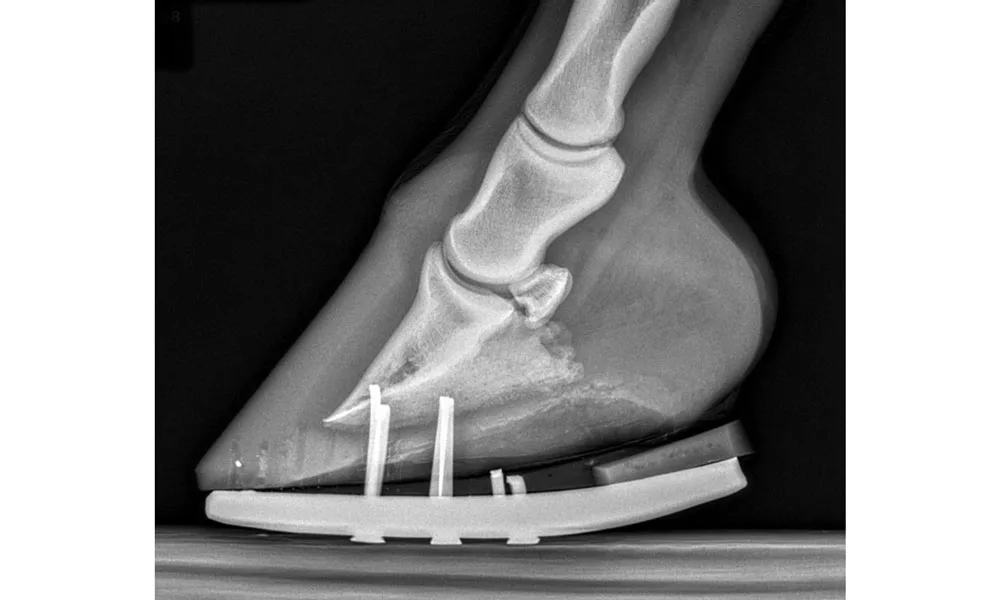
FIGURE 1: Higher flexor demand promotes stronger engagement of the flexor system, facilitating forward rotational movement through rocker shoe mechanics. Dr. Ramon Batalla
Flexor demand is a biomechanical concept describing the instantaneous or cumulative mechanical requirement imposed on the deep digital flexor apparatus to generate the internal flexion moments necessary to maintain equilibrium, control distal interphalangeal (DIP) joint mechanics and facilitate breakover while opposing externally generated extension moments during locomotion (Figure 1).
Throughout the stance phase, the ground reaction force acts on the hoof, creating external moments whose magnitude depends on the position of the center of pressure relative to the joints, hoof geometry, limb posture and the direction of loading. These external moments tend to extend the distal joints and must be balanced by internal flexion moments generated primarily through the deep digital flexor tendon (DDFT), together with contributions from its musculotendinous unit and associated passive structures. The greater the external moment, the greater the internal moment required to maintain mechanical equilibrium.1,2
Flexor demand is therefore not synonymous with DDFT force (Figure 2). Rather, it represents the overall mechanical demand placed on the flexor system, with tendon force being one expression of that…
American Farriers Journal is the “hands-on” magazine for professional farriers, equine veterinarians and horse care product and service buyers.

American Farriers Journal is the “hands-on” magazine for professional farriers, equine veterinarians and horse care product and service buyers.
Download these helpful knowledge building tools


We are here to support you.
We stock a wide range of high-quality products from trusted brands to ensure durability, performance, and reliability in every job you undertake. Our extensive inventory of horseshoe products and farrier tools means you can find everything you need in one place, saving you time and effort. Your satisfaction is our top priority. We are committed to providing excellent customer service, prompt shipping, and hassle-free returns.
