Takeaways
- In addition to Jackson’s trim, Esco Buff also tracks Jackson’s nutritional changes, environmental conditions and workload shifts.
- Subtle hoof clues such as slight flares, changes in chalkiness and shifting postures often precede bigger concerns. It’s important to recognize and act quickly.
- Jackson’s journey highlights how vital it is for farriers, vets and owners to collaborate in real time. No single perspective is enough.
What does it truly take to support the health, soundness and performance of a horse over a full year? What happens to a hoof — and the horse it supports — across the changing seasons? Behind every graceful stride and subtle moment of trust lies a complex web of daily decisions, expert care and thoughtful management.
Over the next 12 months, I will follow one horse — Jackson — through every hoof trim, feed adjustment, veterinary exam, workout and quiet stall moment.
This is more than a diary. It is a living case study that bridges horsemanship, veterinary science, nutrition and farriery. It offers an unfiltered look at the triumphs and setbacks, the rhythms of routine and the subtle signals that guide our decisions as professionals and caretakers.
As farriers, we often meet our patients in brief but crucial intervals, tasked with interpreting a horse’s condition through its feet, limbs and movement.
By documenting Jackson’s life — day by day — I aim to show not just what we do but why we do it. Through this lens, we gain a deeper understanding of the collaborative nature of equine care and the dedication it demands.
This is not just a case study — it’s a conversation. Between disciplines. Between horses and humans. And between what we see in a moment and what unfolds over time. My goal through this series is to offer a clearer picture of what we, as farriers, are really influencing — and what influences us in return.
The Horse: A Case Subject
The focus of this yearlong chronicle is Jackson, a 15-year-old Clydesdale cross gelding that is used primarily for trail and pleasure riding in the Southeast region of the U.S.
Jackson is barefoot and has a history of mild hoof asymmetry and seasonal sole sensitivity. He’s sound, stoic and well-mannered, but like many casually ridden horses, presents subtle challenges that test a farrier’s judgment over time.
His workload varies seasonally — more activity in spring, fall and winter; less in the summer heat. He’s managed by a conscientious owner with regular veterinary and farrier support and a steady training routine.
I chose Jackson precisely because he’s representative — not elite, not neglected, but typical. He’s not a showstopper but a working-class horse. And that makes him the kind of horse most of us see every day — and worth documenting in detail.
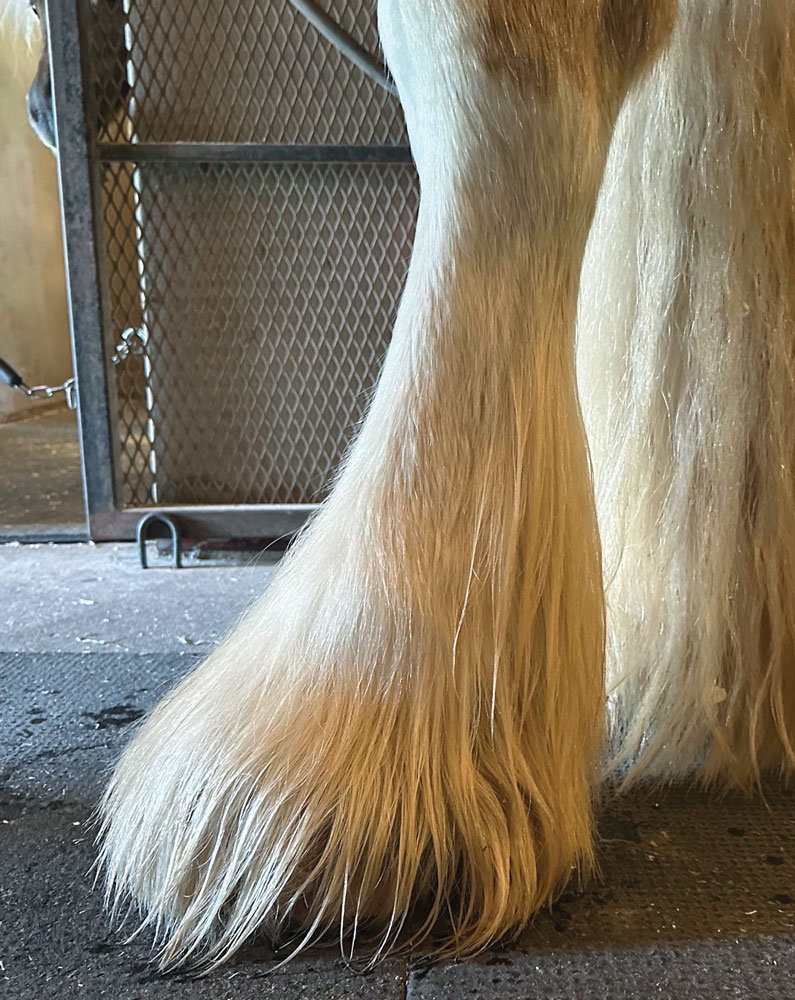
Jackson is a classic draft mix with feathers that must be dealt with by the farrier while performing hoof care. Esco Buff
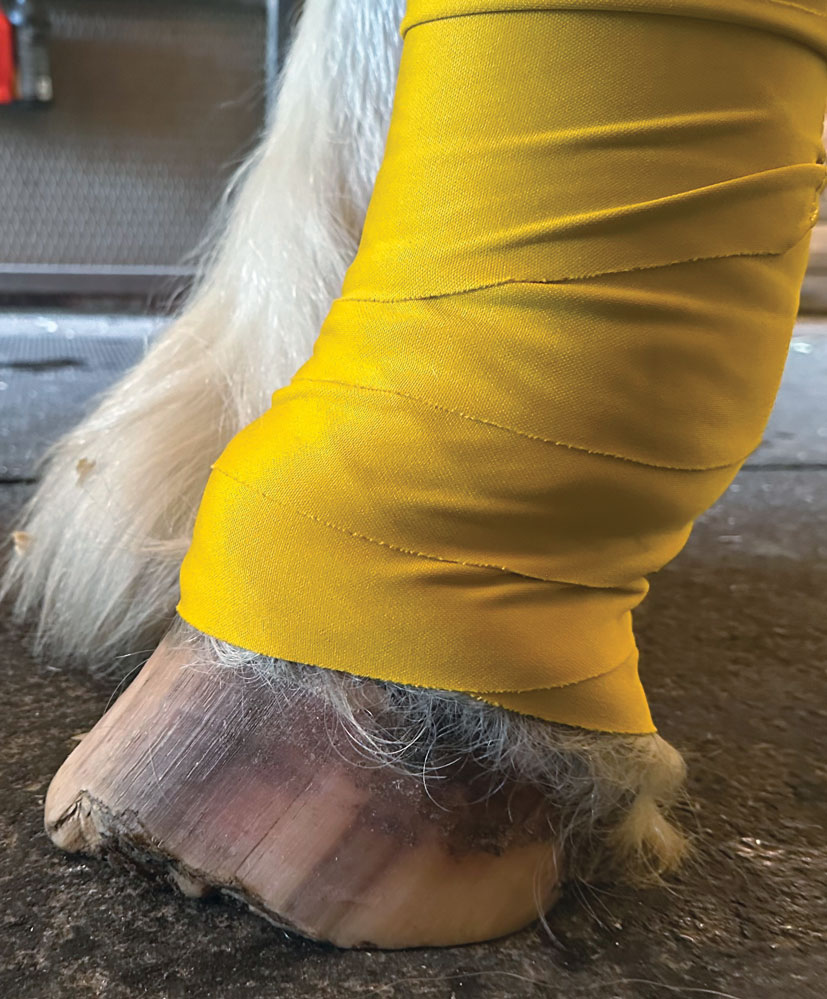
The left front foot and lower limb are wrapped to contain Jackson’s feathers for ease of work. Esco Buff
June 2025: Establishing the Baseline
I’ll use a detailed chronological, journal-style format to highlight practical insights and how small changes evolve over time. I’ve been Jackson’s farrier for the past decade, contributing to his soundness and overall well-being.
Medical History Summary
- OCD at birth. Diagnosed with osteochondritis dissecans. It was resolved by age 4 without surgery.
- Colic surgery. Underwent colic surgery at age 14 for a large colon impaction.
- Anhidrosis. Periodic anhidrosis during hot, humid conditions.
- Endocrine function. Elevated thyrotropin-releasing hormone (TRH) stimulation test. Maintained on levothyroxine and pergolide.
- Orthopedic injury. Left hind stifle meniscal tear with mild tibiotarsal changes. Managed conservatively.
- Sidebone. Grade 3-4 sidebone in both front feet since I started care.
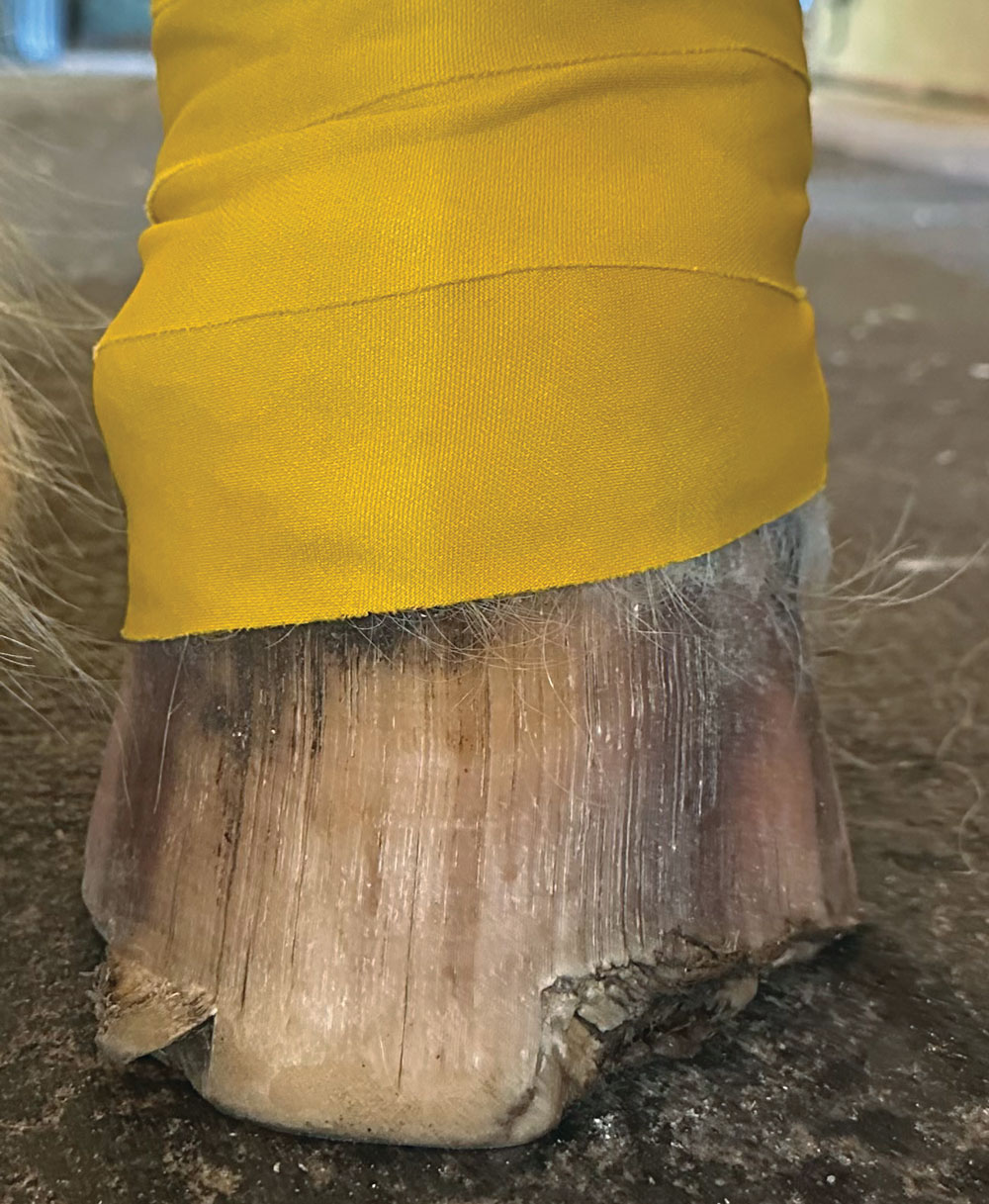
The hoof walls tend to chip and break. While they are stable, there’s minor softening due to the wet climate. Esco Buff
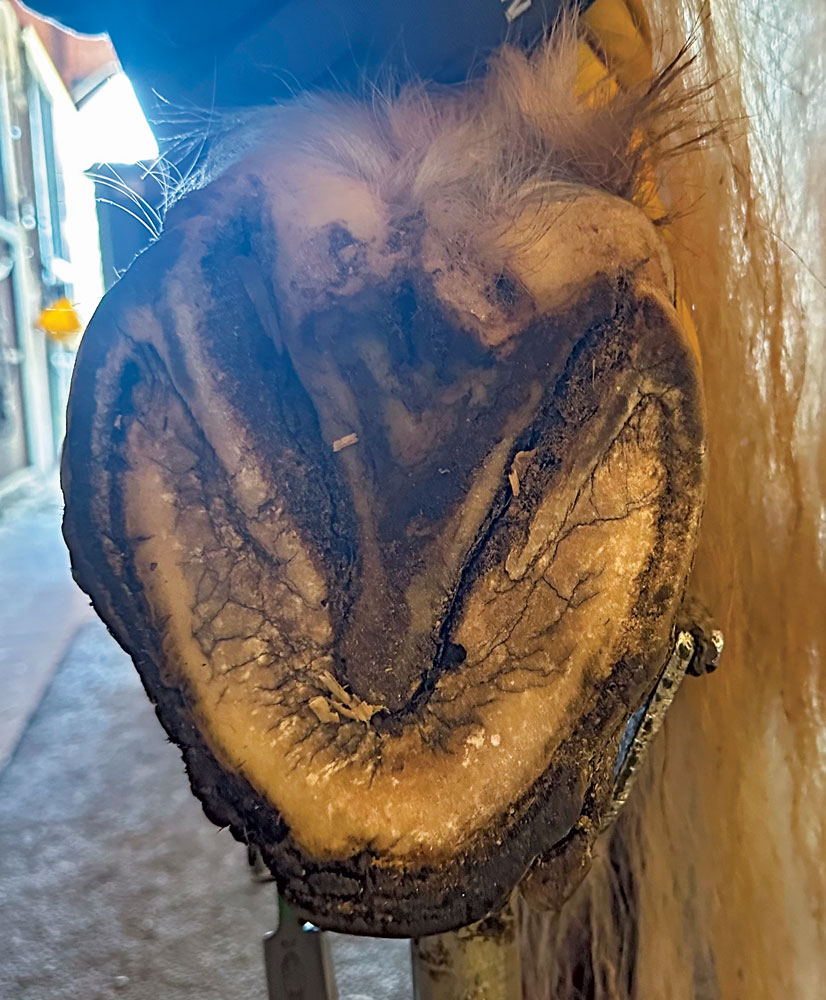
The front hooves have limited sole concavity. The left front tends to grow medially high. Esco Buff
Farrier History Summary
Jackson’s shoeing history is as follows.
- Front hooves. Previously shod to manage wall breakage and protect limited sole concavity. Left front tends to be medially high, right front laterally high, corrected routinely through trimming.
- Hind hooves. Shod for stifle support post-injury. Good sole depth with the same medial-lateral imbalance pattern as the fronts.
- Transition to barefoot. For the past 3 years, Jackson has successfully transitioned to barefoot with a 5-week trim schedule. He remains sound, although occasionally sensitive on hard or dry ground. Frogs are healthy, with only minor seasonal thrush episodes.
- Recent concerns. Subtle lameness has emerged, seemingly originating from within the hoof capsule. A veterinary evaluation, including radiographs, is scheduled for July to guide the next steps.
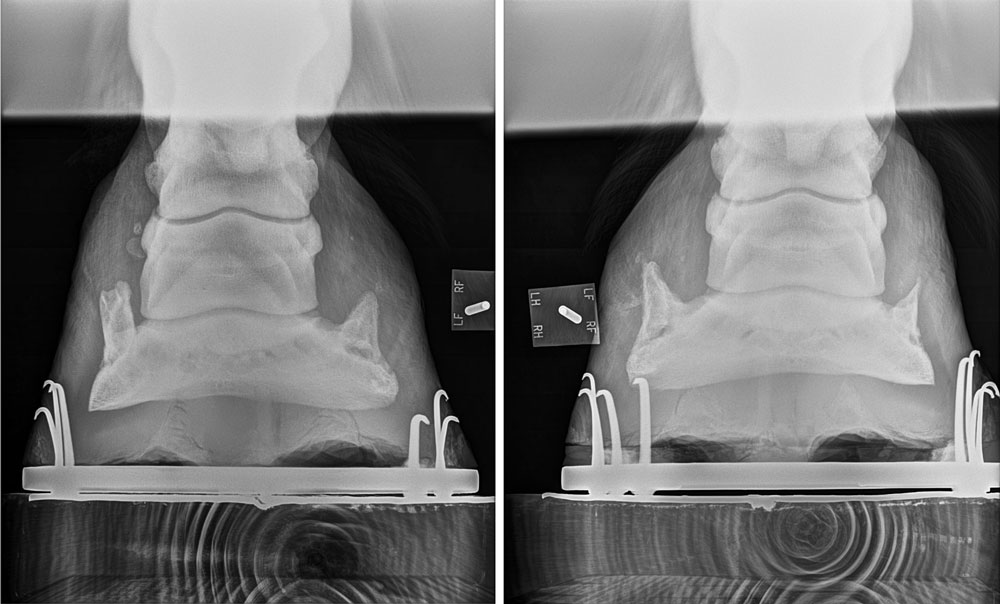
Veterinarians diagnosed Jackson with Grade 3-4 sidebone in both front feet. The condition began before Buff was hired to provide hoof care for the 15-year-old Clydesdale cross. Subtle lameness has emerged, which is believed to be within the hoof capsule. Veterinarians will record new radiographs and evaluate him before taking the next steps. Esco Buff
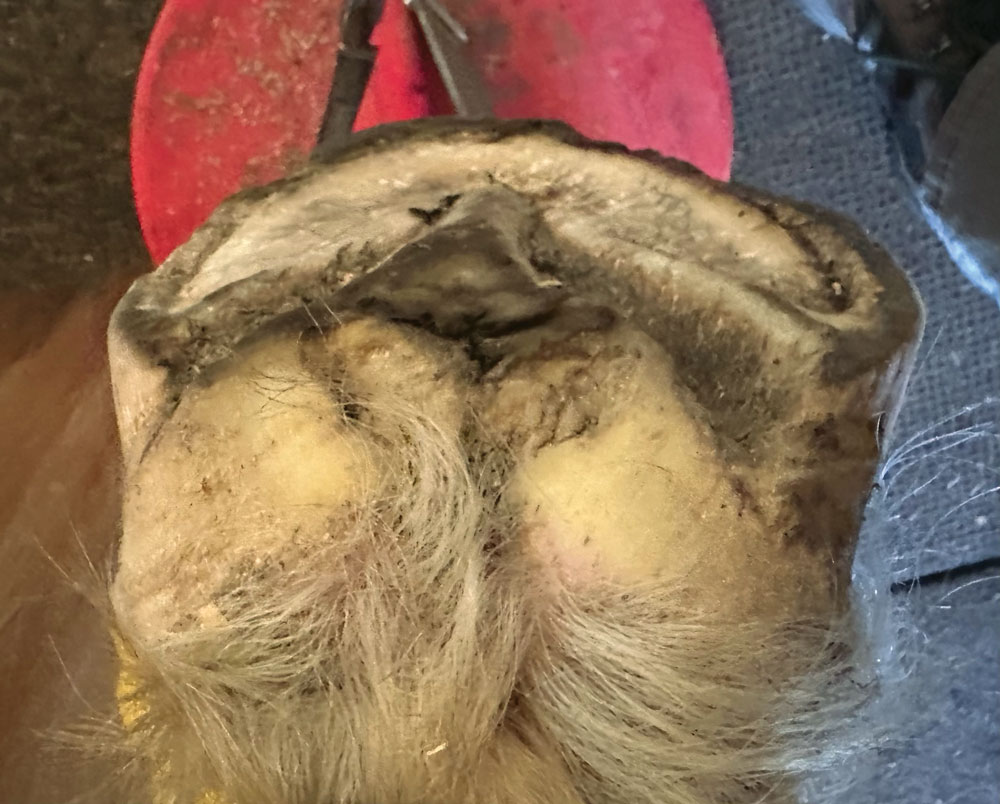
The left front foot view from the heels illustrates minimal concavity, as well as the tendency to grow higher medially. The frog is generally healthy with minor seasonal thrush. Esco Buff
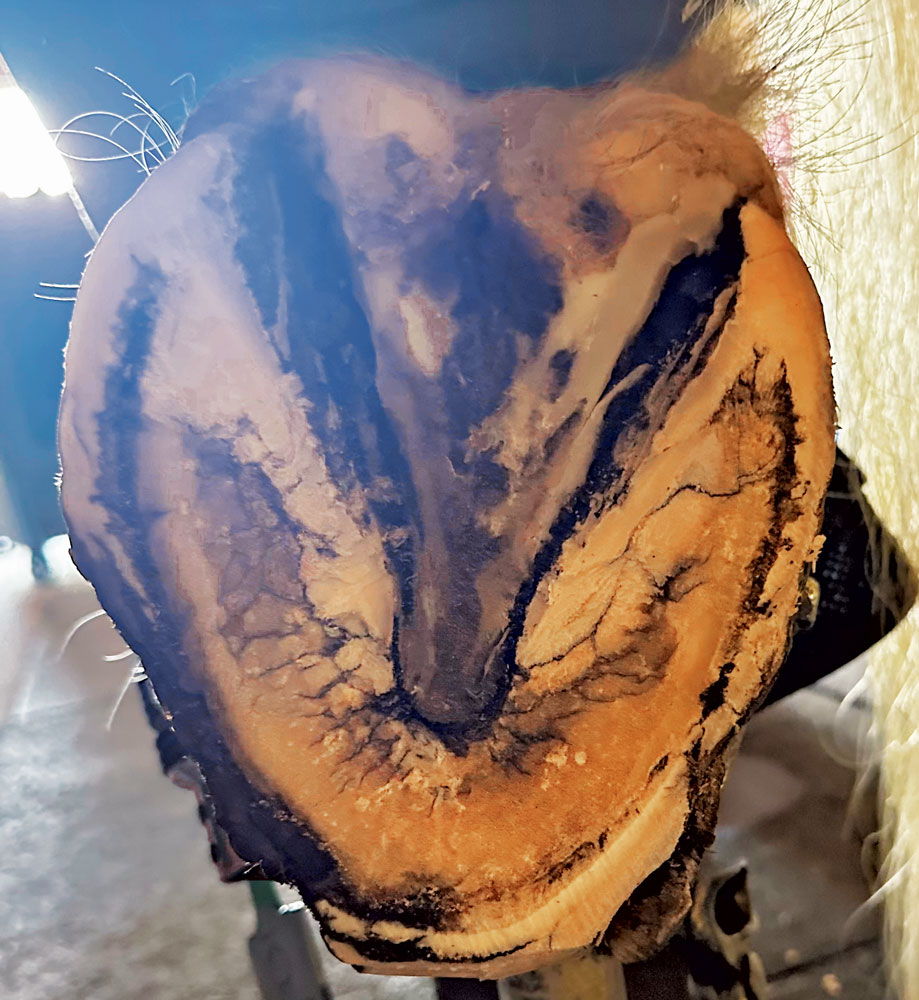
A solar view of Jackson’s left front hoof after trimming. He was transitioned to barefoot 3 years ago. Esco Buff
Training History Summary
Jackson engages in daily groundwork for fitness and responsiveness with occasional leisure riding. There is no intensive or competitive workload.
Behavioral History Summary
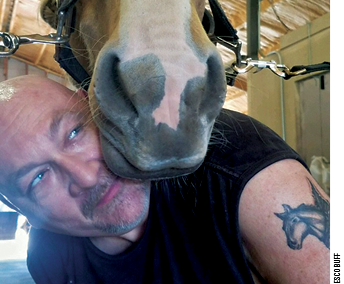
He generally stands well, with brief periods of restlessness. His calm demeanor, especially while I work on his front feet, and his habit of nuzzling suggest comfort and trust, important indicators of our working relationship.
Nutrition & the Hoof
Forage.
- 15 lbs. of second cut Timothy hay (formerly 25 lbs. of first cut).
- 14 hours a day pasture grazing.
- 2 lbs. chopped forage.
Grain.
- 3 lbs. Triple Crown Senior.
- 2 lbs. Tribute Essential K.
Supplements.
- Cetyl M, Vitamin C & E, Thyro-L, Prascend (PPID), Heiro.
- Discontinued a previous feed supplement (palatability) and various metabolic/sweating supplements.
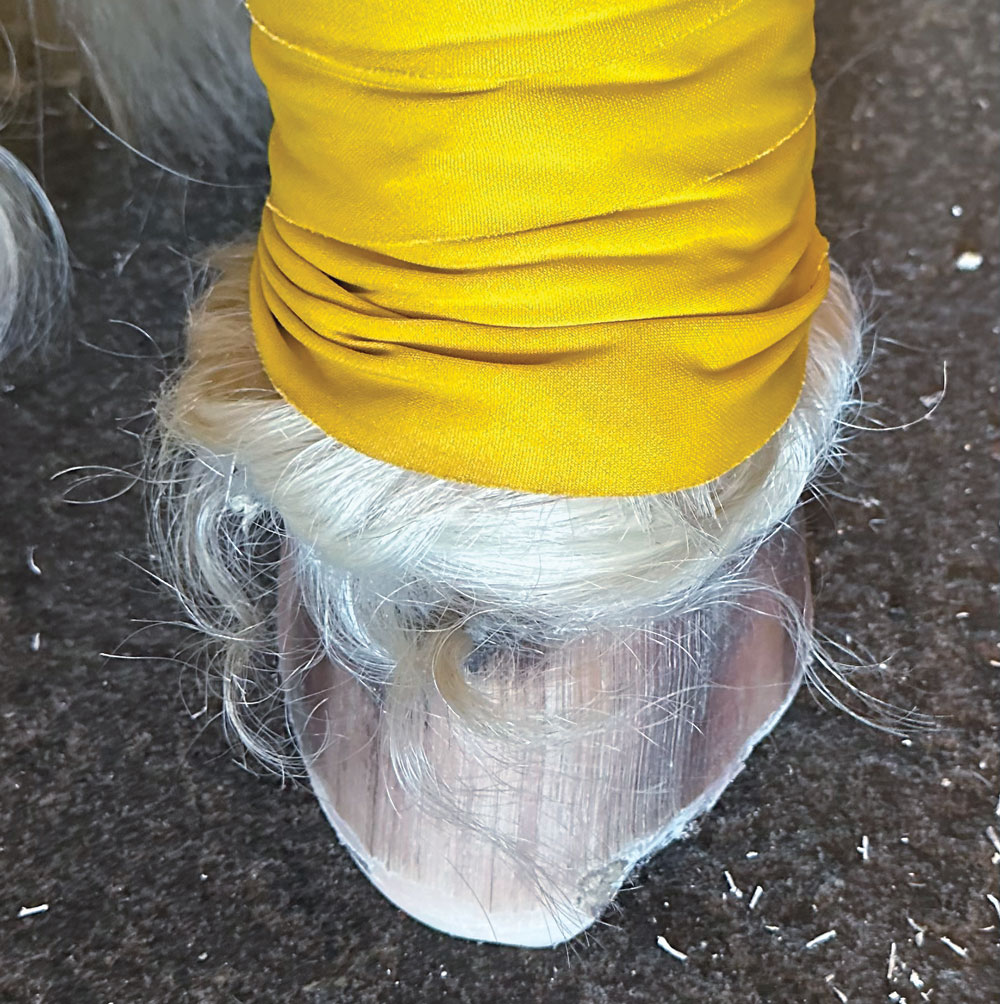
A dorsal view of Jackson’s left front hoof after trimming. Esco Buff
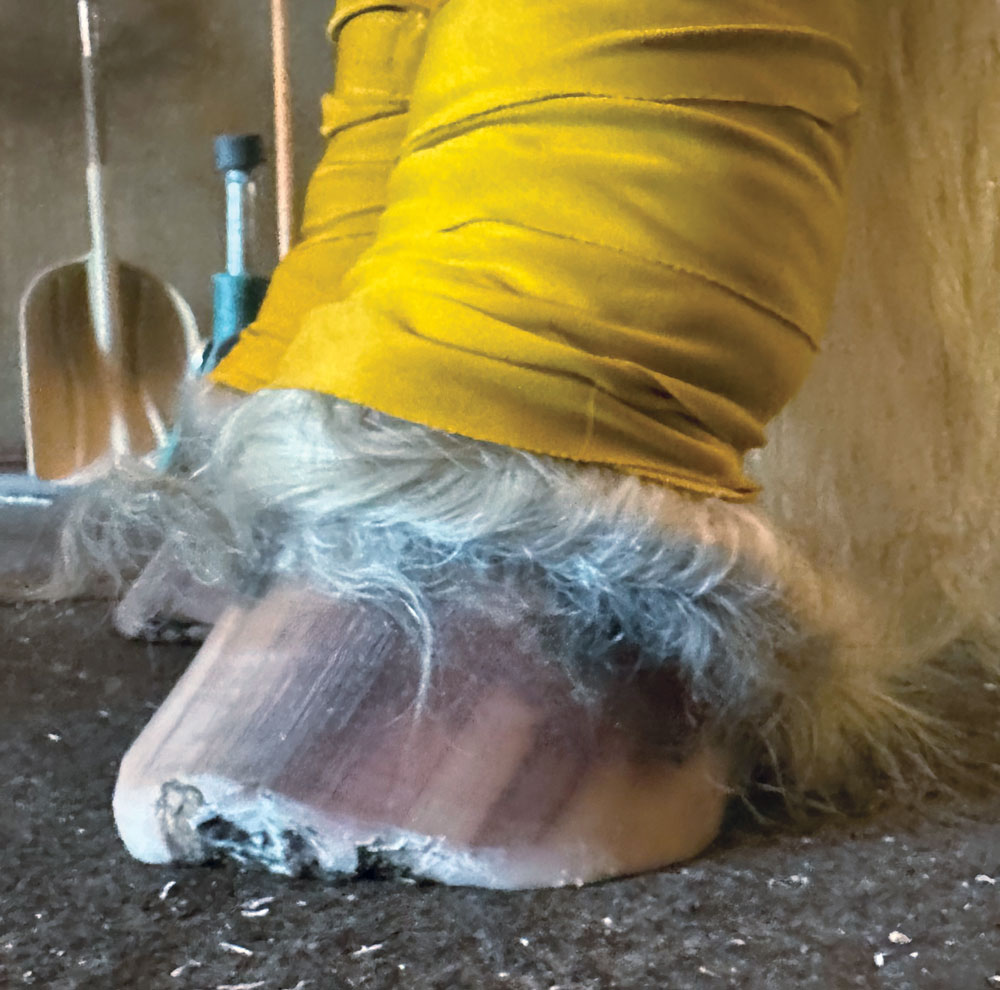
A lateral view of Jackson’s left front hoof after trimming. Esco Buff
Nutritional effects.
- Sole. Remains consistent; no decline observed.
- Wall. Stable; minor softening during wet periods attributed to the environment.
- Frog. Generally healthy; occasional seasonal thrush.
I continue monitoring his hoof quality, particularly with his metabolic history and altered forage intake.
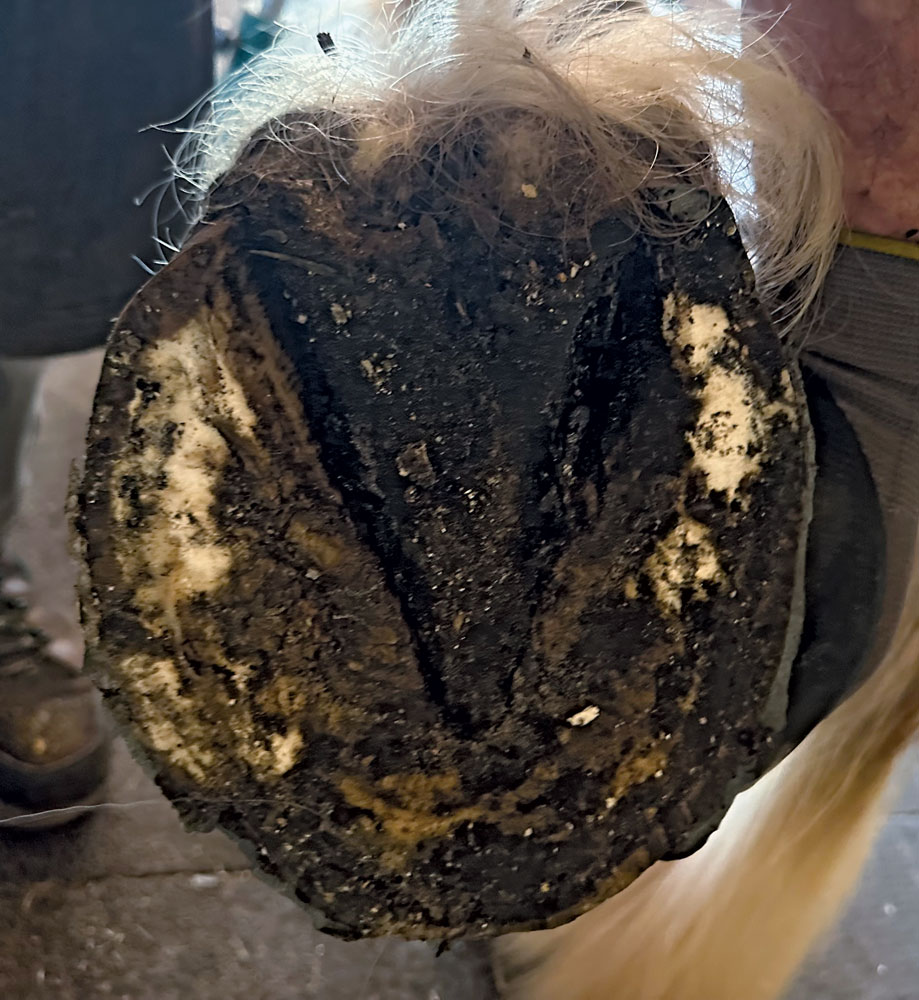
A solar view of Jackson’s right front hoof before trimming. It tends to grow high laterally. Esco Buff
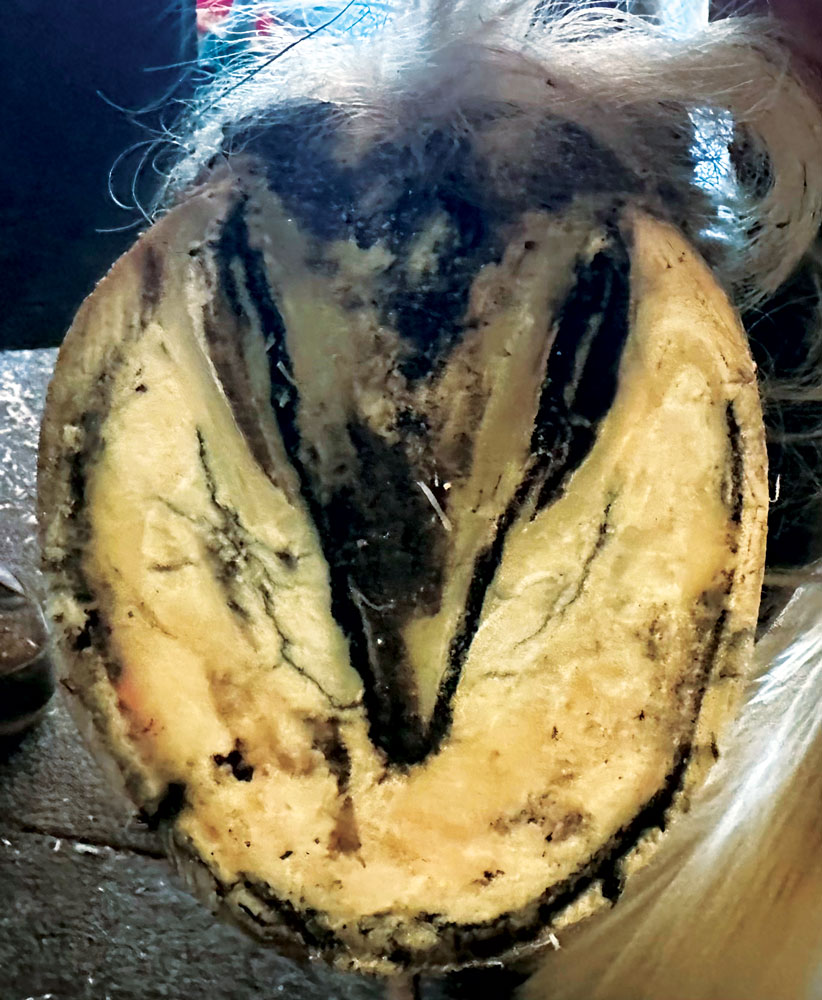
A solar view of Jackson’s right front hoof after trimming. He is on a 5-week trimming schedule. Esco Buff
Veterinarian-Farrier Collaboration
- Stifle injury. Veterinary imaging confirmed a meniscal tear in the left hind. I’ve adapted his trimming to reduce joint stress, addressing medial-lateral imbalance and excessive leverage.
- Sidebone and Radiographs. Initial radiographs showed Grade 3-4 sidebone. This prompted modifications in shoeing to reduce concussion and improve breakover when he was still shod.
- Role of Imaging. Radiographs have been crucial in assessing hoof-pastern axis, sole depth and balance, especially when transitioning to barefoot. They remain an essential part of our ongoing hoof-care evaluations.
This open line of communication between the farrier and veterinarian will continue, particularly as we investigate his new lameness signs.
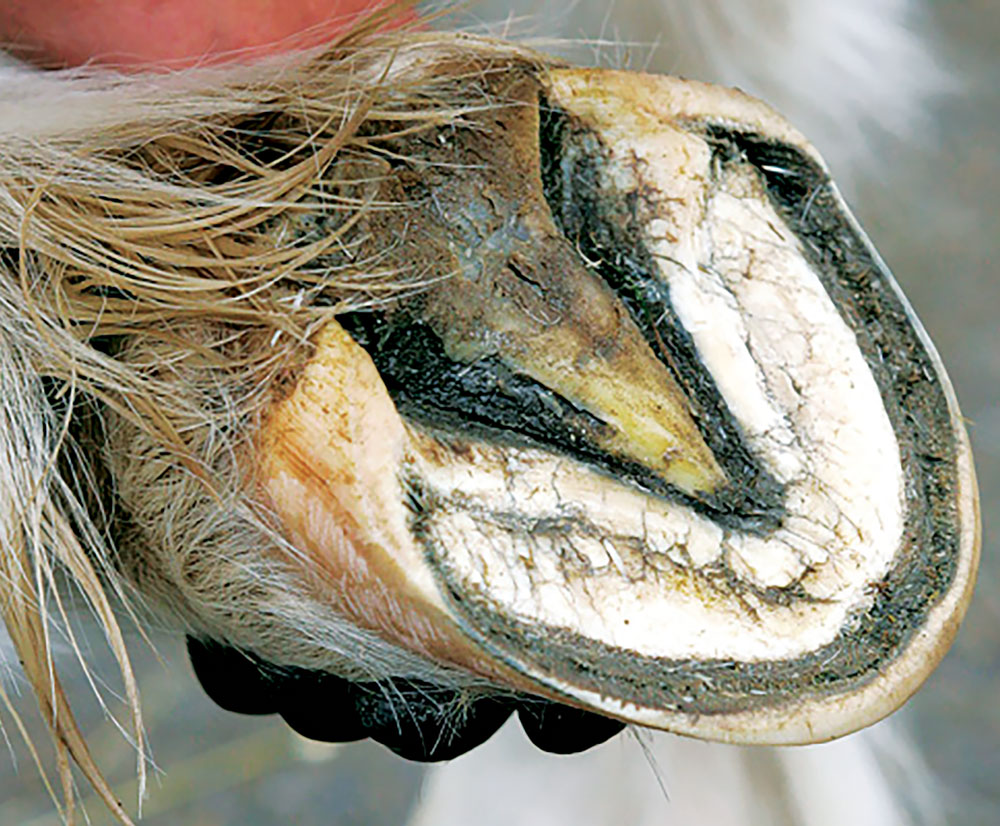
A solar view of Jackson’s hind foot before trimming. He has good sole depth, but follows the same medial-lateral imbalance pattern as the fronts. Esco Buff
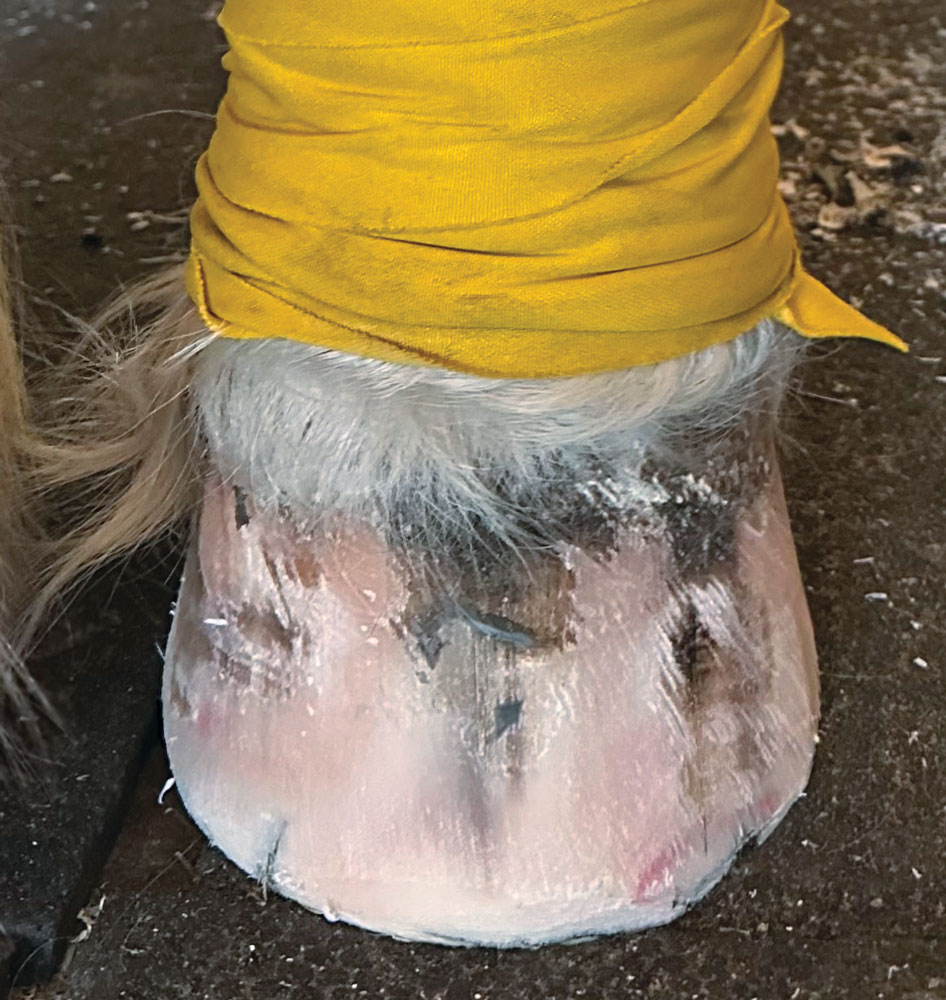
A dorsal view of Jackson’s right front hoof following the trim. Historically, Jackson was shod for protection. Esco Buff
Reflections & Takeaways
Jackson’s case continues to shape how I think, assess and work. The insights I gain from him today carry into future trims, horses and client relationships.
- Context is everything. I now track far more than the trim itself. Nutritional changes, environmental conditions and workload shifts are part of the hoof’s story. These remain at the forefront of my assessments going forward.
- Small changes signal larger issues. Subtle hoof clues — slight flares, changes in chalkiness, shifting postures — often precede bigger concerns. Recognizing and acting on these early remain a key strategy in my practice.
- Collaboration is essential, not optional. Jackson’s journey highlights how vital it is for farriers, vets and owners to collaborate in real time. No single perspective is enough. I’ll continue to advocate for integrated care in every case I manage.
- Patience and pattern recognition yield results. It takes time to see the whole picture. Through documentation, notes and gait records, I identify patterns that inform better decisions. This habit stays central to how I practice.
In Closing
Jackson continues to teach me that hoof care isn’t about achieving perfection — it’s about understanding and managing variables as they unfold. For farriers, staying curious, asking the right questions and keeping good records are not just best practices — they are essential for success in complex cases. What I learn from Jackson today informs every step I take tomorrow.
Quantifying Sidebone
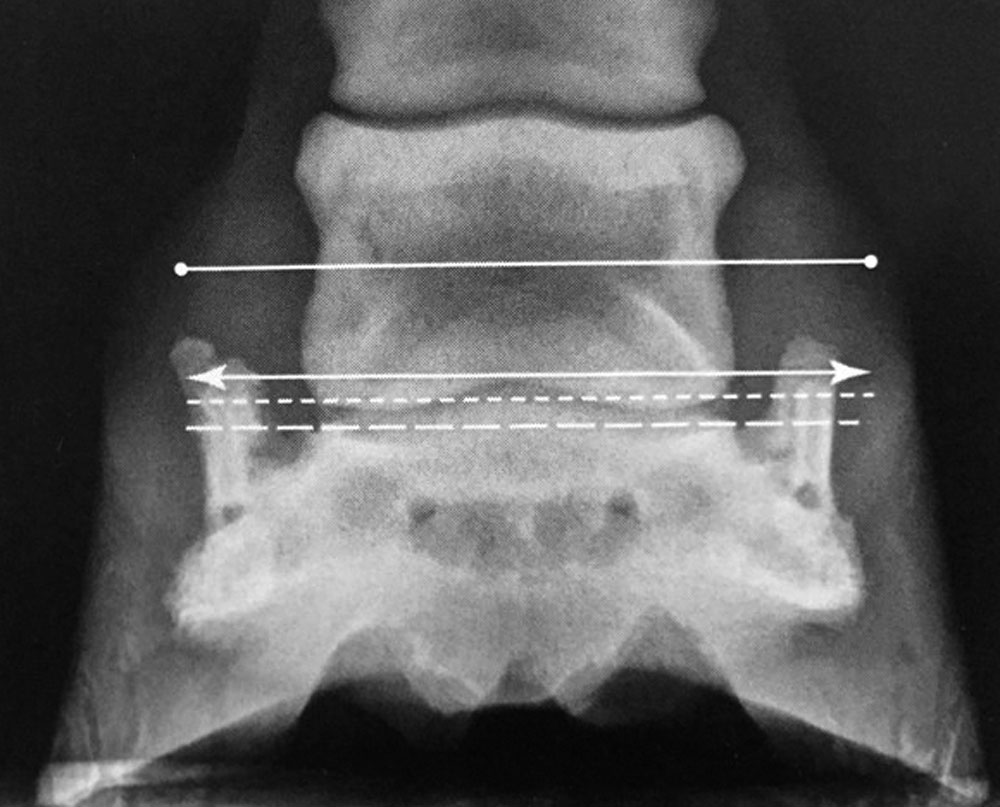
Jackson has been diagnosed with Grade 3-4 sidebone in both of his front feet.
The 15-year-old Clydesdale cross has had sidebone since Esco Buff began performing his hoof care 10 years ago.
Sidebone is the ossification of the collateral cartilages within the horse’s hoof. The collateral cartilages help absorb shock and allow for some flexibility in the hoof. Ossification is the process of forming or hardening the tissue into bone.
While sidebone is common for all horses, heavy breeds like Clydesdales are especially susceptible. Sidebone doesn’t always induce pain; however, it can cause rigidity and reduced shock absorption, contributing to lameness and other problems.
Veterinarians use a collateral cartilage grading system to quantify ossification to quantify ossification.
- Grade 0: No ossification is present.
- Grade 1: Minimal ossification is present. When this occurs, it’s represented at the bottom dashed line.
- Grade 2: Mild ossification extends up to the distal interphalangeal joint, which is at the second dotted line.
- Grade 3: Moderate ossification extends to the proximal edge of the navicular bone, which is represented at the solid line with arrows.
- Grade 4: Advanced ossification that extends above the navicular bone, but not beyond the midpoint of the second phalanx (P2). This is represented between the solid line with arrows and the solid line with dots.
- Grade 5: Extensive ossification that extends beyond the midpoint of P2. Grade 5 ossification is represented above the solid line with dots.
Subtle hoof clues, such as slight flares and shifting postures, often precede bigger concerns …
Over the course of a year, International Horseshoeing Hall of Fame member Esco Buff takes us on a hoof-care journey with Jackson, a 15-year-old Clydesdale cross gelding. The Clearwater, Fla., farrier documents each detail — the trim, shoeing, nutritional decisions, vet visits and his job — in this living case study. This installment was made possible by Triple Crown Nutrition.