
American Farriers Journal

View Archived Issues
November 2019
American Farriers Journal is the “hands-on” magazine for professional farriers, equine veterinarians and horse care product and service buyers.
-
Table Of Contents
Table Of Contents


Results from Our Equine Lameness Survey
The results from an exclusive American Farriers Journal on hoof-care and lameness show farriers’ experiences in encountering these casesRead More

How to Avoid Debt in a Farrier Practice
California farrier shares tips to dodge financial problemsRead More
Mobile Payment Services are an Alternative to Cash and Check
Venmo, Zelle and PayPal are among the options hoof-care clients prefer as alternatives to traditional payment typesRead More
Price Strategies for New and Reset Horseshoes
Analyze your business and clientele to choose the best practiceRead More
Indiana farrier Cody Bogard shares his strategy for increasing hoof-care clients
Hiring a dedicated marketing person lets farrier focus on the equine foot while growing his businessRead MoreHow to Answer the Most Common Client Questions
Stay positive in how you respond to clients to provide better customer serviceRead More
How A Farrier Rig Can Help You
Manufacturers offer new ideas and tips for more efficient use of mobile work stationsRead More8 Tips to Improve Your Efficiency
Maximize your time investment in each horse with a few simple stepsRead More
Keys to Successfully Work with Veterinarians
To help horses, both the farrier and veterinarian must recognize specific areas of responsibility and have open communicationRead More
Changing Your Farrier Practice
Ohio farrier extends his career in spite of arthritis by transitioning to trims onlyRead More
Equine Reciprocating Systems: Interosseous Muscles to the Suspensory Apparatus
In this second in a series, Dr. Deb Bennet continues a discussion of the horse’s forefoot becoming a single digit.Read More In Memoriam
Hall of Fame Farrier Gordon Haight ‘Never stop learning’
American Saddlebred farrier’s legacy lives on with those he mentoredRead More -
Featured Articles
Featured Articles
Results from Our Equine Lameness Survey
The results from an exclusive American Farriers Journal on hoof-care and lameness show farriers’ experiences in encountering these casesRead MorePrice Strategies for New and Reset Horseshoes
Analyze your business and clientele to choose the best practiceRead MoreKeys to Successfully Work with Veterinarians
To help horses, both the farrier and veterinarian must recognize specific areas of responsibility and have open communicationRead More - Digital Edition
-
Online Extras
Online Extras

THIS MONTH'S DIGITAL SPONSORS:
Top Articles
Current Issue
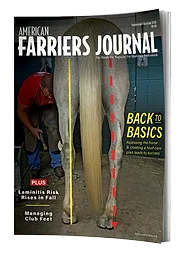
American Farriers Journal
American Farriers Journal is the “hands-on” magazine for professional farriers, equine veterinarians and horse care product and service buyers.
Thinking Beyond Breakover
Understanding Fall Equine Laminitis Risks
I Only Did What the Horse Owner Wanted: A Cautionary Tale
Current Issue

Special Report For Equine Veterinarians
American Farriers Journal is the “hands-on” magazine for professional farriers, equine veterinarians and horse care product and service buyers.
Must Read Free Eguides
Download these helpful knowledge building tools
- Spring Hoof Care
- Caring for Your Horse During a Pandemic
- CBD Products Have Promise for Farriers, but Buyer Beware
- Sharpening Knives with a Buffer
Videos

Organized & Efficient to Better Serve Farriers w/Oleo Acres: 2025 Supply Shop of the Year
Events
Foundations Clinic
Doc Foal's | The Black Pads

Sunrise Farrier Supply
We are here to support you.
We stock a wide range of high-quality products from trusted brands to ensure durability, performance, and reliability in every job you undertake. Our extensive inventory of horseshoe products and farrier tools means you can find everything you need in one place, saving you time and effort. Your satisfaction is our top priority. We are committed to providing excellent customer service, prompt shipping, and hassle-free returns.
