 Premium content is for our Digital-only and Premium subscribers. A Print-only subscription doesn't qualify. Please
American Farriers Journal
American Farriers Journal is the “hands-on” magazine for professional farriers, equine veterinarians and horse care product and service buyers.
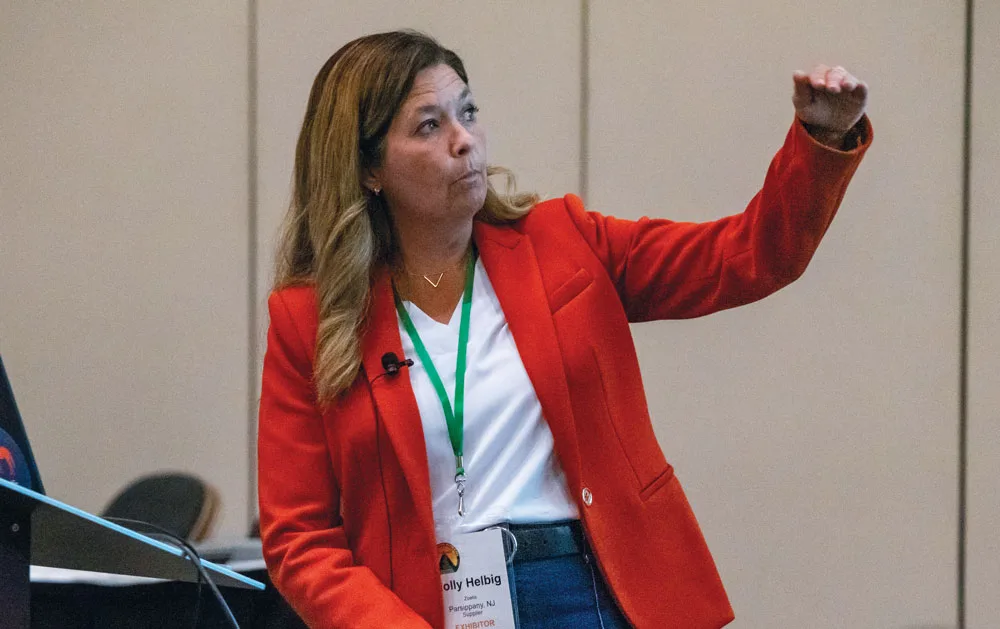
Conformation, footing, workload, trimming and shoeing, fitness and training contribute to osteoarthritis, says Holly Helbig, senior technical service veterinarian at Zoetis. Lewis Horn III
Lameness remains one of the most common and complex challenges in equine practice, often requiring a collaborative approach between farriers and veterinarians. As understanding of joint health continues to evolve, so do the tools used to diagnose, manage and treat these conditions.
Recognizing the underlying causes of lameness and understanding emerging regenerative options help farriers play a critical role in supporting long-term soundness.
Lameness is the leading reason veterinarians are called — even more often than colic. While a farrier’s focus is the hoof, many issues that affect the hoof originate higher up the limb. Understanding contributing factors, such as workload, conformation and footing, help improve diagnosis and direct treatment.
“Any change in the horse’s gait that’s caused by pain is considered lameness, and that can present in a lot of different ways. It’s not always obvious right away. In many cases, we’re seeing the result of something that has been developing over time. That’s part of why lameness is the number one reason veterinarians are called…

American Farriers Journal is the “hands-on” magazine for professional farriers, equine veterinarians and horse care product and service buyers.

American Farriers Journal is the “hands-on” magazine for professional farriers, equine veterinarians and horse care product and service buyers.
Download these helpful knowledge building tools


We are here to support you.
We stock a wide range of high-quality products from trusted brands to ensure durability, performance, and reliability in every job you undertake. Our extensive inventory of horseshoe products and farrier tools means you can find everything you need in one place, saving you time and effort. Your satisfaction is our top priority. We are committed to providing excellent customer service, prompt shipping, and hassle-free returns.
