 Premium content is for our Digital-only and Premium subscribers. A Print-only subscription doesn't qualify. Please
American Farriers Journal
American Farriers Journal is the “hands-on” magazine for professional farriers, equine veterinarians and horse care product and service buyers.

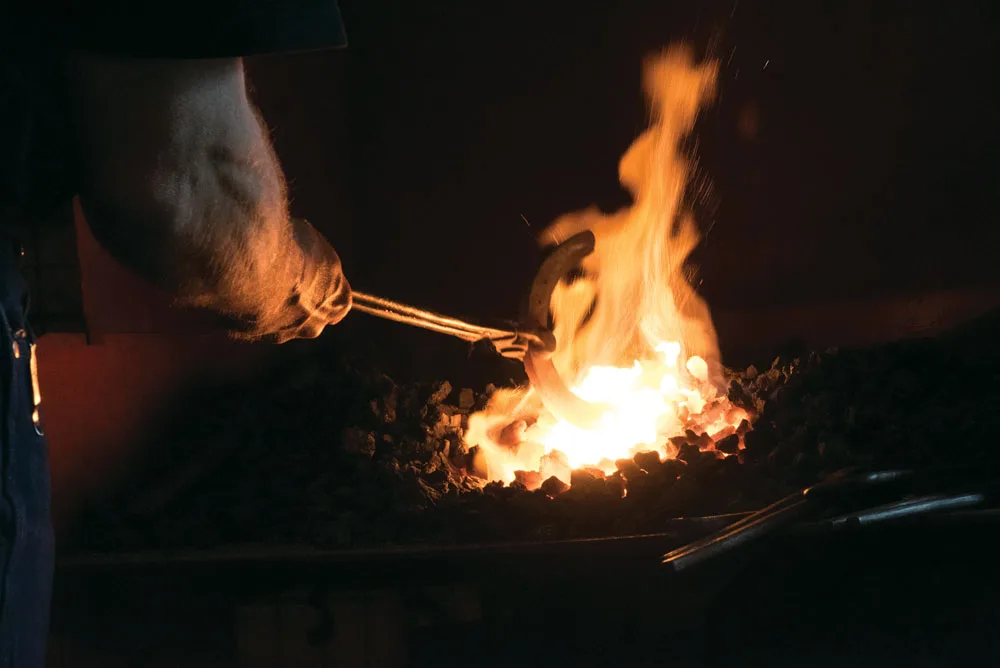
Coal and coke forges were the norm for shaping horseshoes until the emergence of propane forges early 1970s. Jeff Cota
Until the early 1970s, shaping horseshoes required a solid-fuel/coal forge for more than 1,000 years. Are we on the threshold of another advancement in forging?
The forge was necessary because shoes were either handmade from iron bars or many of the early manufactured shoes were unfinished, long, heel-length shoes. Heel calks, needed for traction, were either forged at the horse or the extra length was removed with hot-cutting tools. Clips were drawn as needed. The forge was also needed to weld on toe grabs for traction and wear.
The horses used on the streets or in the military wore heavier shoes than today’s sport horses. There was no chance of altering them without heat. Most horses were taken to blacksmith shops, where a large forge was used for shaping and modifying shoes.
Post World War II, the baby-boom generation started keeping horses in their backyards for recreation and sport. Boarding stables flourished as horse ownership became a hobby. The demand for mobile farriers increased. Although the truck-mounted portable coal forge was nothing new, farriers realized that having one was necessary because of the shortage…

American Farriers Journal is the “hands-on” magazine for professional farriers, equine veterinarians and horse care product and service buyers.

American Farriers Journal is the “hands-on” magazine for professional farriers, equine veterinarians and horse care product and service buyers.
Download these helpful knowledge building tools


We are here to support you.
We stock a wide range of high-quality products from trusted brands to ensure durability, performance, and reliability in every job you undertake. Our extensive inventory of horseshoe products and farrier tools means you can find everything you need in one place, saving you time and effort. Your satisfaction is our top priority. We are committed to providing excellent customer service, prompt shipping, and hassle-free returns.
