In the north of our valley, with the foothills of the Cascade Mountains as a backdrop, lies the Bar 14 Ranch. In the early part of the 20th century it was one of the biggest outfits in the area. The fact that it sits on a county road named after the ranch is something of an indication of how prominent it was.
The ranch isn’t as big nor as busy as in days past, in fact for some time they have been boarding horses there in the barn that originally housed the working horses used on the ranch. It’s a long structure with around 12-14 stalls arranged in a row with a shed roof extending out for shade.
Over the years, I have had numerous horses to shoe that belonged to students attending our local university. They board them at various places offering shelter as well as opportunities to ride. This one was at the Bar 14. Having never been to the ranch, I wanted to get the lay of things before I set up and was looking around as my client showed up. She was off searching a rather large pasture for her horse as I determined the best place to work.
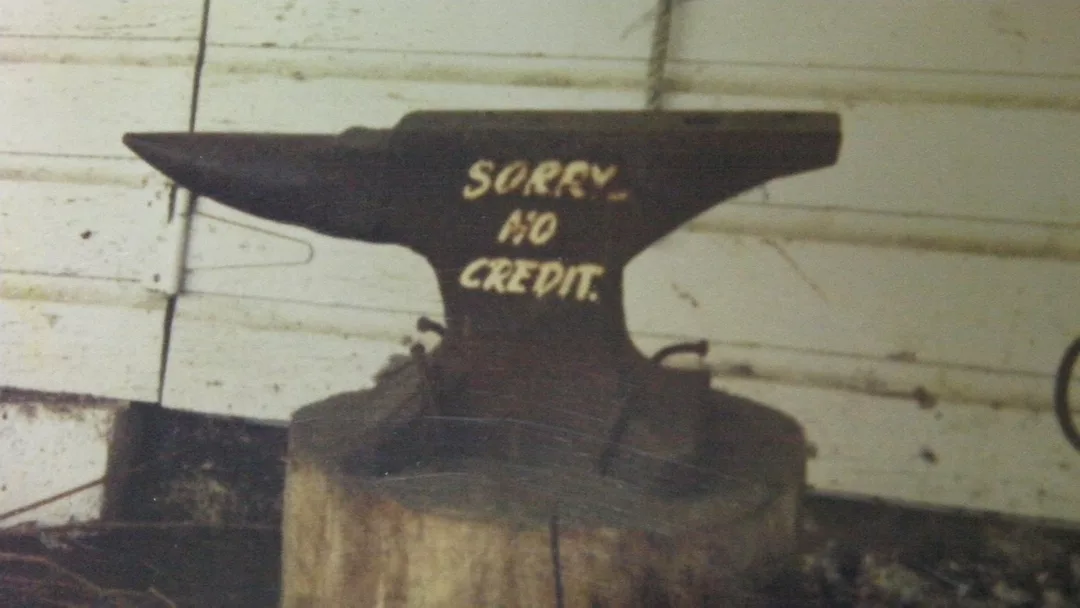
The shed roof offered plenty of cover from the relentless summer sun, so I backed up to the end of the row of stalls and got set up. There was a spigot in the middle of the barn, and as I headed for it with my bucket in hand, I noticed an anvil sitting at the opposite end of the barn from where I had set up. It was still attached to the large stump it had sat on for who knows how long.
When it was in its’ heyday (they literally raised a lot of hay) the Bar 14 and operations like it had to be able to handle on-site whatever maintenance was needed to keep the enterprise going. This of course included the many horses used around the place. It wasn’t unusual for a barn to have an anvil close by for that purpose. From a distance, I could see there were words painted on the side of the anvil that the customer would approach. As I got closer and made out the words, I realized this anvil was used to shoe horses belonging to the hired hands and not the ranch because painted on the face of it was the following in big white letters: SORRY NO CREDIT!
I guess farriers have always had a hard time collecting their fees from some folks. But I have to admit this was a novel approach to that problem, forestalling any uncomfortable conversations after the job was done.
Look out for more installments of "The Way it Was" by David Hazlett, a series that explores how farriery has changed — and stayed the same — over the years. In the meantime, you can read previous installments here.