Farrier Takeaways
- There are many causes and symptoms of stress. Being honest with the sources will help you manage them effectively.
- Although you can’t change the world, you can change how you deal with it. Taking small actions will help you take control over your life.
- There’s no shame in saying no to things that will create more stress in your personal and business life.
What is stress?
A good definition is that it’s a state of mental or emotional strain or tension resulting from adverse or demanding circumstances.
We’ve all had that sinking feeling when a client messages that a horse that was shod yesterday has come up lame. A delivery of shoes that was needed for today hasn’t arrived. An important horse has pulled off another shoe and wrecked its foot. A client hasn’t paid for the last two visits and you’re due there again.
These are all stressors that are built into our day without realizing it. A family member is having problems and doesn’t want to talk about them. Your doctor has called you for a chat about test results. You have colleagues in your organization who don’t pull their weight.
How can we recognize it in ourselves and others? This is important because although no one lives in isolation, a sufferer could sometimes wish they did. Some people would like to live in isolation, but wish they didn’t and so on.
Businesses can be under stress, as well. What are those signs? Are there disputes and dissatisfaction within the group? Is there an increase in staff turnover? Is there an increase in complaints and grievances? Is there an increased sickness absence? Is there an increase in reports of stress? Do you have difficulty attracting new staff? Is there poor performance overall in your company? Is there a lot of customer dissatisfaction or complaints?
Symptoms of Stress
There are many ways that stress can reveal itself through behavioral and physical symptoms.
Behavioral symptoms. These are changes from your normal behavior. Your eating habits can change. You’re smoking or drinking excessively. You’re sleeping too much or too little. You might isolate yourself from others, so you’re a bit more withdrawn. You procrastinate and neglect responsibilities. You might be nervous.
Mood swings that affect your behavior can occur. You have negative or depressive feelings. You have a sense of being disappointed with yourself. Your self-worth starts to go down. Emotional reactions might increase in which you can be more tearful or sensitive, more aggressive, more irritable, or more short-tempered.
You might experience a loss of motivation, commitment and confidence. Memory could be a problem, as well as an inability to concentrate. You might display poor judgment. You could have anxious or racing thoughts. You might worry a lot. Relaxing might be difficult, so you might be agitated and you’re always on the move. You feel overwhelmed.
Physical symptoms. It’s a depressing list of behavioral symptoms, but if you think that stress takes place in the head, you need to think again. You can experience physical symptoms such as aches and pains, diarrhea, constipation, nausea, chest pain, loss of sex drive and frequent illnesses such as colds.
When considering your heart, lungs and circulatory system, the short-term symptoms can include changes in your heart rate, increased blood pressure and you can experience palpitations. In the long term, you might experience hypertension, high blood pressure and heart disease.
You might not think that symptoms can show up regarding your skin, but you can experience sweating or appear flush in the short term. Over the long term, someone can endure eczema or psoriasis.
The way that your body metabolizes can be affected. In the short term, your energy sources might become immobilized with increased cholesterol and glucose. This is important because you need quick reaction to avoid dangerous situations. Long-term metabolism symptoms can include inefficient use of energy, increased fat deposition, insulin resistance and metabolic syndrome.
Life consists of elements that require almost equal attention …
Stress can produce symptoms in the muscles and joints. If you have a short-term stress, you can have increased blood flow to muscles, which can be beneficial in a fight or flight moment. However, in the long term, you can experience loss of muscle function and structure in the form of stiffness and soreness. Osteoporosis is another serious long-term concern.
The digestive system is a common place for stress to manifest. Most of us have experienced “butterflies” in our stomachs in short-term stress situations. You might also get nausea. Over time, your appetite might be suppressed, your ability to repair ulcers can be impaired or you can have a chronic dysfunction of the gut, such as irritable bowel syndrome, might occur.
Stress can even suppress reproductive and growth systems in short-term stressful situations. The long-term effects can result in reproductive abnormalities and a loss of libido. Women can experience irregular or loss of menstrual cycles, while men might face decreased testosterone and erectile dysfunction.
Interestingly, sudden stress can also produce an enhancement of specific immune responses, specifically dealing with wounding. For example, if you’re attacked and are wounded, a sudden bit of stress can help your body repair. However, over the long haul, stress eventually leads to immune suppression, which causes increased susceptibility to some infectious diseases.
Causes of Stress
There are several external and internal causes of stress, but they are different for everyone. One of my clients is a psychiatrist and he says stress is an inability to develop the skills necessary to deal with circumstances. At the beginning of each year, he finds that his appointment book is full of people who are having difficulty dealing with the stress of Christmas. It might be because of the shopping season. You might be hosting family and friends and there are too many things to do. Or, you might have to spend time with people you simply don’t care for their company. Simply put, there’s a concentration of time and pressure during this time of the year.
External causes. The common external causes of stress are major life changes, work or school, relationship difficulties, financial problems, being too busy, children and family, and weather and climate. Some experience seasonally affected depression. When it gets dark for long periods, it affects people.
Internal causes. The common internal causes include chronic worry, pessimism and negative self-talk. You might have unrealistic expectations and you strive for perfectionism. If you have rigid thinking and lack flexibility, it can cause stress. An all-or-nothing attitude can also result.
Managing Stress
What can you do about stress? It’s taken perhaps a lifetime to develop the stress, so it will take some effort to overcome, but starting is half done. You can’t make somebody successful against their better judgment. Success in dealing with stress is an inside job. You’ve got to do it for yourself.
It’s important to point out that I’m not a doctor. However, help is available. If you think you have some of the symptoms that were previously discussed, or you’re feeling ill in any way, seek immediate professional medical help.
It’s important to prioritize your activities. Write a list of everything that needs to be done in the order of importance. Don’t move off number one until it’s done. Keep working on the most important. Once it’s done, then you can move on to number two. You redo your list every day but prioritize it. Don’t choose to do number four because it’s easy. It’s not the most important. You’ve got to decide what’s urgent. You do the most important one first. Once that’s done, then you move on to number two.
After creating your to-do list with 10 or more tasks, often what happens is the immensity of the task is daunting. It can create a state of mental paralysis. You might have a sense of obligation and a nagging feeling in the back of your mind. You can avoid this by keeping your immediate list short. Four or five items are sufficient.
Dr. Tim Pychyl is an expert in procrastination research. He argues that you feel an immediate sense of accomplishment simply by writing down all the tasks you would like to complete, without completing any of them. Your brain will simulate the success you would like to feel.
As you complete the tasks, check them off of the list. You will realize that it’s possible to compile a list and work through things. It can be a simple list. It doesn’t have to be complex. Just get a list done and start working through it.
We need to recognize that life consists of many elements that require almost equal attention. You have to put some time and effort into doing some work to earn money. You must develop time for your home and relationships. You might have a spiritual side, exercise, leisure, or helping others.
We all have women clients who are the wealthy wives of successful businessmen. Many end up divorcing because the wife of a successful, moneymaking man wasn’t enough. You might think that you’re being a great provider for your home and family, but you were neglecting other elements of your life. You must find a balance.
Point your index finger and look at your hand. You have three fingers pointing back at you. It’s no use blaming the government, the horseshoe supplier or my wife. You must take charge.
Fixing Me
How do I fix myself? You can’t change the world, but you can change how you deal with it. How do you eat an elephant? Just one bite at a time. When you take little actions, you realize you have quite a bit of control over your life. You’ll find that you’re back in the driver’s seat and you’ll no longer have that feeling of helplessness.
You must isolate the problem. Sometimes, our life is disorganized, which creates a feeling that we’re out of control. When you are neat and organized, you know what you’re doing and there’s less stress.
Sometimes the problems have a monetary value. This is good because if you can put a monetary value on it, you can analyze the problem without emotional attachment. If you can monetize and say, “I have a $50 problem.” You can say, “It’s only a $50 problem.” It’s bringing a lot of stress into your life that seems huge, but it’s fixable with $50.
If we take emotion out of a decision, we often get to the crux of the problem. Sometimes, it’s so wrapped up in emotions, we don’t know what the problem is.
Getting to the bottom of the problem starts by being honest with yourself. One of the big killers of success is the paralysis of analysis, according to David J. Schwartz in his book The Magic of Thinking Big. We just get so wrapped up in the idea that we can’t make a wrong decision. We get so intense about it that we’re frightened to move. Schwartz says the way forward is action because it cures fear.
Another way to fix me is realizing that there’s no shame in saying no. I have clients ask, “Do you work Saturdays?” No. “Can you fit in another horse?” No. There’s no shame in that. It’s your business — just learn to say no.
You should focus on your day’s schedule. A common cause of stress is a lack of time management. If you’re always running late, you’ll be chasing your tail. You might have another horse to do, but you’re already late for another appointment.
Look for pinch points in your business. What is slowing you down? It could be that you’ve got an old computer that you don’t like using. When you come back in at the end of the day, you think, “I can’t bother to do that invoicing because I’ve got that.” You turn it on and it crashes. That’s a pinch point. Get a new computer. Iron out those little pinch points.
Look at things that need fixing. What work takes up your time and could be outsourced? Do you need to do your own invoicing? Get rid of some of the work. Take charge of your time.
What systems could you introduce into your business that will make your day run more smoothly? You can plan forward and work back. The first question is what time do you need to be home? Then how long will it take you to drive home from your last call? How long will it take you to write out their invoices and load the truck? How long will it take you to answer incoming calls while you’re working? How long will the work take? You’ve got to be honest. If it all goes well, how long will it take? What if there’s a problem? Build some buffers into that program.
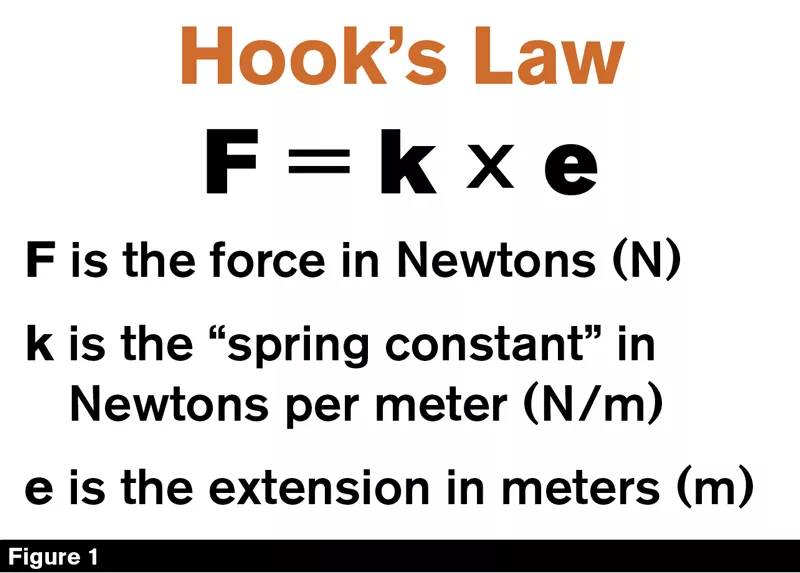
Are you familiar with Hooke’s Law (Figure 1)? A normal spring will return to its original shape. When it’s overstretched, it doesn’t return and loses some of that power. This is what happens when we’re overstretched. We’ve got that elastic region and we can do it. We relaxed. But if you don’t get control of your day, your business and your life, you’re going to get some fractures (Figure 2). It’s going to happen.
A normal spring will return to its original shape in the elastic region. When it’s overstretched in the plastic region, it doesn’t return and loses some power. Fractures occur when it’s stretched too far.
According to the Yerkes-Dodson Law (Figure 3), there is a relationship between arousal — or stress — and performance. You’ll notice that arousal is on the bottom of the chart and output is on the left. When you get a little bit of arousal, you get a little bit of output. That’s fine. Then you get a bit more arousal and you’ve got horses in the field and the horse messes about. You get increased arousal.
Yerkes-Dodson Law suggests there is a relationship between arousal, or stress, and performance.
When you reach the top, you’re overstimulated, and your output is starting to decrease. When you go into a room, have you stood there and wondered, “Why did I come in here?” It’s because you’re overstimulated and you’re in a state of mental paralysis. You need to be working from the backside of the curve. Have you found yourself in your vehicle thinking, “I just can’t do this?” You’re at the arrow on the bottom right of the chart.
You’re overstimulated. You need to get back into that optimum area. Make your to-do list, and start to work on the timing of your day. Work backward. What time do I need to be home? Let’s be honest. How long will it take to get from my last call to home? How long will the last call take? Then work backward. Then you know what time you’ve got to get up. Then your whole day goes smoothly and you don’t waste those buffers.
You might think, “I need to schedule in 10 horses no matter what.” You schedule 10 horses in your day and you’re stressed. You schedule five, you’re finished by lunchtime. It’s not the same volume of horses, but you’re working efficiently and in a relaxed way. You get home and you have a life after work.